Hu Chen-Hao, Bie Han-Qing, Lu Zi-Yi, Ding Yang, Guan He-He, Geng Long-Hui, Ma Shuai, Hu Yuan-Xiang, Fan Qi-Xue, Shen Zhi-Gang
College of Fisheries, Key Lab of Freshwater Animal Breeding, Ministry of Agriculture and Rural Affairs/Key Lab of Agricultural Animal Genetics, Breeding and Reproduction of Ministry of Education/Engineering Technology Research Center for Fish Breeding and Culture in Hubei Province/Engineering Research Center of Green Development for Conventional Aquatic Biological Industry in the Yangtze River Economic Belt of Ministry of Education, Huazhong Agricultural University, Wuhan, China.
HuBei HuangYouYuan Fishery Development Limited Company, Wuhan, China.
Front Physiol. 2023 Apr 24;14:1175075. doi: 10.3389/fphys.2023.1175075. eCollection 2023.
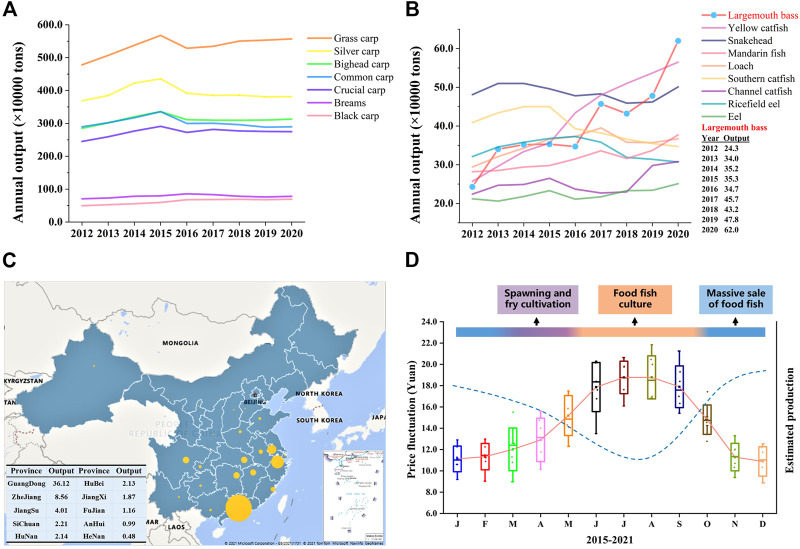
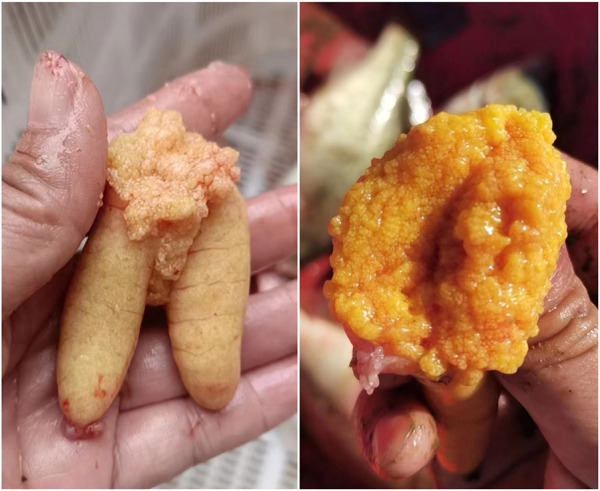
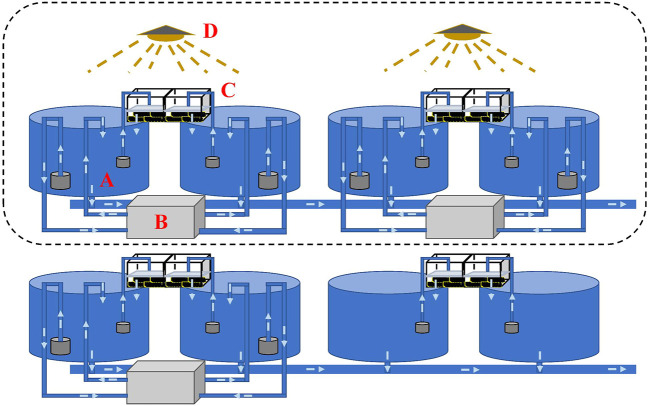
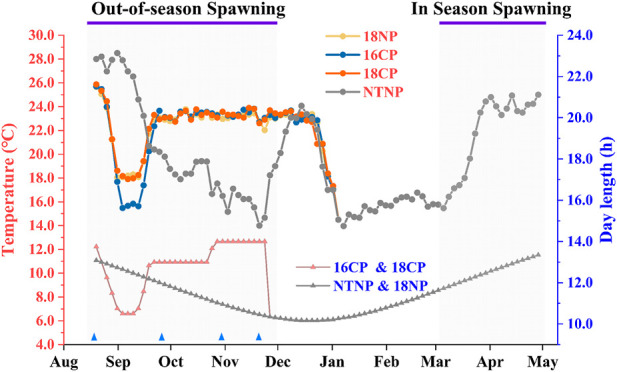
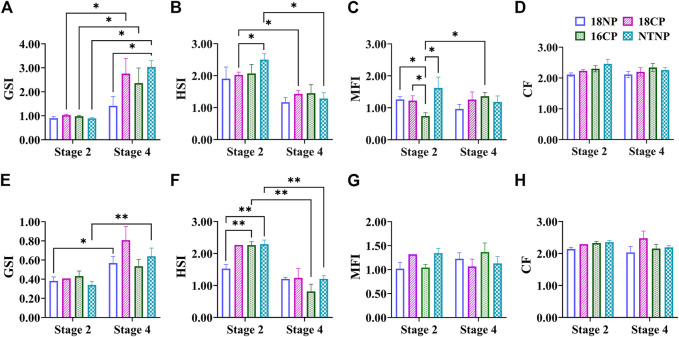
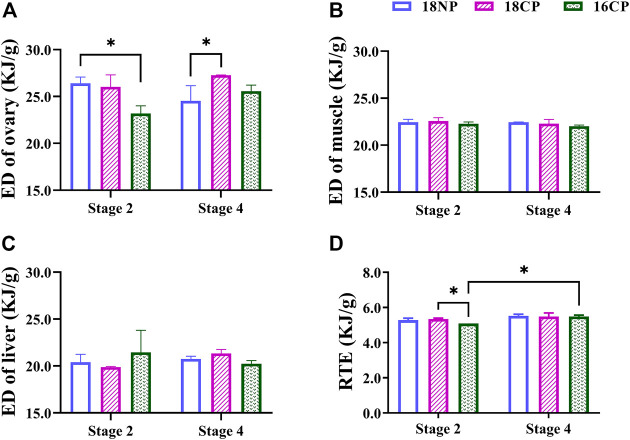
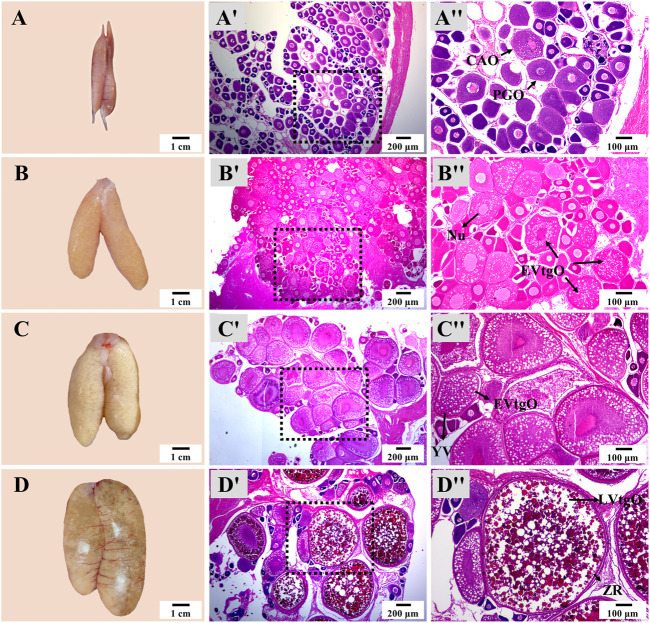
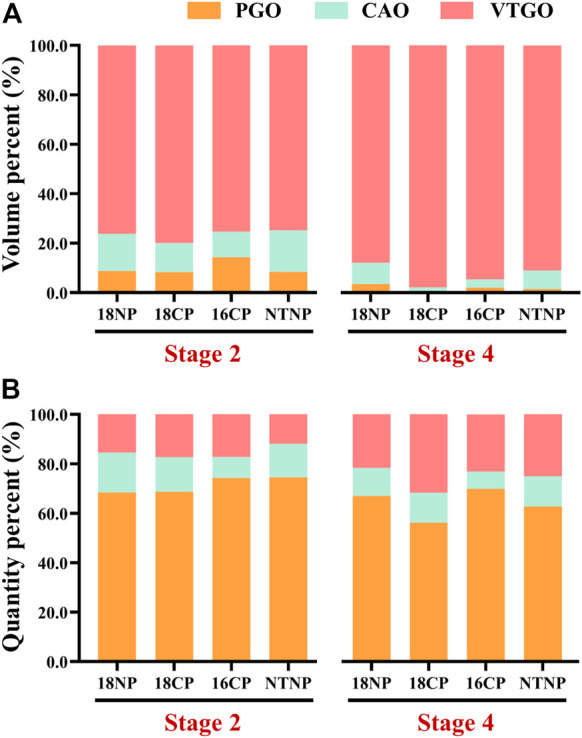
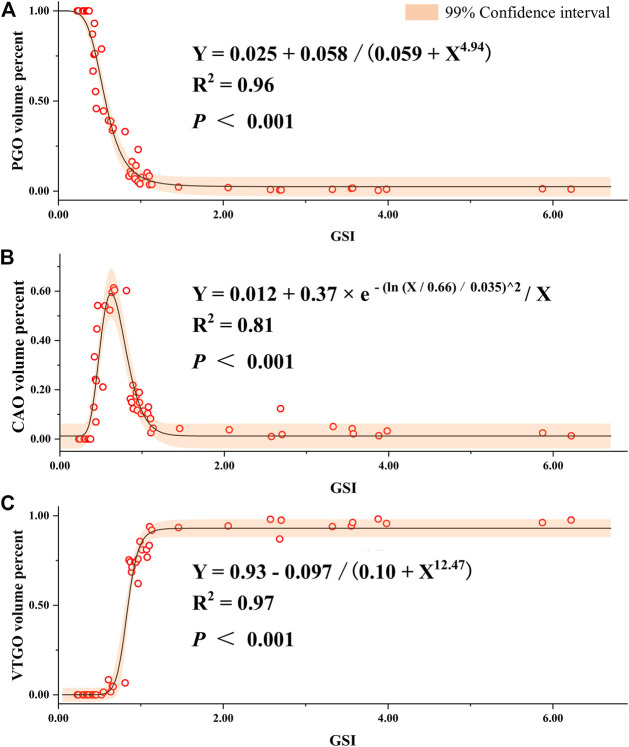
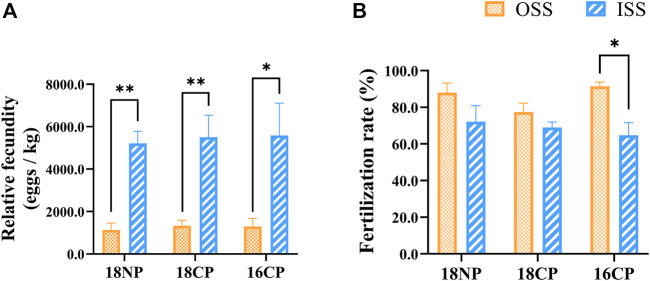
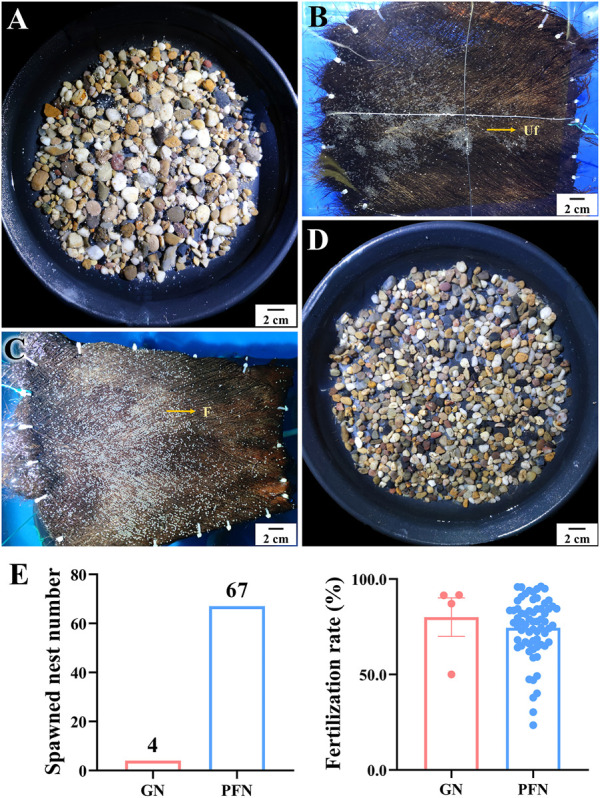
Largemouth bass (LMB) production exceeded 0.7 million tons in 2021 and has become one of the most important freshwater aquaculture species in China. The stable and fixed culture cycle led to regular and drastic price fluctuation during the past decade. Strong price fluctuation provides opportunities and challenges for the LMB industry, and out-of-season spawning (OSS) and culture will provide technical support for the opportunities. To induce OSS at a low cost, we established a controllable recirculating system that allows precise thermo-photoperiod manipulation. In the system, four experimental groups were assigned, 18NP (18°C overwintering water temperature, natural photoperiod), 18CP (18°C overwintering water temperature, controlled photoperiod), 16CP (16°C overwintering water temperature, controlled photoperiod), and NTNP (natural water temperature and natural photoperiod), to determine the effects of chilling temperature and photoperiod on spawning performance. OSS was observed in all the experimental groups without significant differences, except NTNP. The manipulated broodstock can re-spawn 3 months later in the next spring in advance. Further analysis of the volume percentage of different stages of oocytes provides a base for excellent regression between the volume percentage of the primary growth stage, cortical alveoli stage, vitellogenesis/maturation stage, and gonadal development/maturation. The results suggest that the volume percentage of oocytes is a better indicator of gonadal development and maturation than the gonadosomatic index. We also found that LMB prefers palm fiber as a spawning nest over gravel. The findings of this work provide important technique guidance for practical OSS of the LMB aquaculture industry and standardization of ovary development and maturation in fish with asynchronous developmental oocytes.
2021年大口黑鲈产量超过70万吨,已成为中国最重要的淡水养殖品种之一。在过去十年中,稳定且固定的养殖周期导致价格出现周期性剧烈波动。剧烈的价格波动给大口黑鲈产业带来了机遇和挑战,而反季节产卵和养殖将为这些机遇提供技术支持。为了低成本诱导反季节产卵,我们建立了一个可控的循环系统,该系统能够精确控制温度和光周期。在该系统中,设置了四个实验组,分别为18NP(越冬水温18°C,自然光周期)、18CP(越冬水温18°C,控制光周期)、16CP(越冬水温16°C,控制光周期)和NTNP(自然水温与自然光周期),以确定低温和光周期对产卵性能的影响。除NTNP组外,所有实验组均观察到反季节产卵现象,且无显著差异。经过处理的亲鱼能够提前在次年春季3个月后再次产卵。对不同发育阶段卵母细胞体积百分比的进一步分析,为初级生长阶段、皮质泡阶段、卵黄发生/成熟阶段的体积百分比与性腺发育/成熟之间的良好回归提供了依据。结果表明,卵母细胞体积百分比比性腺指数更能准确反映性腺发育和成熟情况。我们还发现,大口黑鲈在产卵时更喜欢棕榈纤维巢而非砾石巢。本研究结果为大口黑鲈养殖业的实际反季节产卵操作以及具有异步发育卵母细胞的鱼类卵巢发育和成熟的标准化提供了重要的技术指导。