Brichkina Anna, Polo Pierfrancesco, Sharma Shrey Dharamvir, Visestamkul Nico, Lauth Matthias
Center for Tumor and Immune Biology, Clinics for Gastroenterology, Endocrinology and Metabolism, Philipps University Marburg, Hans-Meerwein-Str. 3, 35043 Marburg, Germany.
Cancers (Basel). 2023 May 4;15(9):2614. doi: 10.3390/cancers15092614.
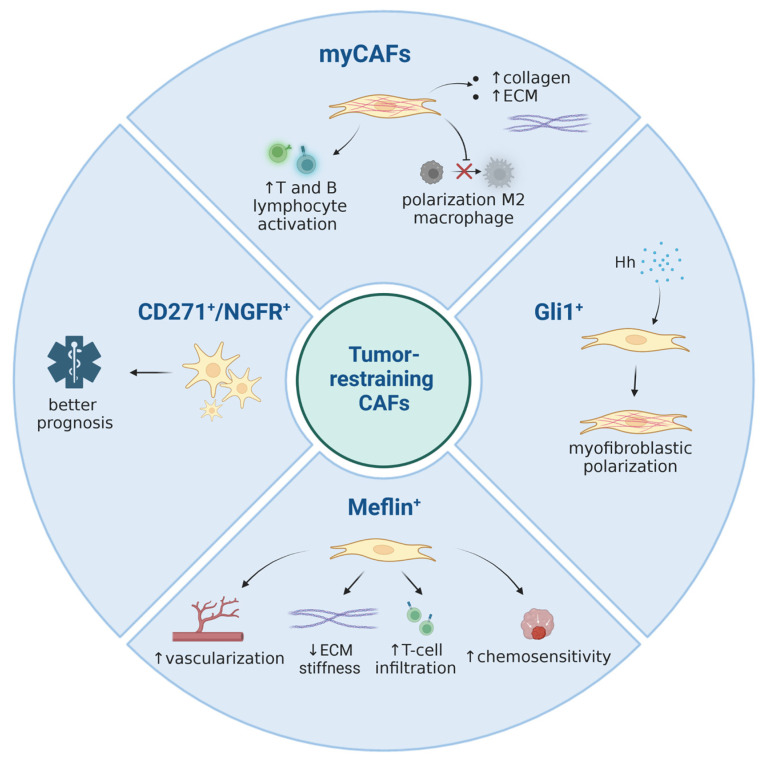
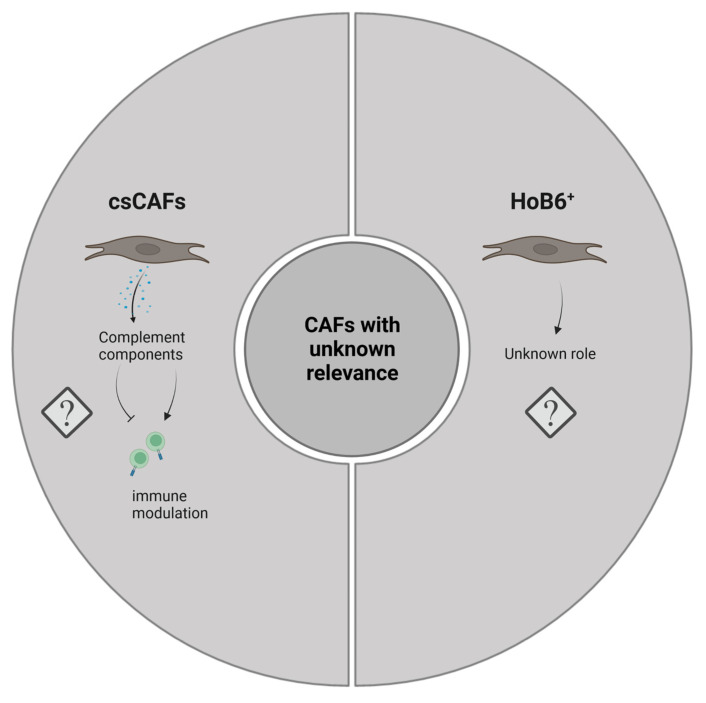
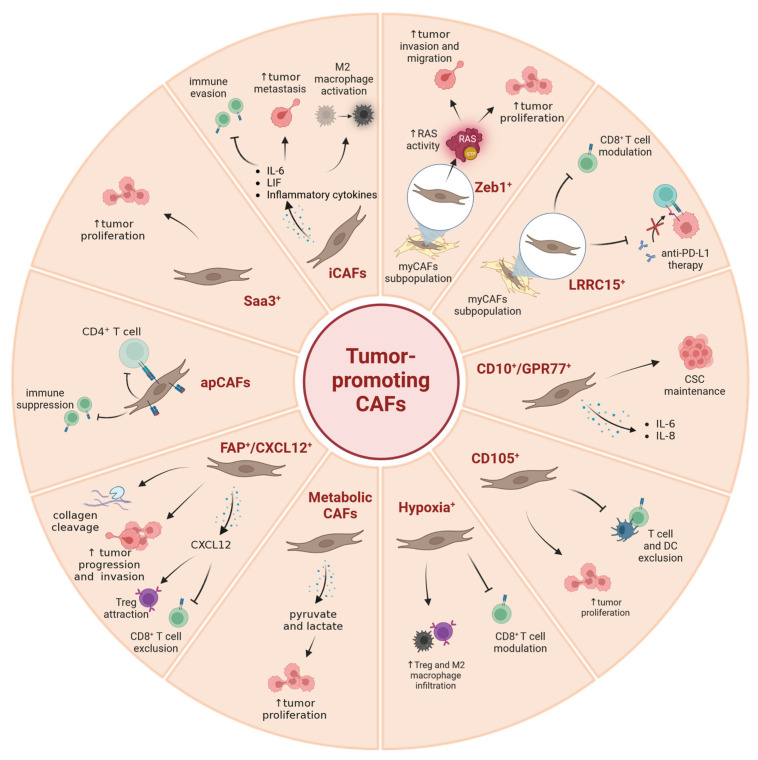
Pancreatic cancer represents one of the most desmoplastic malignancies and is characterized by an extensive deposition of extracellular matrix. The latter is provided by activated cancer-associated fibroblasts (CAFs), which are abundant cells in the pancreatic tumor microenvironment. Many recent studies have made it clear that CAFs are not a singular cellular entity but represent a multitude of potentially dynamic subgroups that affect tumor biology at several levels. As mentioned before, CAFs significantly contribute to the fibrotic reaction and the biomechanical properties of the tumor, but they can also modulate the local immune environment and the response to targeted, chemo or radiotherapy. As the number of known and emerging CAF subgroups is steadily increasing, it is becoming increasingly difficult to keep up with these developments and to clearly discriminate the cellular subsets identified so far. This review aims to provide a helpful overview that enables readers to quickly familiarize themselves with field of CAF heterogeneity and to grasp the phenotypic, functional and therapeutic distinctions of the various stromal subpopulations.
胰腺癌是最具促结缔组织增生性的恶性肿瘤之一,其特征是细胞外基质大量沉积。后者由活化的癌症相关成纤维细胞(CAF)产生,CAF是胰腺肿瘤微环境中丰富的细胞类型。最近的许多研究表明,CAF并非单一的细胞实体,而是代表了众多可能具有动态变化的亚群,这些亚群在多个层面影响肿瘤生物学。如前所述,CAF对肿瘤的纤维化反应和生物力学特性有显著贡献,但它们也能调节局部免疫环境以及对靶向治疗、化疗或放疗的反应。随着已知和新出现的CAF亚群数量不断增加,跟上这些进展并清晰区分目前已确定的细胞亚群变得越来越困难。本综述旨在提供一个有用的概述,使读者能够快速熟悉CAF异质性领域,并掌握各种基质亚群的表型、功能和治疗差异。