El Hani Ouarda, García-Guzmán Juan José, Palacios-Santander José María, Digua Khalid, Amine Aziz, Gharby Said, Cubillana-Aguilera Laura
Laboratory of Process Engineering and Environment, Faculty of Sciences and Techniques, Hassan II University of Casablanca, P.A. 149, Mohammedia 28810, Morocco.
Department of Analytical Chemistry, Institute of Research on Electron Microscopy and Materials (IMEYMAT), Faculty of Sciences, Campus de Excelencia Internacional del Mar (CEIMAR), University of Cadiz, Campus Universitario de Puerto Real, Polígono del Río San Pedro S/N, 11510 Puerto Real, Cádiz, Spain.
Foods. 2023 Apr 23;12(9):1747. doi: 10.3390/foods12091747.
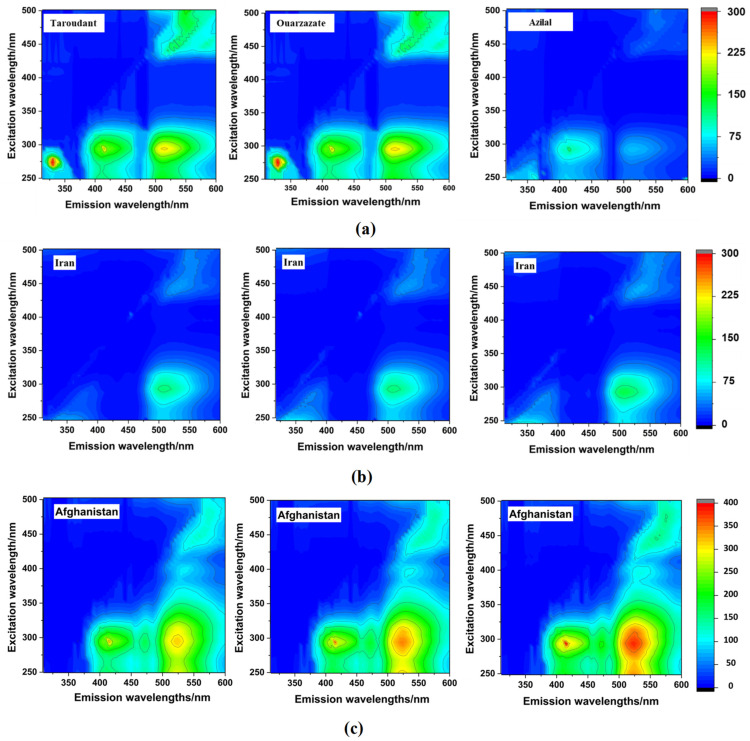
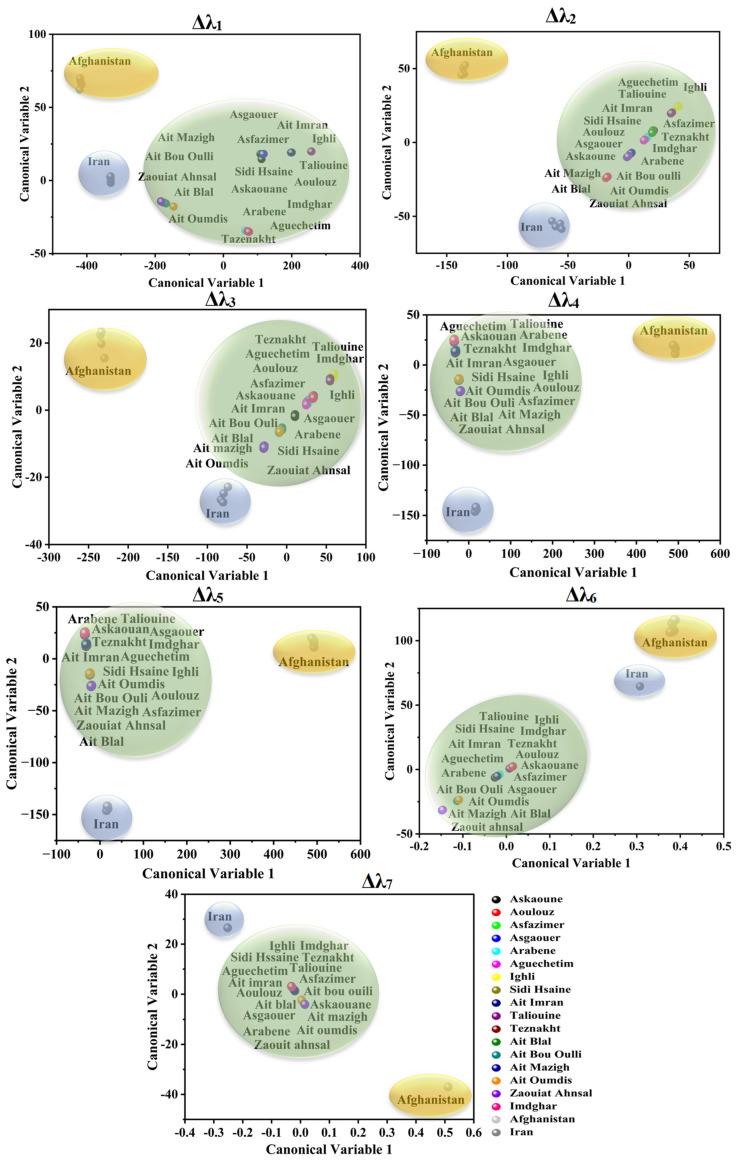
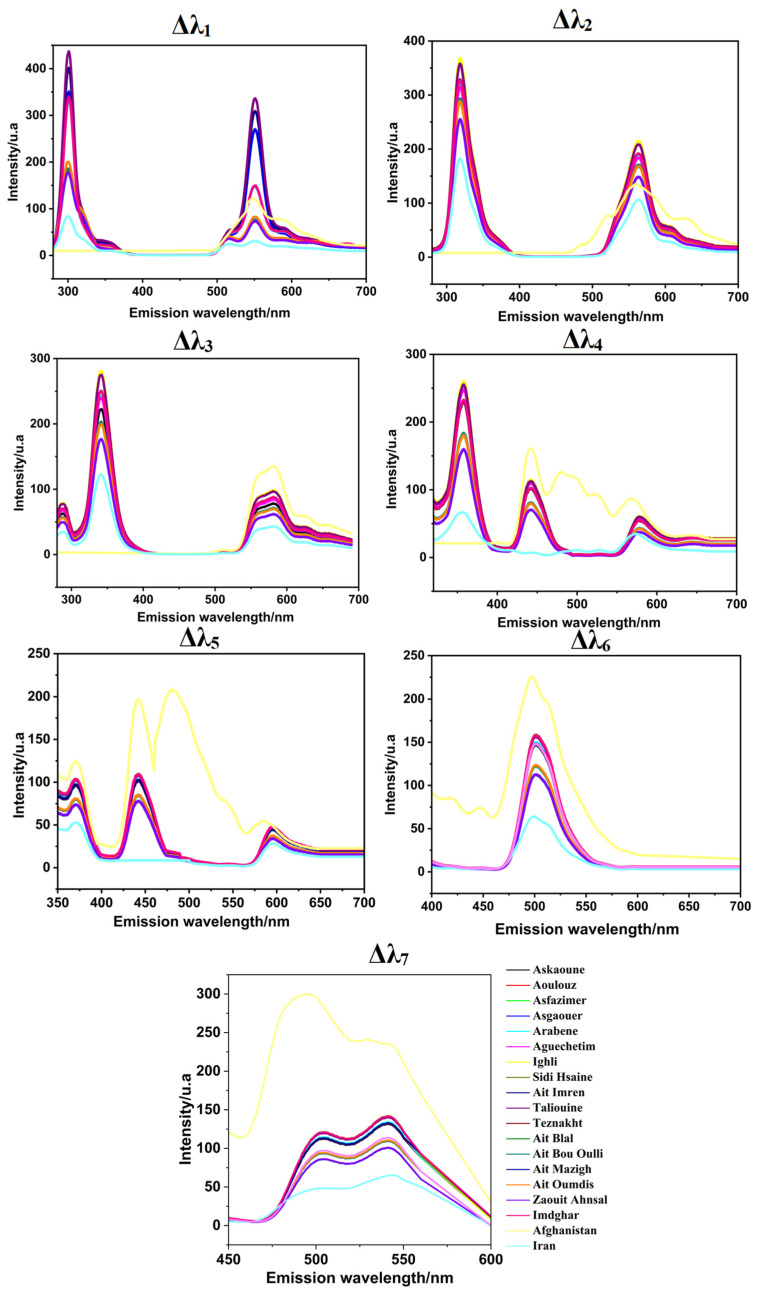
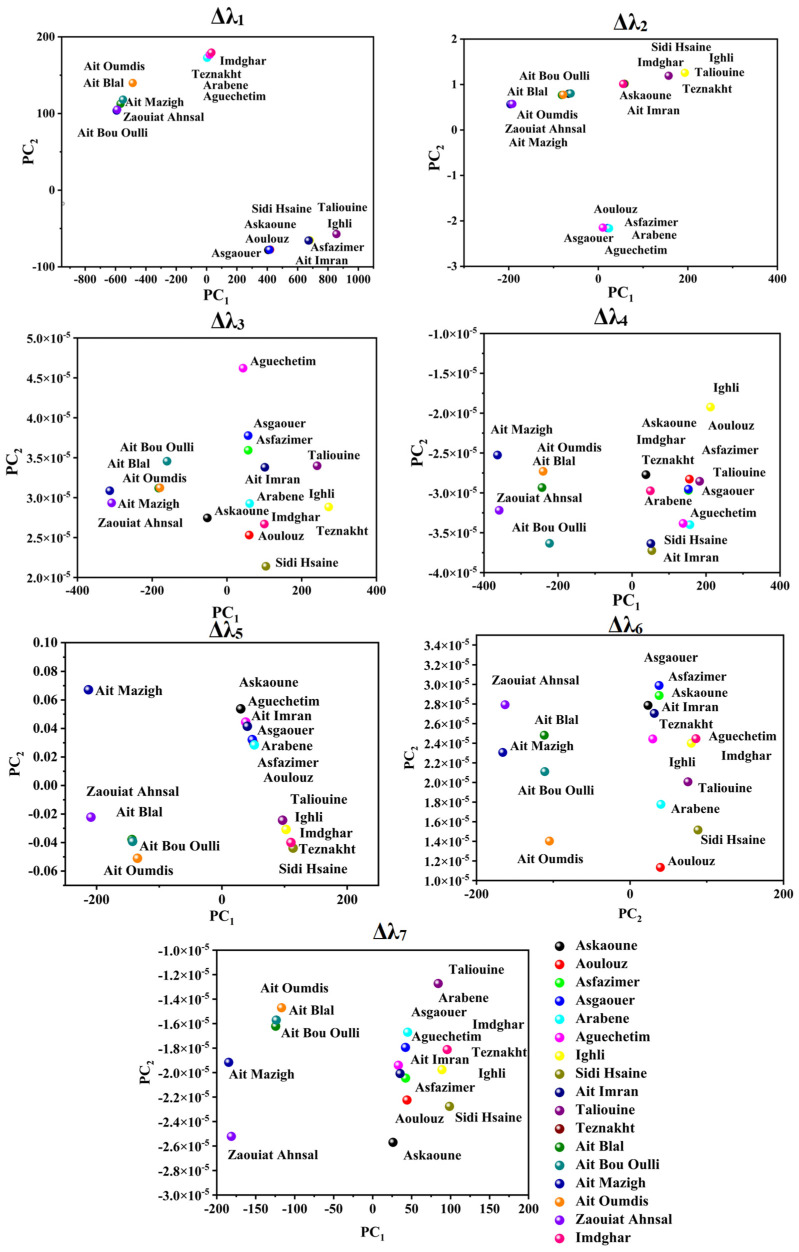
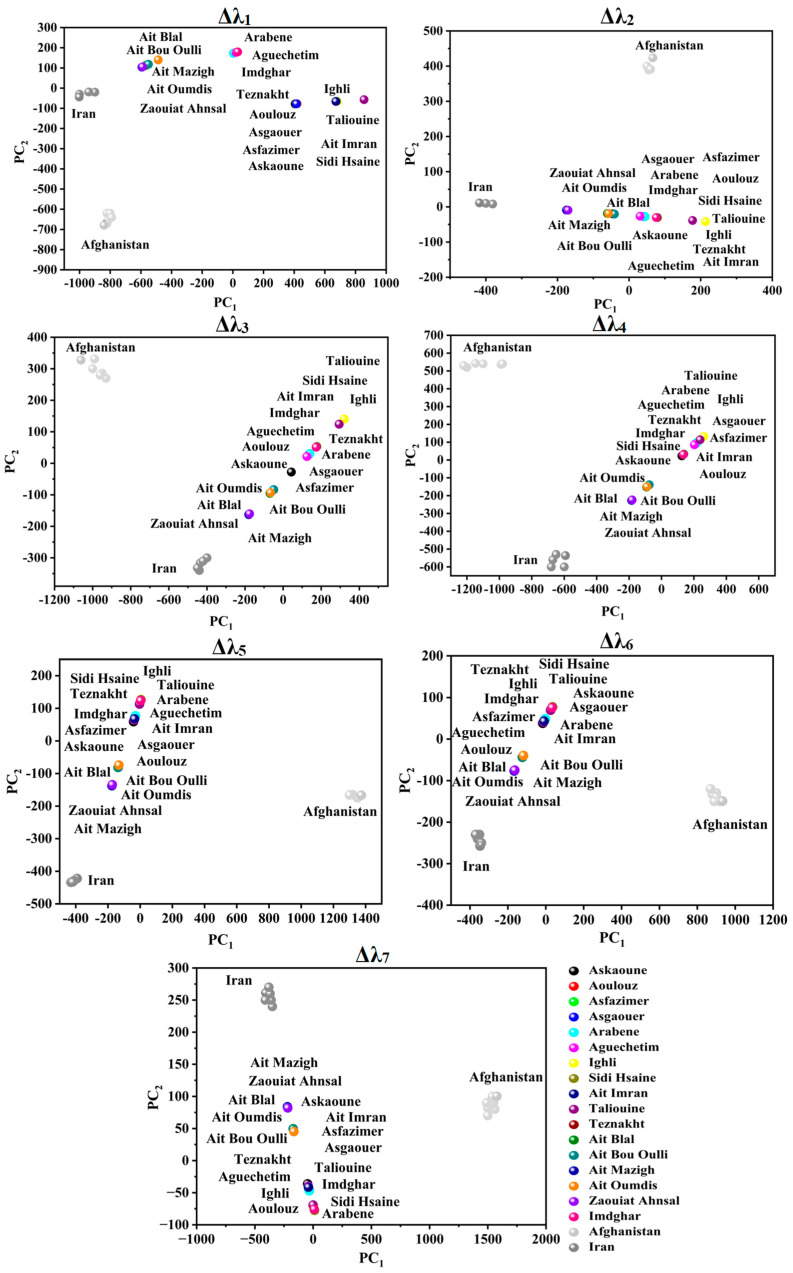
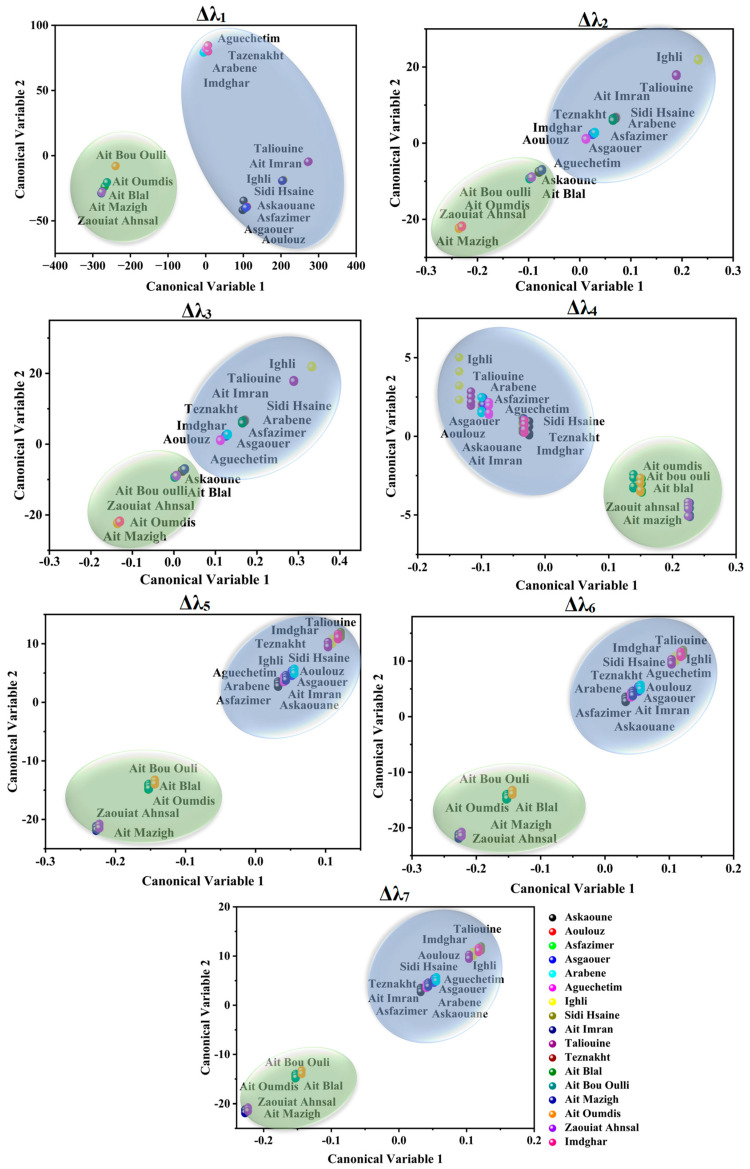
There is an increasing interest in food science for high-quality natural products with a distinct geographical origin, such as saffron. In this work, the excitation-emission matrix (EEM) and synchronous fluorescence were used for the first time to geographically discriminate between Moroccan saffron from Taroudant, Ouarzazate, and Azilal. Moreover, to differentiate between Afghan, Iranian, and Moroccan saffron, a unique fingerprint was assigned to each sample by visualizing the EEM physiognomy. Moreover, principal component analysis (LDA) and linear discriminant analysis (LDA) were successfully applied to classify the synchronous spectra of samples. High fluorescence intensities were registered for Ouarzazate and Taroudant saffron. Yet, the Azilal saffron was distinguished by its low intensities. Furthermore, Moroccan, Afghan, and Iranian saffron were correctly assigned to their origins using PCA and LDA for different offsets (Δλ) (20-250 nm) such that the difference in the fluorescence composition of the three countries' saffron was registered in the following excitation/emission ranges: 250-325 nm/300-480 nm and 360-425 nm/500-550 nm. These regions are characterized by the high polyphenolic content of Moroccan saffron and the important composition of Afghan saffron, including vitamins and terpenoids. However, weak intensities of these compounds were found in Iranian saffron. Furthermore, a substantial explained variance (97-100% for PC and PC) and an important classification rate (70-90%) were achieved. Thus, the non-destructive applied methodology of discrimination was rapid, straightforward, reliable, and accurate.
人们对具有独特地理来源的高品质天然产品(如藏红花)的食品科学兴趣日益浓厚。在这项工作中,首次使用激发 - 发射矩阵(EEM)和同步荧光对来自塔鲁丹特、瓦尔扎扎特和阿齐拉尔的摩洛哥藏红花进行地理区分。此外,为了区分阿富汗、伊朗和摩洛哥藏红花,通过可视化EEM相貌为每个样品赋予了独特的指纹。此外,主成分分析(PCA)和线性判别分析(LDA)成功应用于对样品的同步光谱进行分类。瓦尔扎扎特和塔鲁丹特藏红花的荧光强度较高。然而,阿齐拉尔藏红花的特点是强度较低。此外,使用PCA和LDA针对不同偏移量(Δλ)(20 - 250 nm)将摩洛哥、阿富汗和伊朗藏红花正确归为其原产国,使得三个国家藏红花的荧光成分差异记录在以下激发/发射范围内:250 - 325 nm/300 - 480 nm和360 - 425 nm/500 - 550 nm。这些区域的特点是摩洛哥藏红花的多酚含量高,阿富汗藏红花的重要成分包括维生素和萜类化合物。然而,在伊朗藏红花中发现这些化合物的强度较弱。此外,实现了较大的解释方差(PC和PC分别为97 - 100%)和重要分类率(70 - 90%)。因此,所应用的非破坏性鉴别方法快速、直接、可靠且准确。