Bolignano Davide, Greco Marta, Presta Pierangela, Caglioti Alfredo, Carullo Nazareno, Zicarelli Mariateresa, Foti Daniela Patrizia, Dragone Francesco, Andreucci Michele, Coppolino Giuseppe
Nephrology and Dialysis Unit, University "Magna-Graecia" of Catanzaro, 88100 Catanzaro, Italy.
Department of Medical and Surgical Sciences, University "Magna-Graecia" of Catanzaro, 88100 Catanzaro, Italy.
J Clin Med. 2023 Apr 23;12(9):3072. doi: 10.3390/jcm12093072.
Left ventricular hypertrophy (LVH), which is a pervasive complication of end-stage kidney disease (ESKD), persists in some uremic individuals even after kidney transplantation (Ktx), contributing to worsening CV outcomes. Marinobufagenin (MBG), an endogenous steroid cardiotonic hormone endowed with natriuretic and vasoconstrictive properties, is an acknowledged trigger of uremic cardiomyopathy. However, its clinical significance in the setting of Ktx remains undefined.
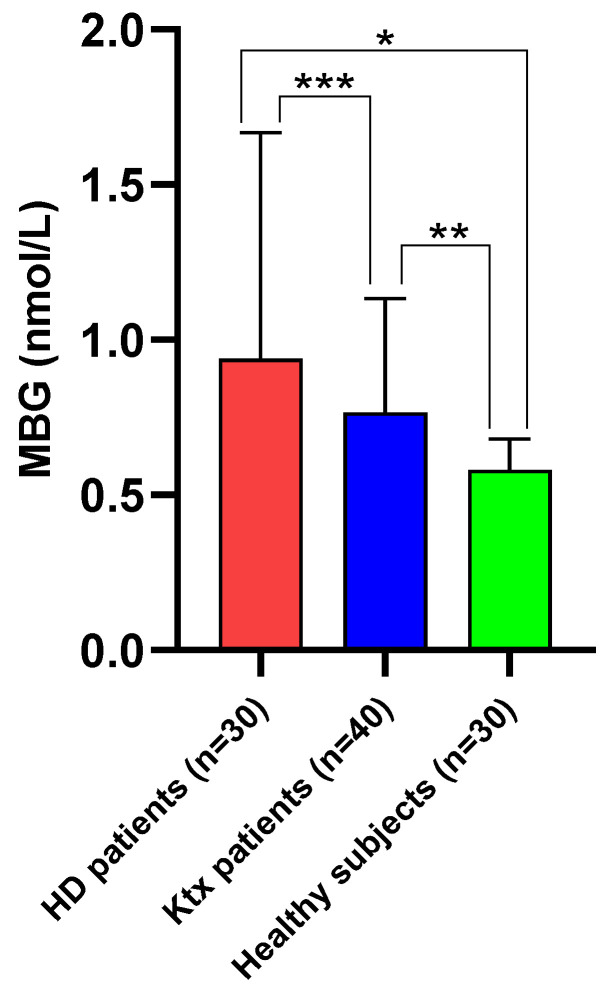
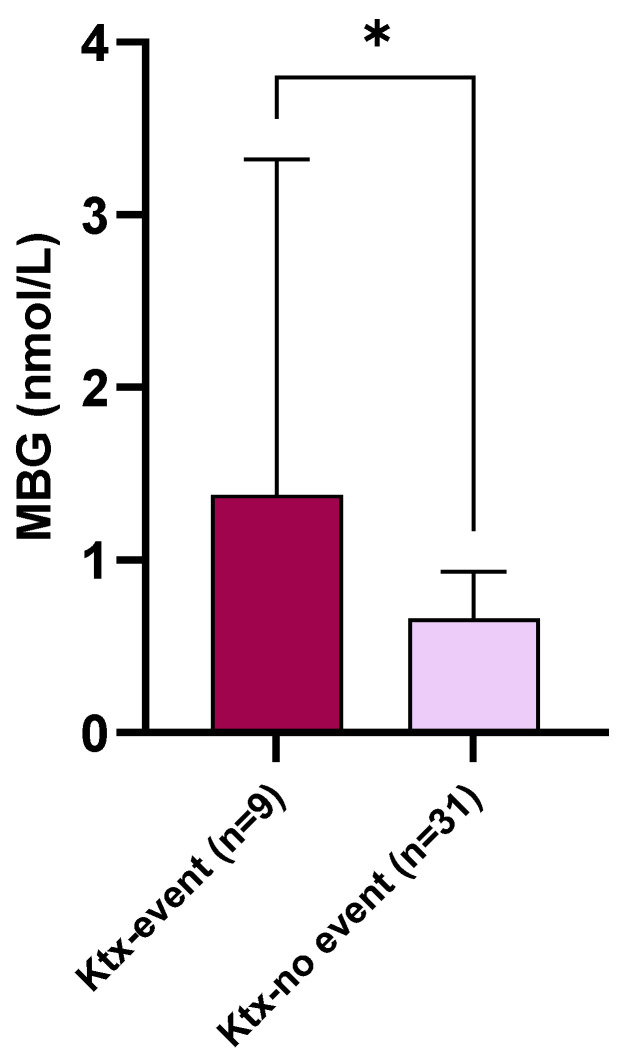
In a cohort of chronic Ktx recipients ( = 40), we assessed circulating MBG together with a thorough clinical and echocardiographic examination. Forty matched haemodialysis (HD) patients and thirty healthy subjects served as controls for MBG measurements. Patients were then prospectively followed up to 12 months and the occurrence of an established cardio-renal endpoint (death, CV events, renal events, graft rejection) was recorded.
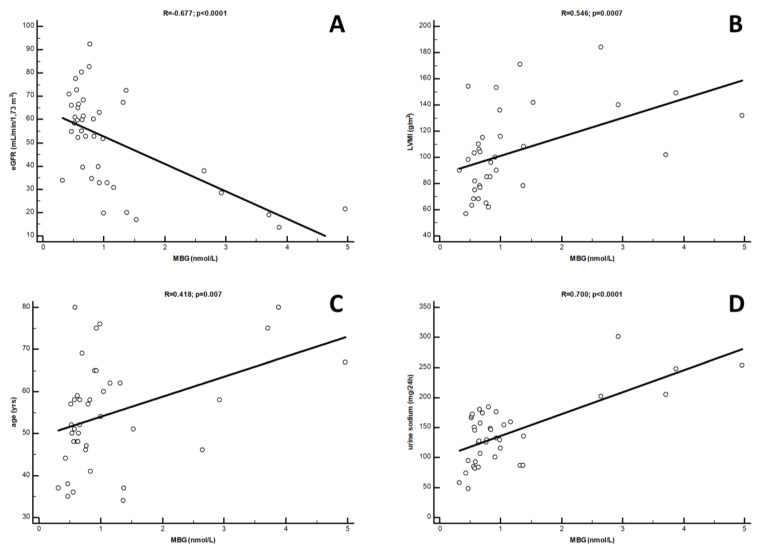
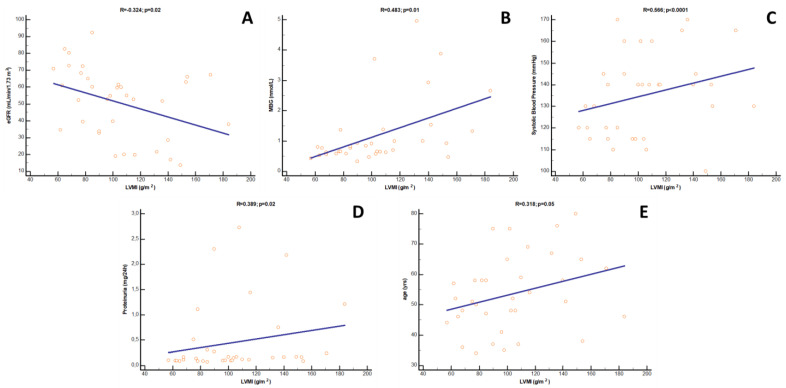
Median MBG plasma levels were lower in Ktx as compared with HD patients ( = 0.02), but higher as compared with healthy controls ( = 0.0005). Urinary sodium (β = 0.423; = 0.01) and eGFR (β = -0.324; = 0.02) were the sole independent predictors of MBG in this cohort, while a strong correlation with left ventricular mass index (LVMi), found in univariate analyses (R = 0.543; = 0.0007), gained significance only in multivariate models not including eGFR. Logistic regression analyses indicated MBG as a significant predictor of the combined endpoint (OR 2.38 [1.10-5.12] per each 1 nmoL/L increase; = 0.01), as well as eGFR, LVMi, serum phosphate and proteinuria.
Ktx recipients display altered MBG levels which are influenced by sodium balance, renal impairment and the severity of LVH. Thus, MBG might represent an important missing link between reduced graft function and pathological cardiac remodelling and may hold important prognostic value for improving cardio-renal risk assessment.
左心室肥厚(LVH)是终末期肾病(ESKD)普遍存在的并发症,在一些尿毒症患者中,即使在肾移植(Ktx)后仍持续存在,导致心血管结局恶化。海蟾蜍精(MBG)是一种具有利钠和血管收缩特性的内源性类固醇强心激素,是公认的尿毒症心肌病触发因素。然而,其在肾移植背景下的临床意义仍不明确。
在一组慢性肾移植受者(n = 40)中,我们评估了循环MBG,并进行了全面的临床和超声心动图检查。40名匹配的血液透析(HD)患者和30名健康受试者作为MBG测量的对照。然后对患者进行前瞻性随访12个月,并记录既定的心肾终点(死亡、心血管事件、肾脏事件、移植排斥)的发生情况。
与HD患者相比,肾移植患者的MBG血浆中位数水平较低(P = 0.02),但与健康对照相比更高(P = 0.0005)。尿钠(β = 0.423;P = 0.01)和估算肾小球滤过率(eGFR)(β = -0.324;P = 0.02)是该队列中MBG的唯一独立预测因素,而在单因素分析中发现与左心室质量指数(LVMi)有很强的相关性(R = 0.543;P = 0.0007),仅在不包括eGFR的多变量模型中具有显著性。逻辑回归分析表明,MBG是联合终点的重要预测因素(每增加1 nmoL/L,OR为2.38 [1.10 - 5.12];P = 0.01),eGFR、LVMi、血清磷酸盐和蛋白尿也是如此。
肾移植受者的MBG水平发生改变,受钠平衡、肾功能损害和LVH严重程度影响。因此,MBG可能是移植功能降低与病理性心脏重塑之间重要的缺失环节,可能对改善心肾风险评估具有重要的预后价值。