Dementia Research Centre, Department of Neurodegenerative Disease, UCL Queen Square Institute of Neurology, University College London, London WC1N 3AR, UK.
Kidney Cancer Program, UT Southwestern Medical Centre, Dallas, TX 75390, USA.
Brain. 2023 Oct 3;146(10):4065-4076. doi: 10.1093/brain/awad163.
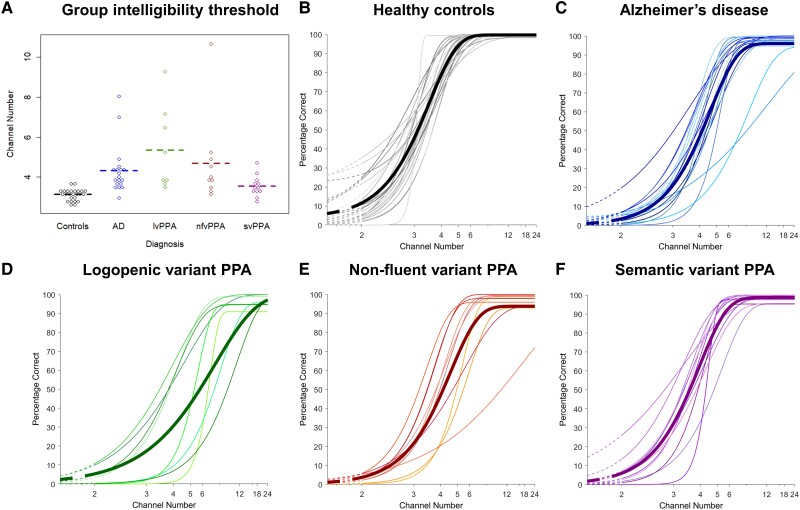
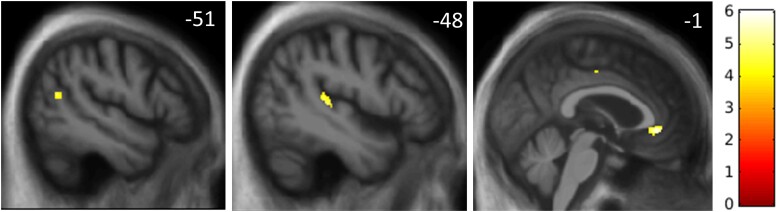
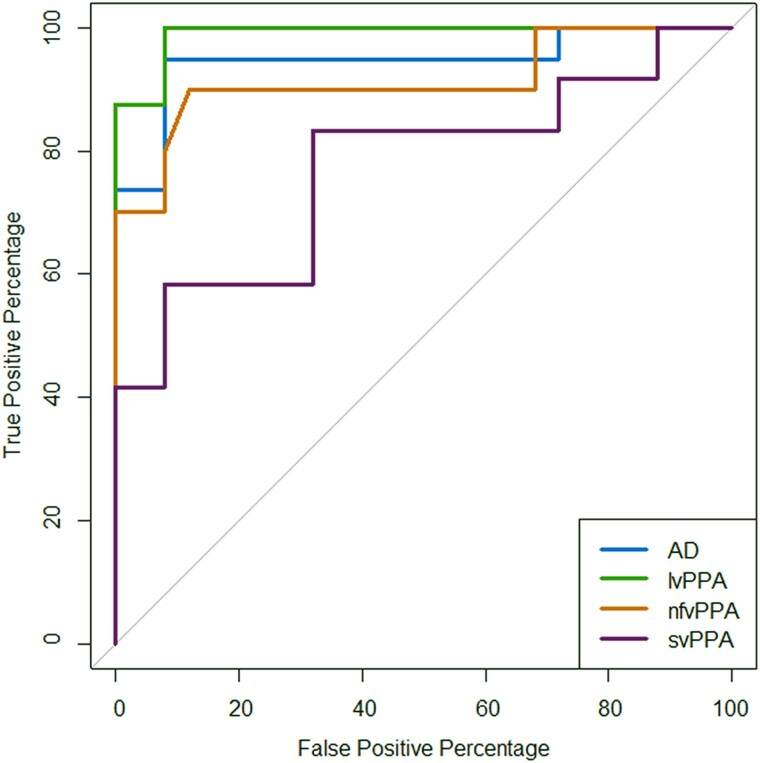
Successful communication in daily life depends on accurate decoding of speech signals that are acoustically degraded by challenging listening conditions. This process presents the brain with a demanding computational task that is vulnerable to neurodegenerative pathologies. However, despite recent intense interest in the link between hearing impairment and dementia, comprehension of acoustically degraded speech in these diseases has been little studied. Here we addressed this issue in a cohort of 19 patients with typical Alzheimer's disease and 30 patients representing the three canonical syndromes of primary progressive aphasia (non-fluent/agrammatic variant primary progressive aphasia; semantic variant primary progressive aphasia; logopenic variant primary progressive aphasia), compared to 25 healthy age-matched controls. As a paradigm for the acoustically degraded speech signals of daily life, we used noise-vocoding: synthetic division of the speech signal into frequency channels constituted from amplitude-modulated white noise, such that fewer channels convey less spectrotemporal detail thereby reducing intelligibility. We investigated the impact of noise-vocoding on recognition of spoken three-digit numbers and used psychometric modelling to ascertain the threshold number of noise-vocoding channels required for 50% intelligibility by each participant. Associations of noise-vocoded speech intelligibility threshold with general demographic, clinical and neuropsychological characteristics and regional grey matter volume (defined by voxel-based morphometry of patients' brain images) were also assessed. Mean noise-vocoded speech intelligibility threshold was significantly higher in all patient groups than healthy controls, and significantly higher in Alzheimer's disease and logopenic variant primary progressive aphasia than semantic variant primary progressive aphasia (all P < 0.05). In a receiver operating characteristic analysis, vocoded intelligibility threshold discriminated Alzheimer's disease, non-fluent variant and logopenic variant primary progressive aphasia patients very well from healthy controls. Further, this central hearing measure correlated with overall disease severity but not with peripheral hearing or clear speech perception. Neuroanatomically, after correcting for multiple voxel-wise comparisons in predefined regions of interest, impaired noise-vocoded speech comprehension across syndromes was significantly associated (P < 0.05) with atrophy of left planum temporale, angular gyrus and anterior cingulate gyrus: a cortical network that has previously been widely implicated in processing degraded speech signals. Our findings suggest that the comprehension of acoustically altered speech captures an auditory brain process relevant to daily hearing and communication in major dementia syndromes, with novel diagnostic and therapeutic implications.
日常生活中的成功沟通取决于对受挑战性聆听条件影响的语音信号的准确解码。这个过程给大脑带来了一项具有挑战性的计算任务,而大脑容易受到神经退行性病变的影响。然而,尽管最近人们对听力损伤与痴呆之间的联系产生了浓厚的兴趣,但这些疾病中对语音信号的理解却很少被研究。在这里,我们在一个由 19 名典型阿尔茨海默病患者和 30 名代表原发性进行性失语症三个经典综合征(非流利/语法障碍型原发性进行性失语症;语义型原发性进行性失语症;失语法型原发性进行性失语症)的患者队列中以及 25 名年龄匹配的健康对照组中解决了这个问题。我们使用噪声编码作为日常生活中语音信号的退化模型:将语音信号分解为由调幅白噪声构成的频率通道,从而减少通道数量可以减少频谱时间细节,从而降低可理解性。我们研究了噪声编码对口语三数字识别的影响,并使用心理测量模型来确定每个参与者达到 50%可理解性所需的噪声编码通道数量的阈值。还评估了噪声编码语音可理解性阈值与一般人口统计学、临床和神经心理学特征以及区域灰质体积(通过患者大脑图像的基于体素形态计量学定义)之间的关联。所有患者组的平均噪声编码语音可理解性阈值均显著高于健康对照组,并且阿尔茨海默病组和失语法型原发性进行性失语症组的阈值均显著高于语义型原发性进行性失语症组(均 P <0.05)。在接收器操作特征分析中,经噪声编码的可理解性阈值可以很好地区分阿尔茨海默病、非流利变体和失语法变体原发性进行性失语症患者与健康对照组。此外,该中心听力测量与整体疾病严重程度相关,但与外周听力或清晰语音感知无关。神经解剖学上,在对预先定义的感兴趣区域中的多个体素进行比较校正后,跨综合征的受损噪声编码语音理解与左侧颞平面、角回和前扣带回的萎缩显著相关(P <0.05):这是一个以前广泛涉及处理退化语音信号的皮质网络。我们的发现表明,对语音信号的理解捕捉到了与主要痴呆综合征中日常听力和交流相关的听觉大脑过程,具有新的诊断和治疗意义。