Yusuf Hamied Department of Chemistry, University of Cambridge, Cambridge CB2 1EW, United Kingdom.
Nanoscience Centre, Department of Engineering, University of Cambridge, Cambridge CB3 0FF, United Kingdom.
Proc Natl Acad Sci U S A. 2023 May 23;120(21):e2216234120. doi: 10.1073/pnas.2216234120. Epub 2023 May 15.
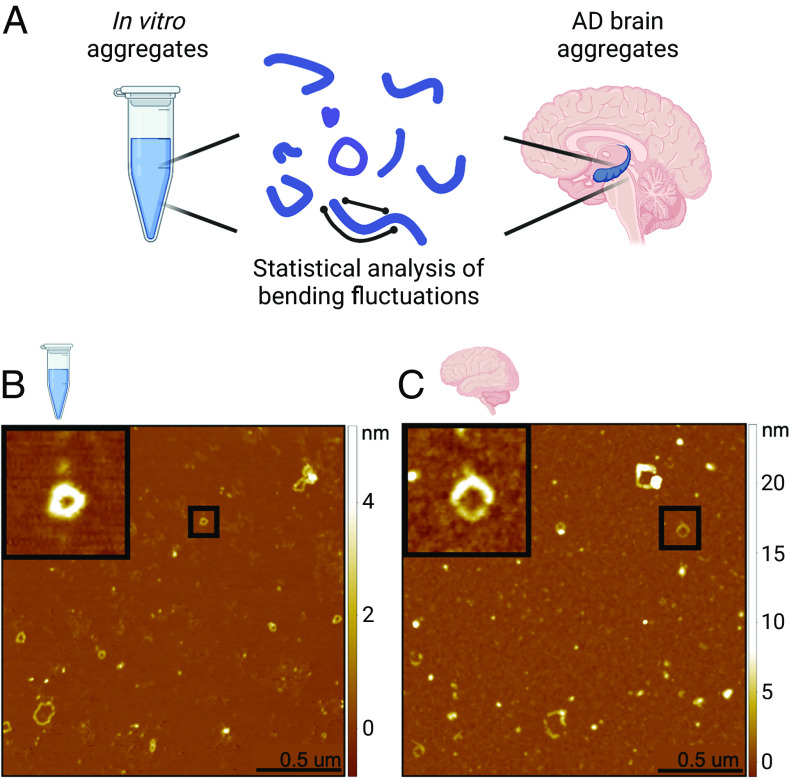
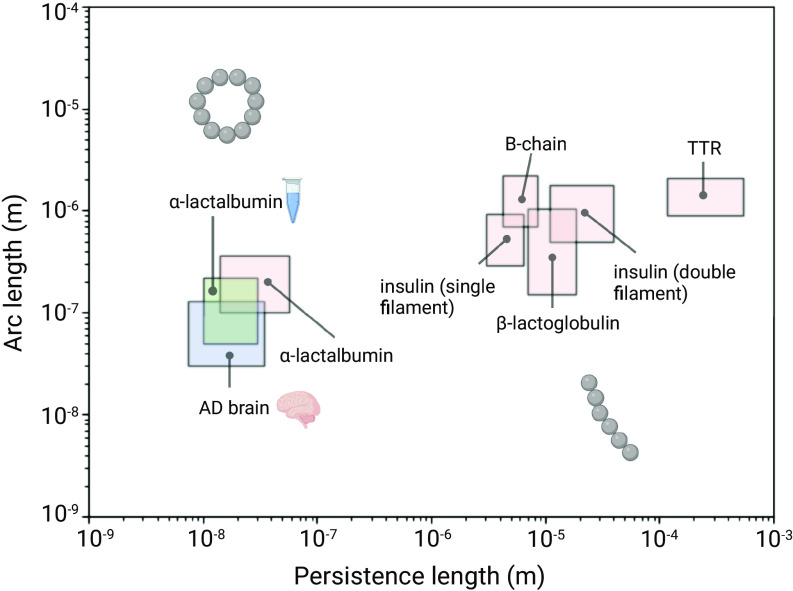
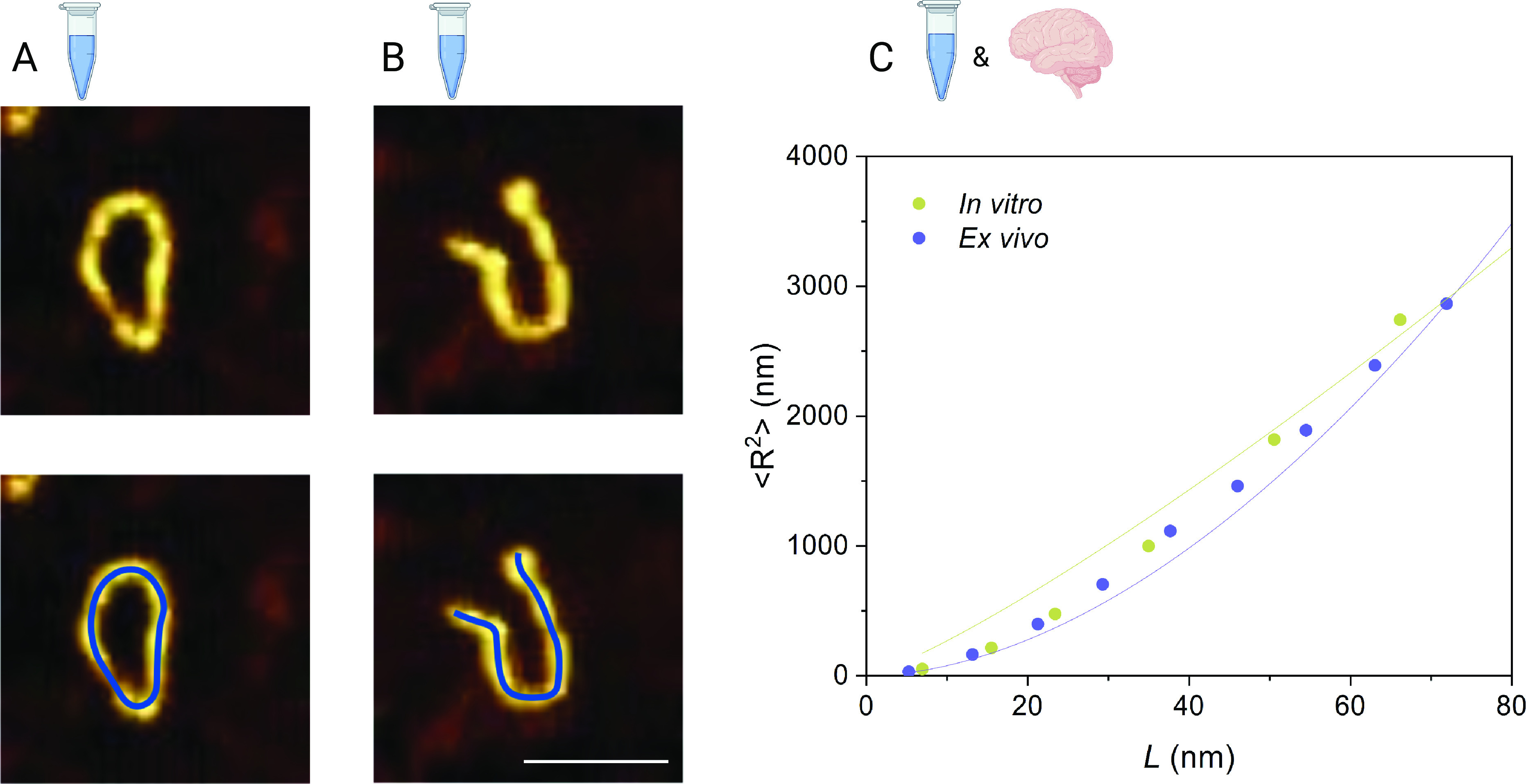
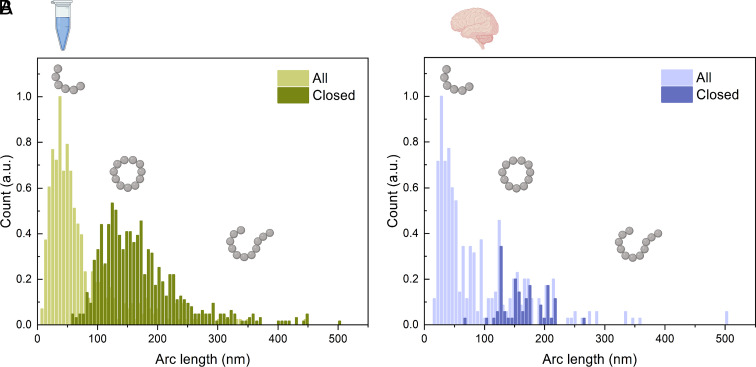
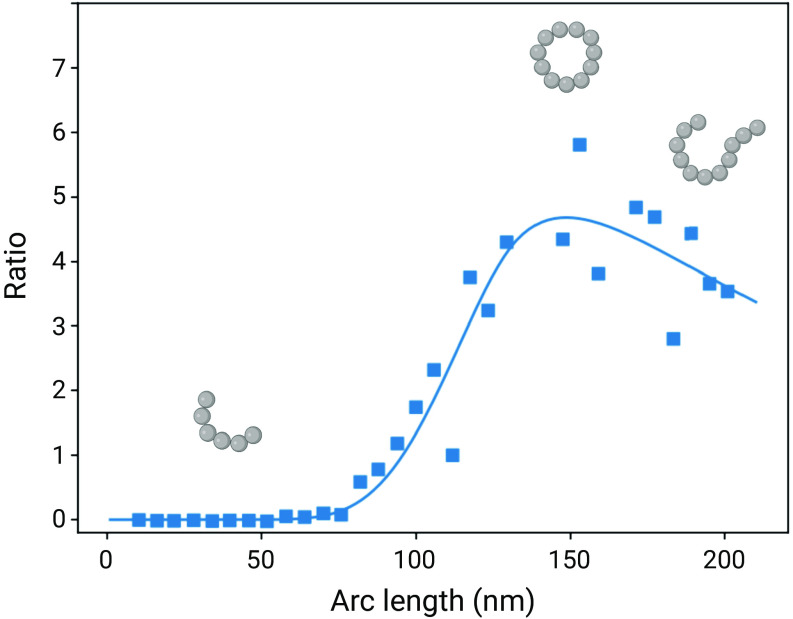
Neurodegenerative diseases, such as Alzheimer's disease (AD), are associated with protein misfolding and aggregation into amyloid fibrils. Increasing evidence suggests that soluble, low-molecular-weight aggregates play a key role in disease-associated toxicity. Within this population of aggregates, closed-loop pore-like structures have been observed for a variety of amyloid systems, and their presence in brain tissues is associated with high levels of neuropathology. However, their mechanism of formation and relationship with mature fibrils have largely remained challenging to elucidate. Here, we use atomic force microscopy and statistical theory of biopolymers to characterize amyloid ring structures derived from the brains of AD patients. We analyze the bending fluctuations of protofibrils and show that the process of loop formation is governed by the mechanical properties of their chains. We conclude that ex vivo protofibril chains possess greater flexibility than that imparted by hydrogen-bonded networks characteristic of mature amyloid fibrils, such that they are able to form end-to-end connections. These results explain the diversity in the structures formed from protein aggregation and shed light on the links between early forms of flexible ring-forming aggregates and their role in disease.
神经退行性疾病,如阿尔茨海默病(AD),与蛋白质错误折叠和聚集形成淀粉样纤维有关。越来越多的证据表明,可溶性、低分子量的聚集物在与疾病相关的毒性中发挥着关键作用。在这些聚集物中,已经观察到各种淀粉样系统存在闭环孔状结构,并且它们在脑组织中的存在与高水平的神经病理学相关。然而,它们的形成机制及其与成熟纤维的关系在很大程度上仍然难以阐明。在这里,我们使用原子力显微镜和生物聚合物统计理论来表征源自 AD 患者大脑的淀粉样环结构。我们分析原纤维的弯曲波动,并表明环形成过程受其链的机械性能控制。我们得出结论,体外原纤维链具有比成熟淀粉样纤维特征的氢键网络赋予的更大的柔韧性,使得它们能够形成端到端的连接。这些结果解释了蛋白质聚集形成的结构多样性,并阐明了早期柔性环形成聚集物与疾病之间的联系。