• 文献检索
  • 文档翻译
  • 深度研究
  • 学术资讯
  • Suppr Zotero 插件Zotero 插件
  • 邀请有礼
  • 套餐&价格
  • 历史记录
应用&插件
Suppr Zotero 插件Zotero 插件浏览器插件Mac 客户端Windows 客户端微信小程序
定价
高级版会员购买积分包购买API积分包
服务
文献检索文档翻译深度研究API 文档MCP 服务
关于我们
关于 Suppr公司介绍联系我们用户协议隐私条款
关注我们

Suppr 超能文献

核心技术专利:CN118964589B侵权必究
粤ICP备2023148730 号-1Suppr @ 2026

文献检索

告别复杂PubMed语法,用中文像聊天一样搜索,搜遍4000万医学文献。AI智能推荐,让科研检索更轻松。

立即免费搜索

文件翻译

保留排版,准确专业,支持PDF/Word/PPT等文件格式,支持 12+语言互译。

免费翻译文档

深度研究

AI帮你快速写综述,25分钟生成高质量综述,智能提取关键信息,辅助科研写作。

立即免费体验

用于诊断胃肠道疾病的智能无线胶囊内镜

Intelligent Wireless Capsule Endoscopy for the Diagnosis of Gastrointestinal Diseases.

作者信息

Mehedi Ibrahim M, Rao K Prahlad, Alotaibi Fahad Mushhabbab, Alkanfery Hadi Mohsen

机构信息

Department of Electrical and Computer Engineering (ECE), King Abdulaziz University, Jeddah 21589, Saudi Arabia.

Center of Excellence in Intelligent Engineering Systems (CEIES), King Abdulaziz University, Jeddah 21589, Saudi Arabia.

出版信息

Diagnostics (Basel). 2023 Apr 17;13(8):1445. doi: 10.3390/diagnostics13081445.

DOI:10.3390/diagnostics13081445
PMID:37189546
原文链接:https://pmc.ncbi.nlm.nih.gov/articles/PMC10137352/
Abstract

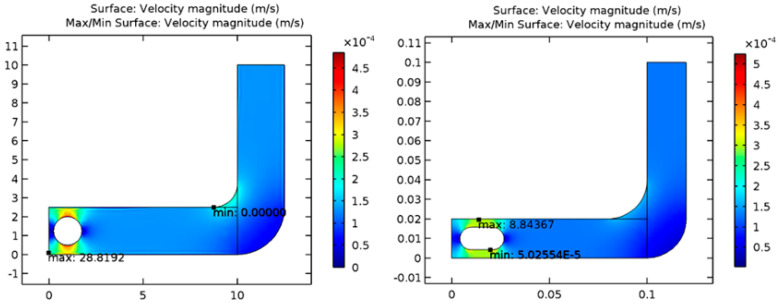
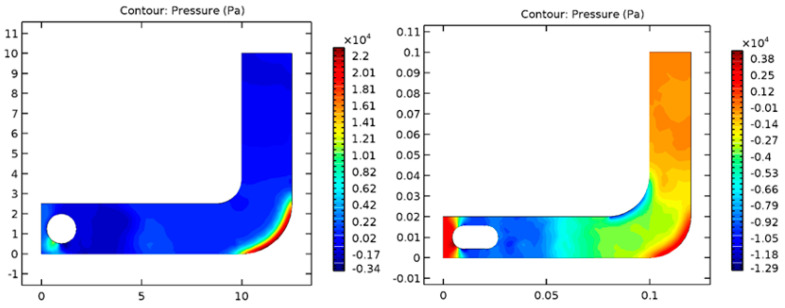
Through a wireless capsule endoscope (WCE) fitted with a miniature camera (about an inch), this study aims to examine the role of wireless capsule endoscopy (WCE) in the diagnosis, monitoring, and evaluation of GI (gastrointestinal) disorders. In a wearable belt recorder, a capsule travels through the digestive tract and takes pictures. It attempts to find tiny components that can be used to enhance the WCE. To accomplish this, we followed the steps below: Researching current capsule endoscopy through databases, designing and simulating the device using computers, implanting the system and finding tiny components compatible with capsule size, testing the system and eliminating noise and other problems, and analyzing the results. In the present study, it was shown that a spherical WCE shaper and a smaller WCE with a size of 13.5 diameter, a high resolution, and a high frame rate (8-32 fps) could help patients with pains due to the traditional capsules and provide more accurate pictures as well as prolong the battery life. In addition, the capsule can also be used to reconstruct 3D images. Simulation experiments showed that spherical endoscopic devices are more advantageous than commercial capsule-shaped endoscopic devices for wireless applications. We found that the sphere's velocity through the fluid was greater than the capsule's.

摘要

通过一个装有微型摄像头(约一英寸)的无线胶囊内窥镜(WCE),本研究旨在探讨无线胶囊内窥镜在胃肠道(GI)疾病的诊断、监测和评估中的作用。在一个可穿戴式腰带记录仪中,一个胶囊穿过消化道并拍照。它试图找到可用于改进WCE的微小部件。为实现这一目标,我们采取了以下步骤:通过数据库研究当前的胶囊内窥镜,使用计算机设计和模拟该设备,植入系统并找到与胶囊尺寸兼容的微小部件,测试系统并消除噪声和其他问题,以及分析结果。在本研究中,结果表明,一个球形WCE成型器以及一个直径为13.5、具有高分辨率和高帧率(8 - 32帧/秒)的较小WCE,可以帮助因传统胶囊而感到疼痛的患者,提供更准确的图像并延长电池寿命。此外,该胶囊还可用于重建3D图像。模拟实验表明,对于无线应用而言,球形内窥镜设备比商用胶囊形内窥镜设备更具优势。我们发现球体在流体中的速度大于胶囊的速度。
https://cdn.ncbi.nlm.nih.gov/pmc/blobs/4f35/10137352/c593db05b26a/diagnostics-13-01445-g017.jpg
https://cdn.ncbi.nlm.nih.gov/pmc/blobs/4f35/10137352/a63156ffb9e9/diagnostics-13-01445-g001.jpg
https://cdn.ncbi.nlm.nih.gov/pmc/blobs/4f35/10137352/2a3d75195d21/diagnostics-13-01445-g002.jpg
https://cdn.ncbi.nlm.nih.gov/pmc/blobs/4f35/10137352/b807d495db00/diagnostics-13-01445-g003.jpg
https://cdn.ncbi.nlm.nih.gov/pmc/blobs/4f35/10137352/62a067c2acdc/diagnostics-13-01445-g004.jpg
https://cdn.ncbi.nlm.nih.gov/pmc/blobs/4f35/10137352/2be03c21fef9/diagnostics-13-01445-g005.jpg
https://cdn.ncbi.nlm.nih.gov/pmc/blobs/4f35/10137352/58a141ac635d/diagnostics-13-01445-g006.jpg
https://cdn.ncbi.nlm.nih.gov/pmc/blobs/4f35/10137352/dc4e78e6b54e/diagnostics-13-01445-g007.jpg
https://cdn.ncbi.nlm.nih.gov/pmc/blobs/4f35/10137352/2d448e3f6a7d/diagnostics-13-01445-g008.jpg
https://cdn.ncbi.nlm.nih.gov/pmc/blobs/4f35/10137352/19431a7bf824/diagnostics-13-01445-g009.jpg
https://cdn.ncbi.nlm.nih.gov/pmc/blobs/4f35/10137352/5e4cba7fe484/diagnostics-13-01445-g010.jpg
https://cdn.ncbi.nlm.nih.gov/pmc/blobs/4f35/10137352/8d3d0320eb07/diagnostics-13-01445-g011.jpg
https://cdn.ncbi.nlm.nih.gov/pmc/blobs/4f35/10137352/5fc24a1df63f/diagnostics-13-01445-g012.jpg
https://cdn.ncbi.nlm.nih.gov/pmc/blobs/4f35/10137352/9d97216409da/diagnostics-13-01445-g013.jpg
https://cdn.ncbi.nlm.nih.gov/pmc/blobs/4f35/10137352/ebed64c01310/diagnostics-13-01445-g014.jpg
https://cdn.ncbi.nlm.nih.gov/pmc/blobs/4f35/10137352/90b3f2d804c1/diagnostics-13-01445-g015.jpg
https://cdn.ncbi.nlm.nih.gov/pmc/blobs/4f35/10137352/ba0828592936/diagnostics-13-01445-g016.jpg
https://cdn.ncbi.nlm.nih.gov/pmc/blobs/4f35/10137352/c593db05b26a/diagnostics-13-01445-g017.jpg
https://cdn.ncbi.nlm.nih.gov/pmc/blobs/4f35/10137352/a63156ffb9e9/diagnostics-13-01445-g001.jpg
https://cdn.ncbi.nlm.nih.gov/pmc/blobs/4f35/10137352/2a3d75195d21/diagnostics-13-01445-g002.jpg
https://cdn.ncbi.nlm.nih.gov/pmc/blobs/4f35/10137352/b807d495db00/diagnostics-13-01445-g003.jpg
https://cdn.ncbi.nlm.nih.gov/pmc/blobs/4f35/10137352/62a067c2acdc/diagnostics-13-01445-g004.jpg
https://cdn.ncbi.nlm.nih.gov/pmc/blobs/4f35/10137352/2be03c21fef9/diagnostics-13-01445-g005.jpg
https://cdn.ncbi.nlm.nih.gov/pmc/blobs/4f35/10137352/58a141ac635d/diagnostics-13-01445-g006.jpg
https://cdn.ncbi.nlm.nih.gov/pmc/blobs/4f35/10137352/dc4e78e6b54e/diagnostics-13-01445-g007.jpg
https://cdn.ncbi.nlm.nih.gov/pmc/blobs/4f35/10137352/2d448e3f6a7d/diagnostics-13-01445-g008.jpg
https://cdn.ncbi.nlm.nih.gov/pmc/blobs/4f35/10137352/19431a7bf824/diagnostics-13-01445-g009.jpg
https://cdn.ncbi.nlm.nih.gov/pmc/blobs/4f35/10137352/5e4cba7fe484/diagnostics-13-01445-g010.jpg
https://cdn.ncbi.nlm.nih.gov/pmc/blobs/4f35/10137352/8d3d0320eb07/diagnostics-13-01445-g011.jpg
https://cdn.ncbi.nlm.nih.gov/pmc/blobs/4f35/10137352/5fc24a1df63f/diagnostics-13-01445-g012.jpg
https://cdn.ncbi.nlm.nih.gov/pmc/blobs/4f35/10137352/9d97216409da/diagnostics-13-01445-g013.jpg
https://cdn.ncbi.nlm.nih.gov/pmc/blobs/4f35/10137352/ebed64c01310/diagnostics-13-01445-g014.jpg
https://cdn.ncbi.nlm.nih.gov/pmc/blobs/4f35/10137352/90b3f2d804c1/diagnostics-13-01445-g015.jpg
https://cdn.ncbi.nlm.nih.gov/pmc/blobs/4f35/10137352/ba0828592936/diagnostics-13-01445-g016.jpg
https://cdn.ncbi.nlm.nih.gov/pmc/blobs/4f35/10137352/c593db05b26a/diagnostics-13-01445-g017.jpg

相似文献

1
Intelligent Wireless Capsule Endoscopy for the Diagnosis of Gastrointestinal Diseases.用于诊断胃肠道疾病的智能无线胶囊内镜
Diagnostics (Basel). 2023 Apr 17;13(8):1445. doi: 10.3390/diagnostics13081445.
2
Colored Video Analysis in Wireless Capsule Endoscopy: A Survey of State-of-the-Art.无线胶囊内镜中的彩色视频分析:现状综述。
Curr Med Imaging. 2020;16(9):1074-1084. doi: 10.2174/1573405616666200124140915.
3
Capsule endoscopy: from current achievements to open challenges.胶囊内镜:从现有成果到待解决的挑战。
IEEE Rev Biomed Eng. 2011;4:59-72. doi: 10.1109/RBME.2011.2171182.
4
Computer vision-based solutions to overcome the limitations of wireless capsule endoscopy.基于计算机视觉的解决方案,以克服无线胶囊内窥镜的局限性。
J Med Eng Technol. 2023 Apr-May;47(4):242-261. doi: 10.1080/03091902.2024.2302025. Epub 2024 Jan 22.
5
3D reconstruction of wireless capsule endoscopy images.无线胶囊内窥镜图像的三维重建
Annu Int Conf IEEE Eng Med Biol Soc. 2010;2010:5149-52. doi: 10.1109/IEMBS.2010.5626182.
6
Characteristics of patients with a retained wireless capsule endoscope (WCE) necessitating laparotomy for removal of the capsule.需要剖腹手术取出胶囊的无线胶囊内镜(WCE)滞留患者的特征。
In Vivo. 2011 Jul-Aug;25(4):707-10.
7
A survey on contemporary computer-aided tumor, polyp, and ulcer detection methods in wireless capsule endoscopy imaging.无线胶囊内镜成像中当代计算机辅助肿瘤、息肉和溃疡检测方法的调查。
Comput Med Imaging Graph. 2020 Oct;85:101767. doi: 10.1016/j.compmedimag.2020.101767. Epub 2020 Aug 28.
8
Wireless Capsule Gastrointestinal Endoscopy: Direction-of-Arrival Estimation Based Localization Survey.无线胶囊式胃肠道内窥镜检查:基于到达方向估计的定位研究。
IEEE Rev Biomed Eng. 2017;10:2-11. doi: 10.1109/RBME.2017.2697950. Epub 2017 Apr 25.
9
Deep learning for registration of region of interest in consecutive wireless capsule endoscopy frames.基于深度学习的无线胶囊内窥镜连续帧中感兴趣区域的配准。
Comput Methods Programs Biomed. 2021 Sep;208:106189. doi: 10.1016/j.cmpb.2021.106189. Epub 2021 May 25.
10
Frontiers of robotic endoscopic capsules: a review.机器人内镜胶囊前沿:综述
J Microbio Robot. 2016;11(1):1-18. doi: 10.1007/s12213-016-0087-x. Epub 2016 May 2.

引用本文的文献

1
Optimization Scheme for Modulation of Data Transmission Module in Endoscopic Capsule.内镜胶囊数据传输模块调制优化方案
Sensors (Basel). 2025 Jul 31;25(15):4738. doi: 10.3390/s25154738.
2
Enhanced gastrointestinal disease classification using a convvit hybrid model on endoscopic images.使用卷积视觉变换器(ConvVit)混合模型对内镜图像进行增强的胃肠道疾病分类
Phys Eng Sci Med. 2025 Jul 21. doi: 10.1007/s13246-025-01600-7.
3
A recurrent multimodal sparse transformer framework for gastrointestinal disease classification.一种用于胃肠疾病分类的循环多模态稀疏变压器框架。

本文引用的文献

1
Magnetically Guided Capsule Endoscopy in Pediatric Patients with Abdominal Pain.小儿腹痛患者的磁控胶囊内镜检查
Gastroenterol Res Pract. 2019 May 8;2019:7172930. doi: 10.1155/2019/7172930. eCollection 2019.
2
Retained Capsule Endoscopy in Crohn's Disease Patient, Diagnosed on Upright Abdominal Film.在一名通过立位腹部平片确诊的克罗恩病患者中发现的滞留胶囊内镜。
Am Surg. 2018 Nov 1;84(11):e458-e460.
3
Computed Tomography Enterography: Quantitative Evaluation on Crohn's Disease Activity.计算机断层扫描小肠造影:对克罗恩病活动度的定量评估
Sci Rep. 2025 Jul 7;15(1):24206. doi: 10.1038/s41598-025-08897-0.
4
Capsule Endoscopy: Current Trends, Technological Advancements, and Future Perspectives in Gastrointestinal Diagnostics.胶囊内镜检查:胃肠道诊断的当前趋势、技术进展及未来展望
Bioengineering (Basel). 2025 Jun 4;12(6):613. doi: 10.3390/bioengineering12060613.
5
A Multifunctional Capsule-like Puncture Biopsy Robot for the Gastrointestinal System.一种用于胃肠系统的多功能胶囊式穿刺活检机器人。
Micromachines (Basel). 2025 May 18;16(5):589. doi: 10.3390/mi16050589.
6
A novel network-level fused deep learning architecture with shallow neural network classifier for gastrointestinal cancer classification from wireless capsule endoscopy images.一种具有浅层神经网络分类器的新型网络级融合深度学习架构,用于从无线胶囊内窥镜图像中进行胃肠道癌分类。
BMC Med Inform Decis Mak. 2025 Mar 31;25(1):150. doi: 10.1186/s12911-025-02966-0.
7
Review article: Current status and future directions of ingestible electronic devices in gastroenterology.综述文章:消化内科可摄入电子设备的现状和未来方向。
Aliment Pharmacol Ther. 2024 Feb;59(4):459-474. doi: 10.1111/apt.17844. Epub 2024 Jan 2.
8
Optimal Frequency and Wireless Power Budget for Miniature Receivers in Obese People.肥胖人群中微型接收器的最佳频率和无线功率预算。
Sensors (Basel). 2023 Sep 26;23(19):8084. doi: 10.3390/s23198084.
Gastroenterol Res Pract. 2018 Jul 22;2018:7351936. doi: 10.1155/2018/7351936. eCollection 2018.
4
Case of Bleeding Ileal Varices after a Colectomy Diagnosed by Capsule Endoscopy.经胶囊内镜诊断的结肠切除术后回肠静脉曲张出血病例
Korean J Gastroenterol. 2018 Jun 25;71(6):349-353. doi: 10.4166/kjg.2018.71.6.349.
5
The application value of capsule endoscopy in diagnosing small intestinal carcinoma.胶囊内镜在小肠癌诊断中的应用价值
J Cancer Res Ther. 2018 Jan;14(1):57-60. doi: 10.4103/jcrt.JCRT_584_17.
6
A non-rigid map fusion-based direct SLAM method for endoscopic capsule robots.一种基于非刚性地图融合的内窥镜胶囊机器人直接同步定位与地图构建方法。
Int J Intell Robot Appl. 2017;1(4):399-409. doi: 10.1007/s41315-017-0036-4. Epub 2017 Nov 24.
7
Effectiveness of Capsule Endoscopy Compared with Other Diagnostic Modalities in Patients with Small Bowel Crohn's Disease: A Meta-Analysis.胶囊内镜与其他诊断方式在小肠克罗恩病患者中的有效性比较:一项荟萃分析。
Gut Liver. 2017 Jan 15;11(1):62-72. doi: 10.5009/gnl16015.
8
European Code against Cancer, 4th Edition: Cancer screening.《欧洲抗癌法典》第4版:癌症筛查
Cancer Epidemiol. 2015 Dec;39 Suppl 1:S139-52. doi: 10.1016/j.canep.2015.10.021.
9
High sensitivity of quick view capsule endoscopy for detection of small bowel Crohn's disease.快速观察胶囊内镜对小肠克罗恩病的检测具有高灵敏度。
J Gastroenterol Hepatol. 2014 May;29(5):992-6. doi: 10.1111/jgh.12488.
10
Diagnosis and treatment of gastrointestinal disorders in patients with primary immunodeficiency.原发性免疫缺陷病患者的胃肠疾病的诊断与治疗。
Clin Gastroenterol Hepatol. 2013 Sep;11(9):1050-63. doi: 10.1016/j.cgh.2013.02.024. Epub 2013 Mar 13.