Department of Biological Sciences, University of Pittsburgh, Pittsburgh, Pennsylvania, United States of America.
Department of Microbiology and Molecular Genetics, University of Pittsburgh School of Medicine, Pittsburgh, Pennsylvania, United States of America.
PLoS Genet. 2023 May 17;19(5):e1010745. doi: 10.1371/journal.pgen.1010745. eCollection 2023 May.
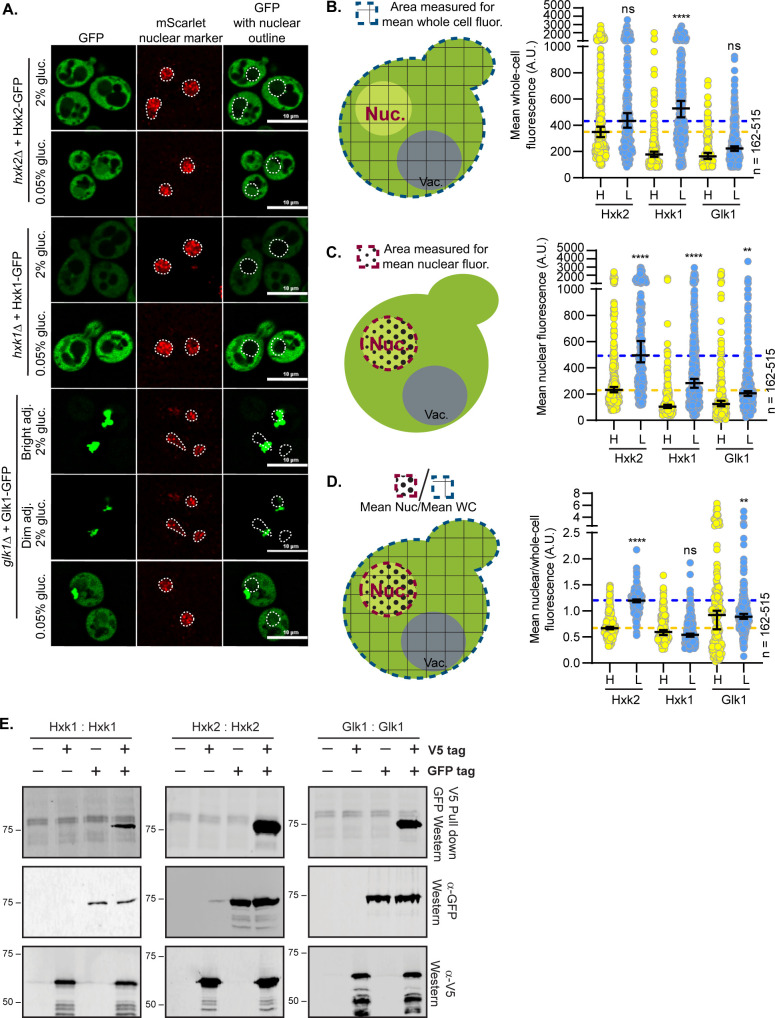
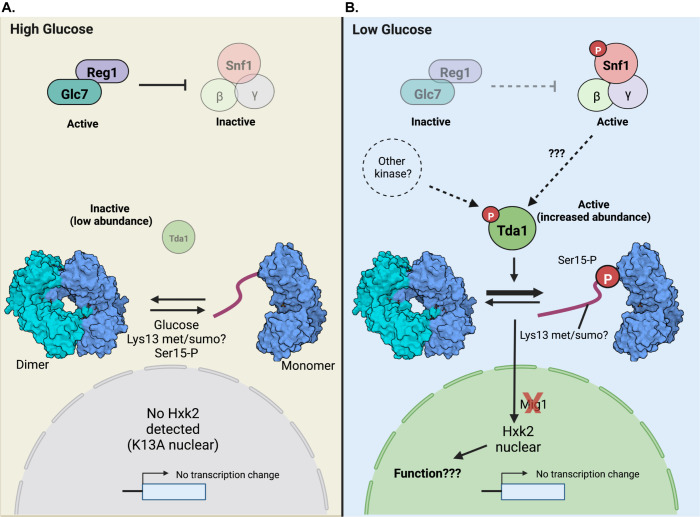
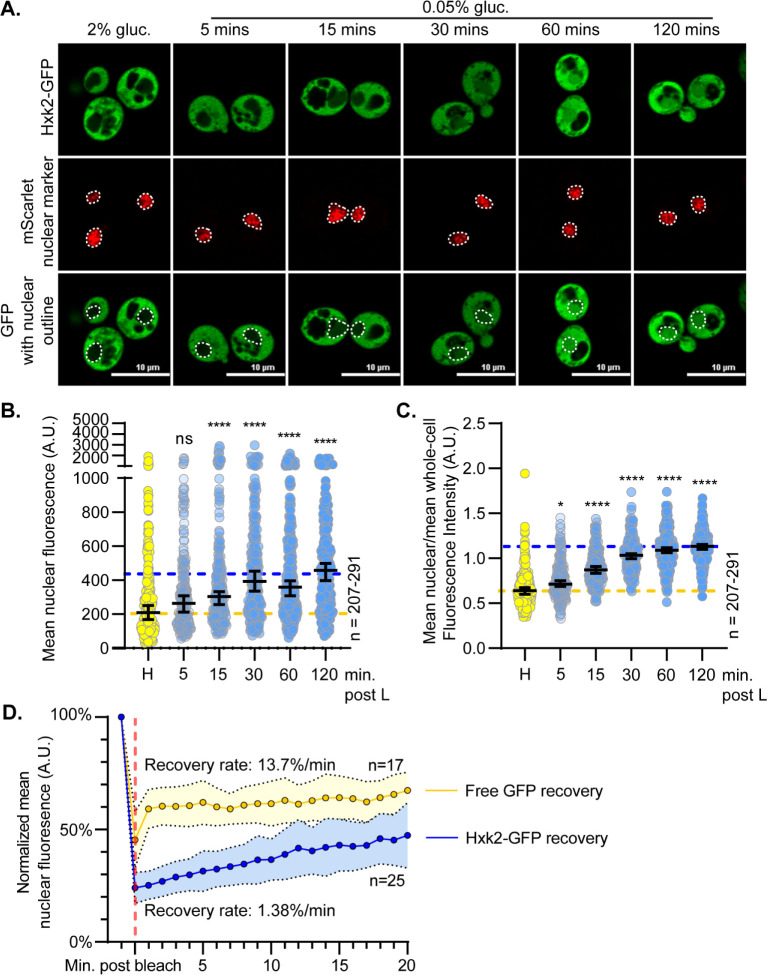
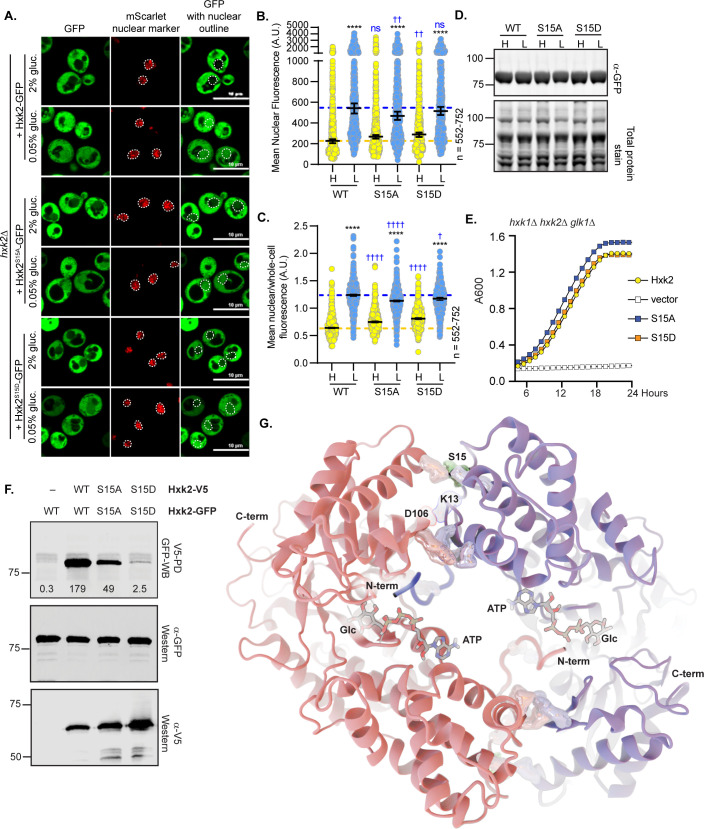
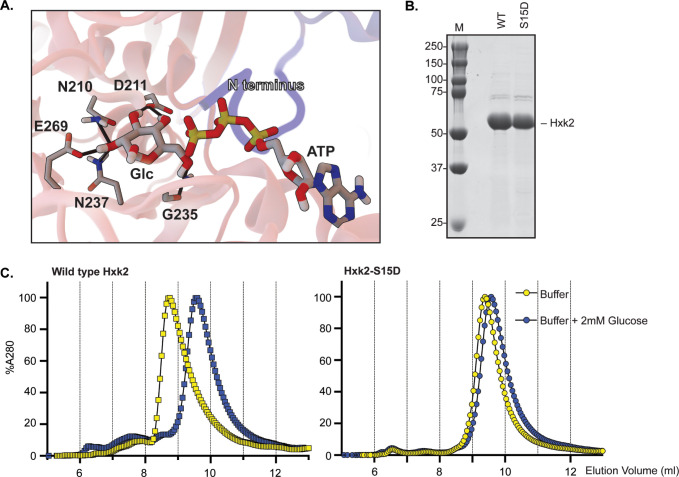
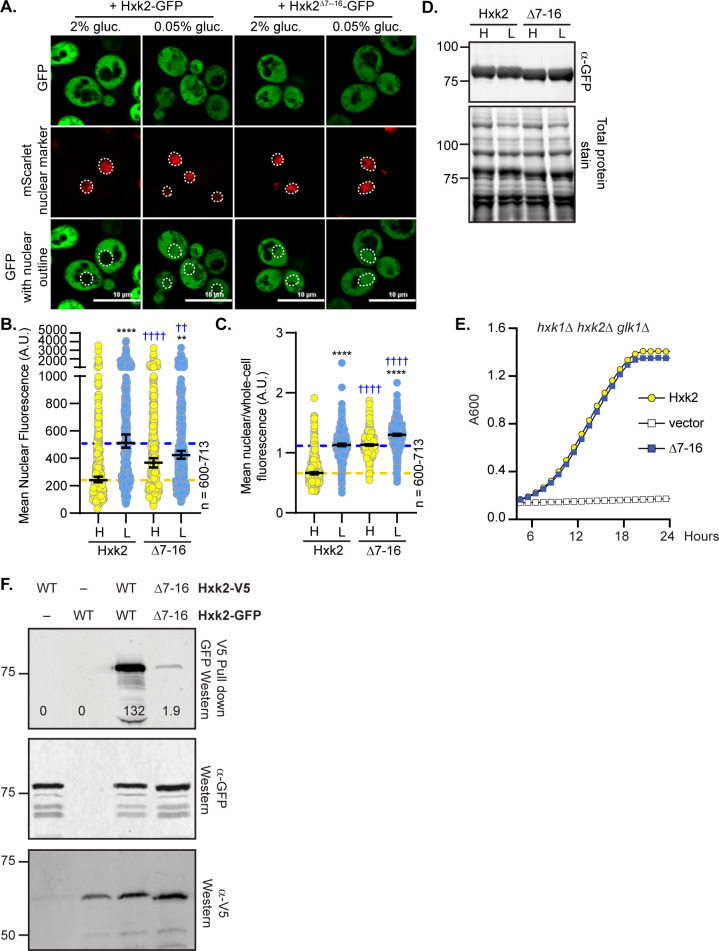
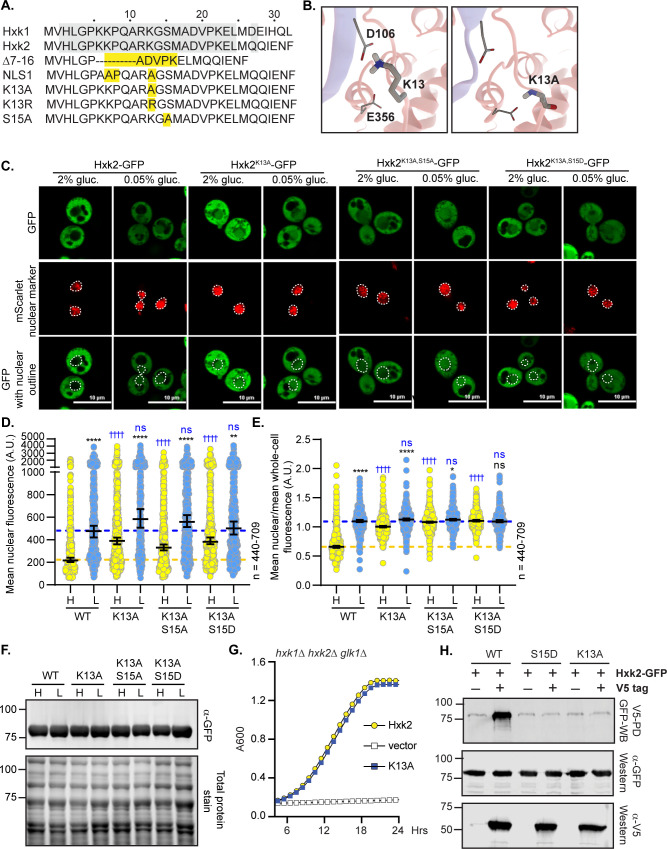
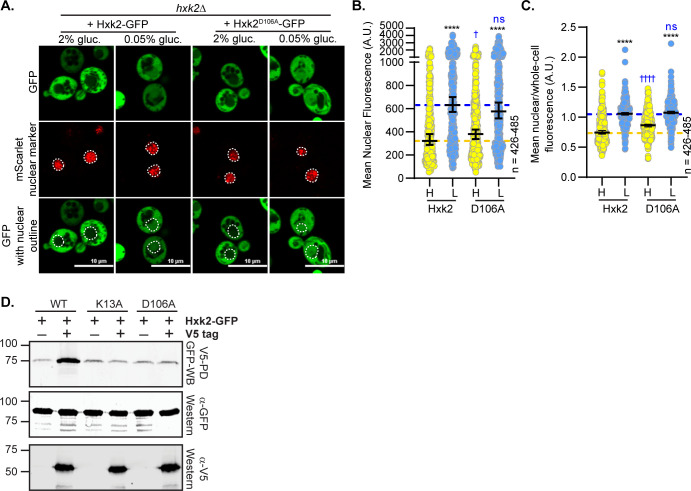
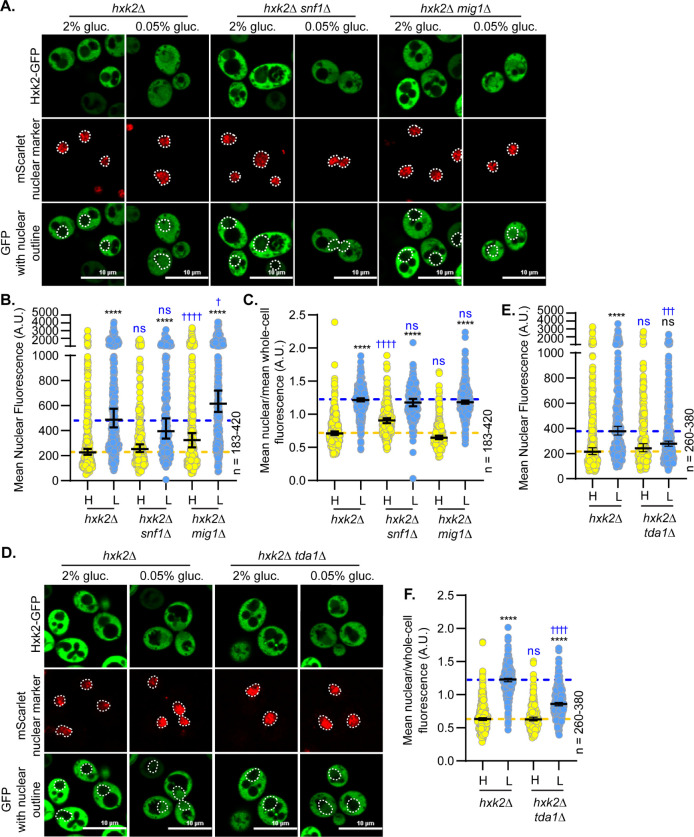
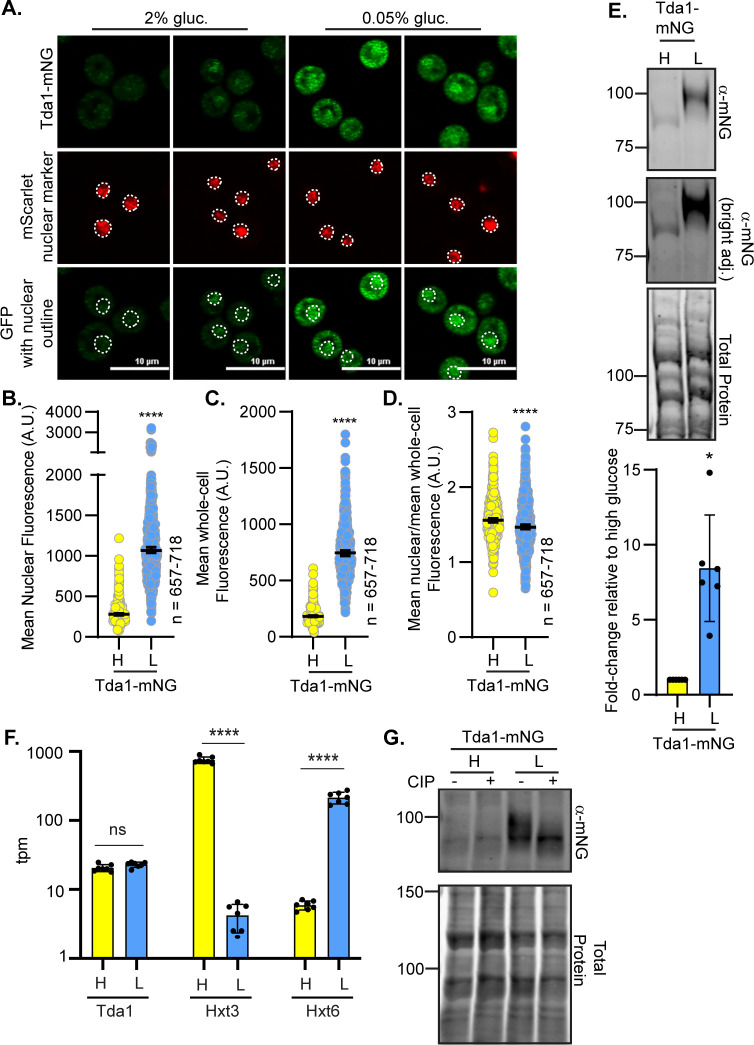
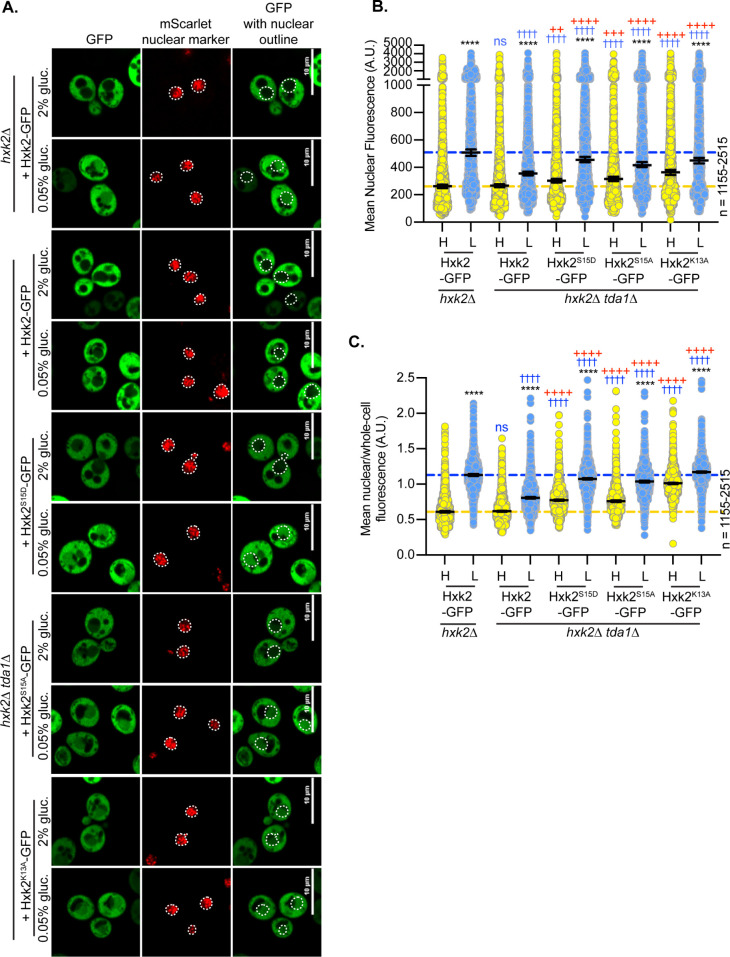
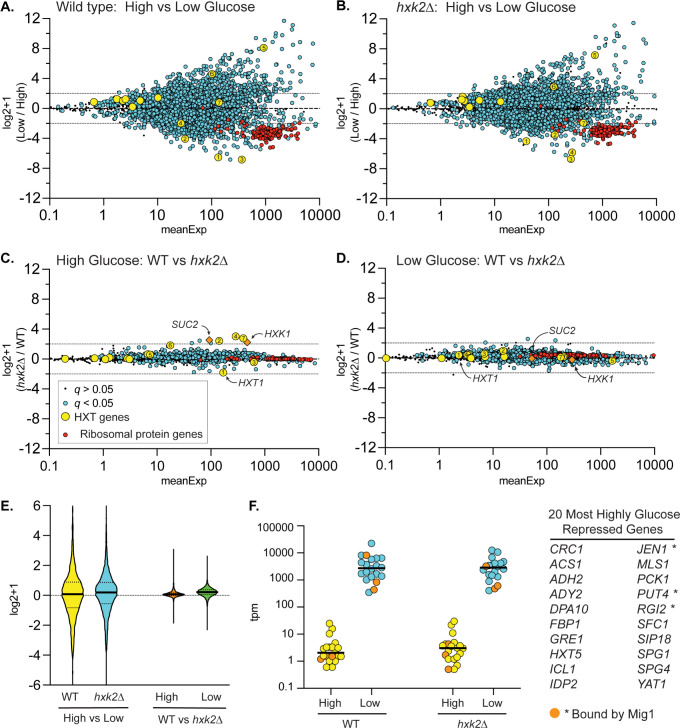
Glucose is the preferred carbon source for most eukaryotes, and the first step in its metabolism is phosphorylation to glucose-6-phosphate. This reaction is catalyzed by hexokinases or glucokinases. The yeast Saccharomyces cerevisiae encodes three such enzymes, Hxk1, Hxk2, and Glk1. In yeast and mammals, some isoforms of this enzyme are found in the nucleus, suggesting a possible moonlighting function beyond glucose phosphorylation. In contrast to mammalian hexokinases, yeast Hxk2 has been proposed to shuttle into the nucleus in glucose-replete conditions, where it reportedly moonlights as part of a glucose-repressive transcriptional complex. To achieve its role in glucose repression, Hxk2 reportedly binds the Mig1 transcriptional repressor, is dephosphorylated at serine 15 and requires an N-terminal nuclear localization sequence (NLS). We used high-resolution, quantitative, fluorescent microscopy of live cells to determine the conditions, residues, and regulatory proteins required for Hxk2 nuclear localization. Countering previous yeast studies, we find that Hxk2 is largely excluded from the nucleus under glucose-replete conditions but is retained in the nucleus under glucose-limiting conditions. We find that the Hxk2 N-terminus does not contain an NLS but instead is necessary for nuclear exclusion and regulating multimerization. Amino acid substitutions of the phosphorylated residue, serine 15, disrupt Hxk2 dimerization but have no effect on its glucose-regulated nuclear localization. Alanine substation at nearby lysine 13 affects dimerization and maintenance of nuclear exclusion in glucose-replete conditions. Modeling and simulation provide insight into the molecular mechanisms of this regulation. In contrast to earlier studies, we find that the transcriptional repressor Mig1 and the protein kinase Snf1 have little effect on Hxk2 localization. Instead, the protein kinase Tda1 regulates Hxk2 localization. RNAseq analyses of the yeast transcriptome dispels the idea that Hxk2 moonlights as a transcriptional regulator of glucose repression, demonstrating that Hxk2 has a negligible role in transcriptional regulation in both glucose-replete and limiting conditions. Our studies define a new model of cis- and trans-acting regulators of Hxk2 dimerization and nuclear localization. Based on our data, the nuclear translocation of Hxk2 in yeast occurs in glucose starvation conditions, which aligns well with the nuclear regulation of mammalian orthologs. Our results lay the foundation for future studies of Hxk2 nuclear activity.
葡萄糖是大多数真核生物首选的碳源,其代谢的第一步是磷酸化为葡萄糖-6-磷酸。该反应由己糖激酶或葡萄糖激酶催化。酵母酿酒酵母编码三种这样的酶,Hxk1、Hxk2 和 Glk1。在酵母和哺乳动物中,这种酶的一些同工酶存在于核内,表明其除了葡萄糖磷酸化之外可能还有其他兼职功能。与哺乳动物己糖激酶不同,据报道,酵母 Hxk2 在葡萄糖充足的条件下会穿梭到核内,据报道,它在葡萄糖抑制转录复合物中兼职。为了实现其在葡萄糖抑制中的作用,据报道 Hxk2 结合 Mig1 转录阻遏物,丝氨酸 15 被去磷酸化,并且需要 N 端核定位序列(NLS)。我们使用活细胞的高分辨率、定量、荧光显微镜来确定 Hxk2 核定位所需的条件、残基和调节蛋白。与之前的酵母研究相反,我们发现 Hxk2 在葡萄糖充足的条件下大部分被排除在核外,但在葡萄糖限制条件下保留在核内。我们发现 Hxk2 的 N 端不含 NLS,但对于核排斥和调节多聚化是必需的。磷酸化残基丝氨酸 15 的氨基酸取代会破坏 Hxk2 二聚体,但对其葡萄糖调节的核定位没有影响。葡萄糖充足条件下附近赖氨酸 13 的取代会影响二聚体形成并维持核排斥。建模和模拟提供了对这种调节的分子机制的深入了解。与早期的研究相反,我们发现转录阻遏物 Mig1 和蛋白激酶 Snf1 对 Hxk2 定位的影响很小。相反,蛋白激酶 Tda1 调节 Hxk2 的定位。酵母转录组的 RNAseq 分析消除了 Hxk2 作为葡萄糖抑制转录调节剂兼职的想法,表明 Hxk2 在葡萄糖充足和限制条件下对转录调节的作用可以忽略不计。我们的研究定义了 Hxk2 二聚化和核定位的顺式和反式作用调节因子的新模型。根据我们的数据,酵母中 Hxk2 的核易位发生在葡萄糖饥饿条件下,这与哺乳动物同源物的核调节很好地一致。我们的结果为未来研究 Hxk2 核活性奠定了基础。