Hickman Richard A, Miller Alexandra M, Arcila Maria E
Human Oncology and Pathogenesis Program, Sloan Kettering Institute, New York, NY, United States; Murtha Cancer Center Research Program, Uniformed Services University of the Health Sciences, Bethesda, MD, United States; Henry M. Jackson Foundation for the Advancement of Military Medicine, Inc., Bethesda, MD, United States.
Human Oncology and Pathogenesis Program, Sloan Kettering Institute, New York, NY, United States; Department of Neurology, Memorial Sloan Kettering Cancer Center, New York, NY, United States.
Transl Oncol. 2023 Jul;33:101688. doi: 10.1016/j.tranon.2023.101688. Epub 2023 May 15.
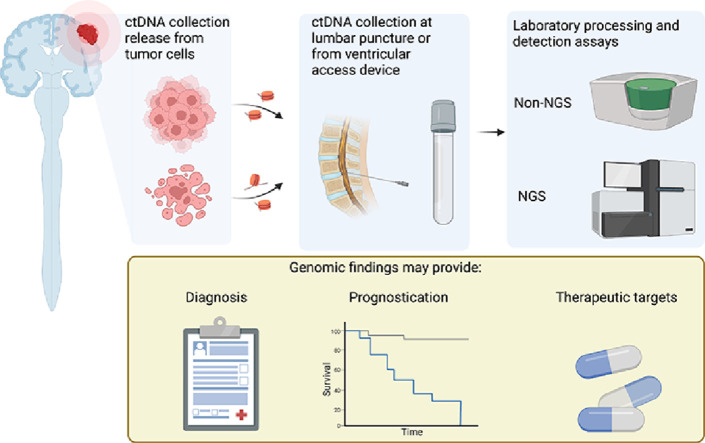
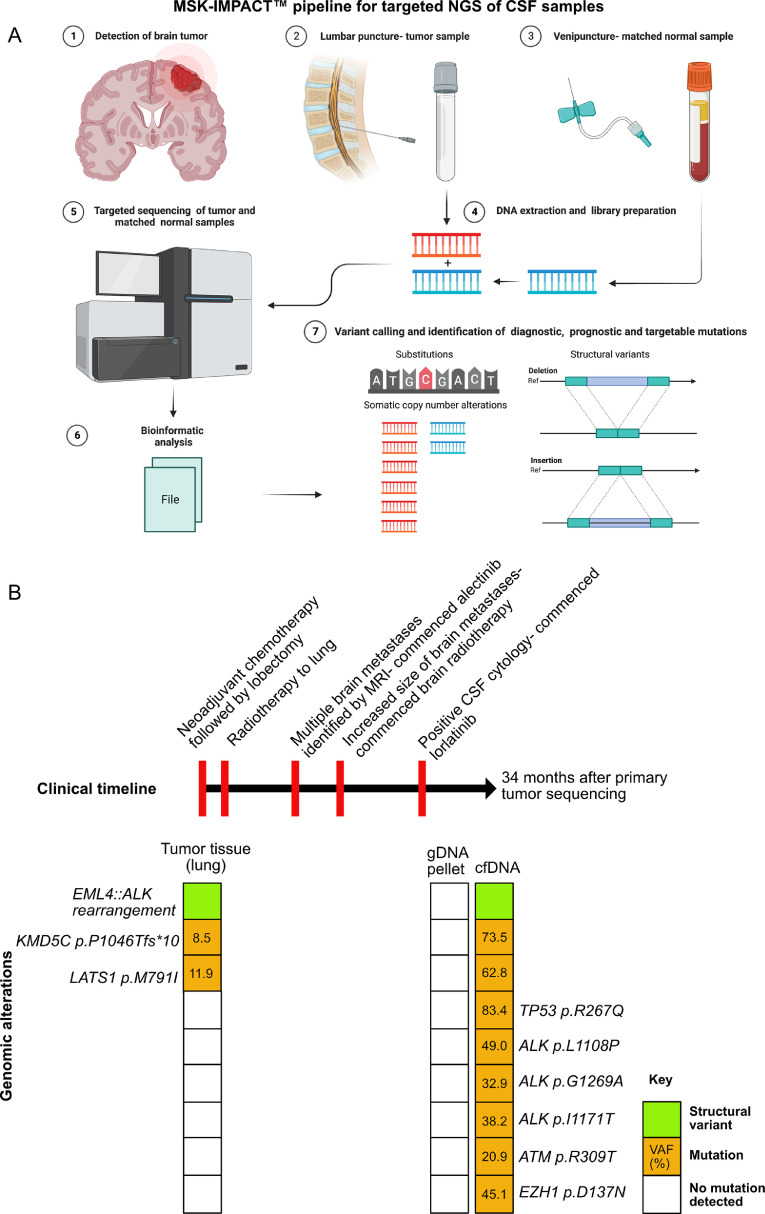
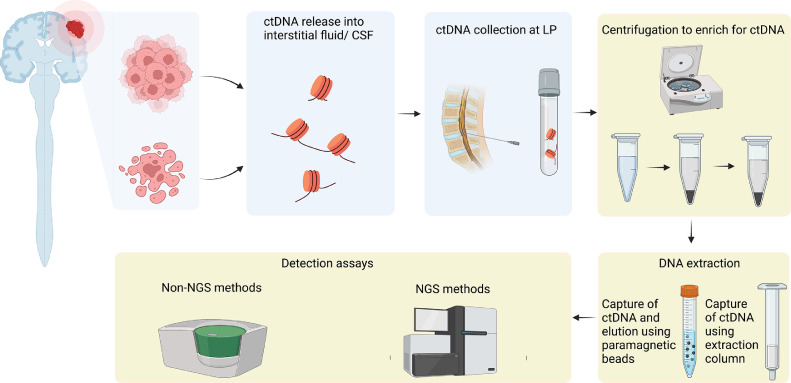
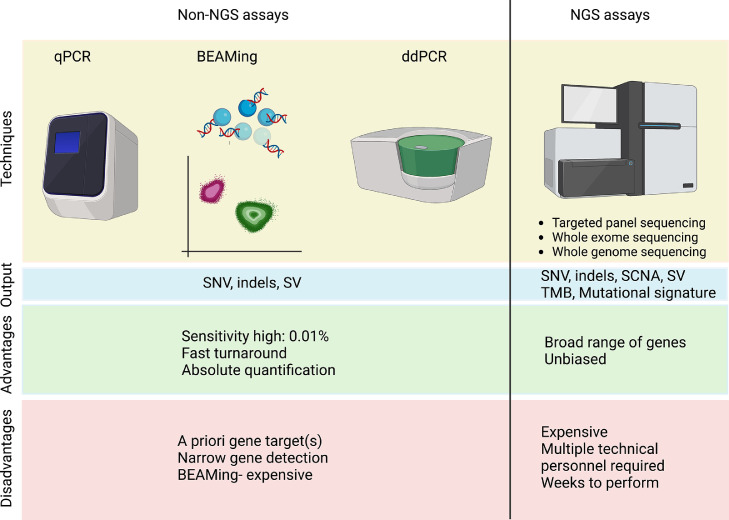
Malignancies involving the central nervous system present unique challenges for diagnosis and monitoring due to the difficulties and risks of direct biopsies and the low specificity and/or sensitivity of other techniques for assessment. In recent years, liquid biopsy of the cerebrospinal fluid (CSF) has emerged as a convenient alternative that combines minimal invasiveness with the ability to detect disease-defining or therapeutically actionable genetic alterations from circulating tumor DNA (ctDNA). Since CSF can be obtained by lumbar puncture, or an established ventricular access device at multiple time points, ctDNA analysis enables initial molecular characterization and longitudinal monitoring throughout a patient's disease course, promoting optimization of treatment regimens. This review outlines some of the key aspects of ctDNA from CSF as a highly suitable approach for clinical assessment, the benefits and drawbacks, testing methods, as well as potential future advancements in this field. We anticipate wider adoption of this practice as technologies and pipelines improve and envisage significant improvements for cancer care.
由于直接活检存在困难和风险,以及其他评估技术的特异性和/或敏感性较低,涉及中枢神经系统的恶性肿瘤在诊断和监测方面面临独特挑战。近年来,脑脊液(CSF)液体活检已成为一种便捷的替代方法,它将微创性与从循环肿瘤DNA(ctDNA)中检测疾病定义或治疗可操作的基因改变的能力相结合。由于可以通过腰椎穿刺或在多个时间点使用已建立的脑室通路装置获取脑脊液,ctDNA分析能够在患者疾病过程中进行初始分子特征分析和纵向监测,促进治疗方案的优化。本综述概述了脑脊液ctDNA作为一种非常适合临床评估的方法的一些关键方面、优缺点、检测方法以及该领域未来可能的进展。我们预计随着技术和流程的改进,这种做法将得到更广泛的应用,并设想癌症护理将有显著改善。