Department of Obstetrics and Gynecology, Nanfang Hospital, Southern Medical University, Guangzhou, Guangdong, China.
Department of Obstetrics and Gynecology, The Third Affiliated Hospital of Guangzhou Medical University, Guangzhou, Guangdong, China.
Microbiol Spectr. 2023 Jun 15;11(3):e0007623. doi: 10.1128/spectrum.00076-23. Epub 2023 May 18.
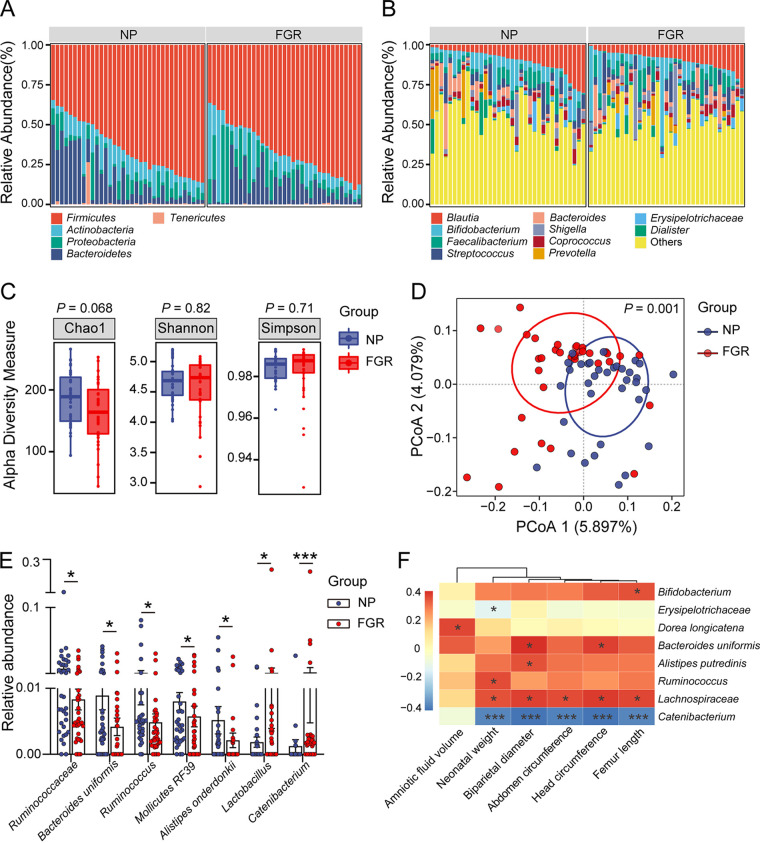
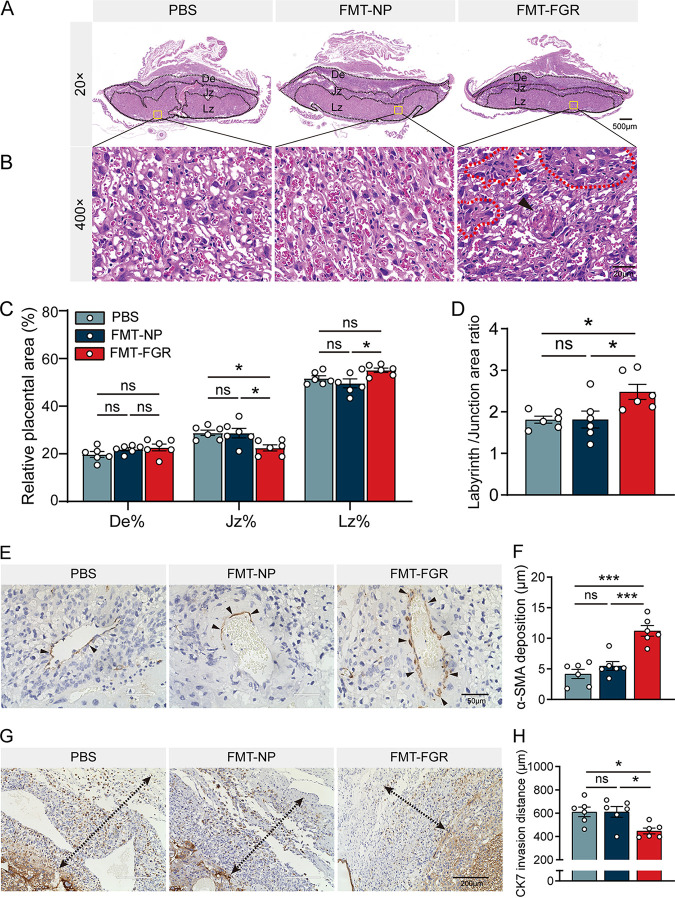
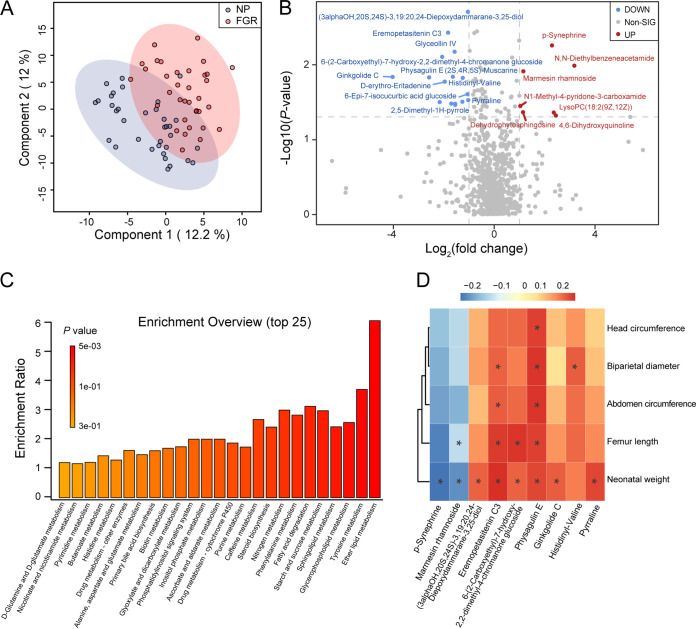
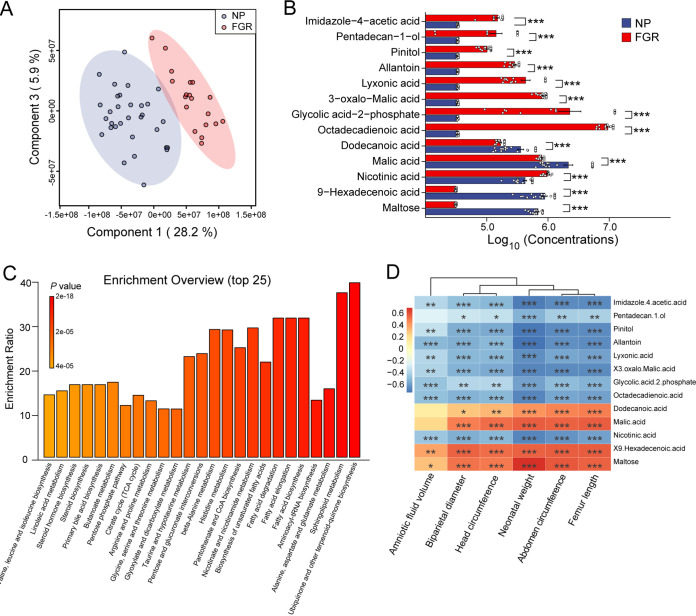
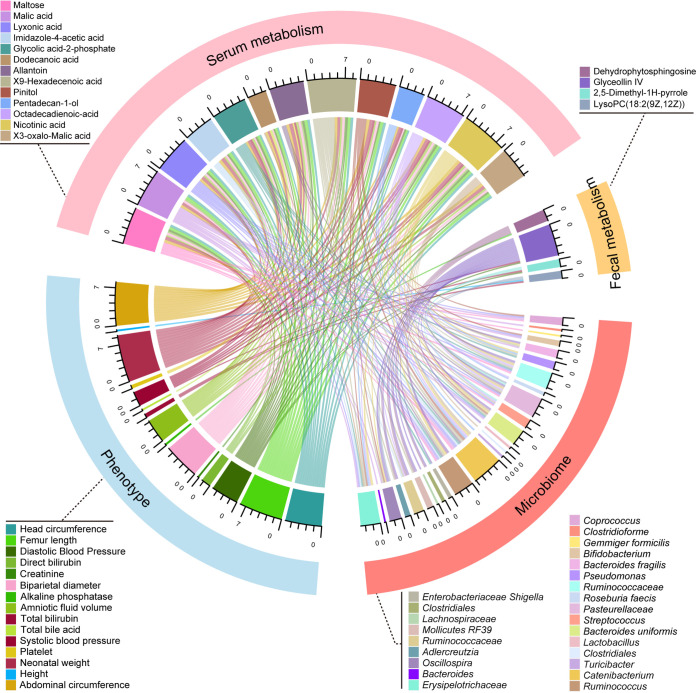
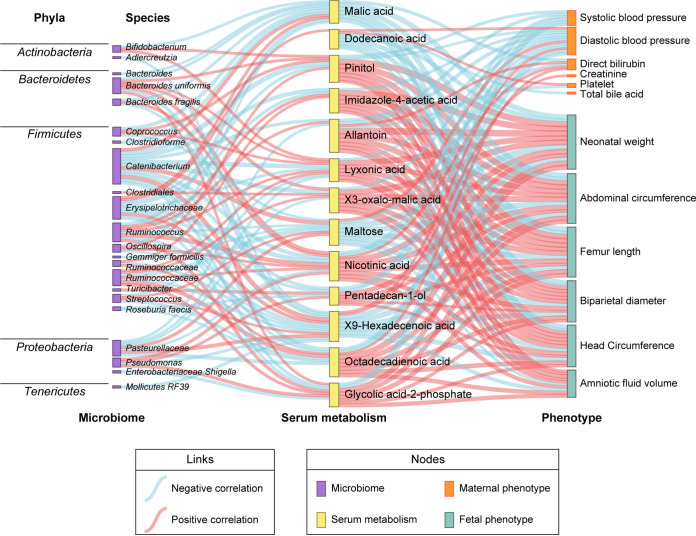
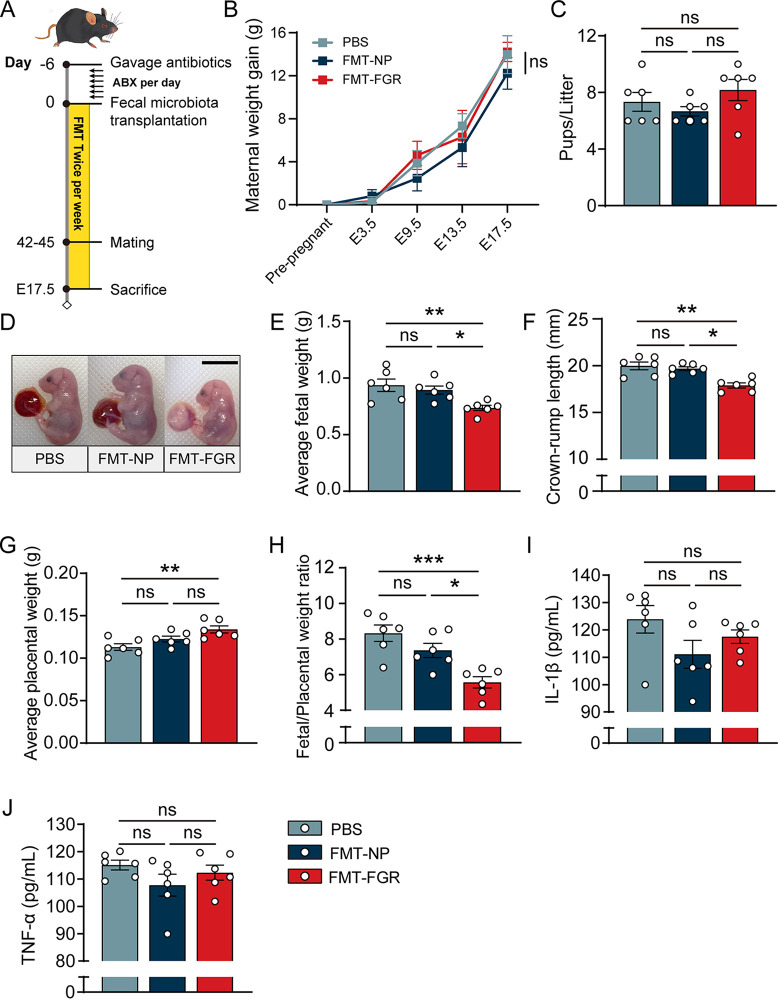
Fetuses diagnosed with fetal growth restriction (FGR) are at an elevated risk of stillbirth and adulthood morbidity. Gut dysbiosis has emerged as one of the impacts of placental insufficiency, which is the main cause of FGR. This study aimed to characterize the relationships among the intestinal microbiome, metabolites, and FGR. Characterization was conducted on the gut microbiome, fecal metabolome, and human phenotypes in a cohort of 35 patients with FGR and 35 normal pregnancies (NP). The serum metabolome was analyzed in 19 patients with FGR and 31 normal pregnant women. Multidimensional data was integrated to reveal the links between data sets. A fecal microbiota transplantation mouse model was used to determine the effects of the intestinal microbiome on fetal growth and placental phenotypes. The diversity and composition of the gut microbiota were altered in patients with FGR. A group of microbial species altered in FGR closely correlated with fetal measurements and maternal clinical variables. Fecal and serum metabolism profiles were distinct in FGR patients compared to those in the NP group. Altered metabolites were identified and associated with clinical phenotypes. Integrated multi-omics analysis revealed the interactions among gut microbiota, metabolites, and clinical measurements. Microbiota from FGR gravida transplanted to mice progestationally induced FGR and placental dysfunction, including impaired spiral artery remodeling and insufficient trophoblast cell invasion. Taken together, the integration of microbiome and metabolite profiles from the human cohort indicates that patients with FGR endure gut dysbiosis and metabolic disorders, which contribute to disease pathogenesis. Downstream of the primary cause of fetal growth restriction are placental insufficiency and fetal malnutrition. Gut microbiota and metabolites appear to play an important role in the progression of gestation, while dysbiosis induces maternal and fetal complications. Our study elaborates the significant differences in microbiota profiles and metabolome characteristics between women with FGR and normal pregnancies. This is the first attempt so far that reveals the mechanistic links in multi-omics in FGR, providing a novel insight into host-microbe interaction in placenta-derived diseases.
胎儿生长受限(FGR)患者的死产和成年后发病风险增加。肠道菌群失调已成为胎盘功能不全的影响之一,而胎盘功能不全是 FGR 的主要原因。本研究旨在描述肠道微生物组、代谢物与 FGR 之间的关系。研究对 35 例 FGR 患者和 35 例正常妊娠(NP)患者的肠道微生物组、粪便代谢组和人类表型进行了特征描述。对 19 例 FGR 患者和 31 例正常孕妇的血清代谢组进行了分析。整合多维数据以揭示数据集之间的联系。使用粪便微生物群移植小鼠模型来确定肠道微生物群对胎儿生长和胎盘表型的影响。FGR 患者的肠道微生物多样性和组成发生改变。FGR 中改变的微生物物种与胎儿测量值和母体临床变量密切相关。与 NP 组相比,FGR 患者的粪便和血清代谢谱明显不同。鉴定出改变的代谢物并与临床表型相关。综合多组学分析揭示了肠道微生物群、代谢物和临床测量值之间的相互作用。移植 FGR 孕妇的粪便微生物群会在妊娠前诱导 FGR 和胎盘功能障碍,包括螺旋动脉重塑受损和滋养细胞侵袭不足。总之,从人类队列中整合微生物组和代谢组谱表明,FGR 患者经历肠道菌群失调和代谢紊乱,这有助于疾病的发病机制。FGR 的主要原因是胎盘功能不全和胎儿营养不良。肠道微生物群和代谢物似乎在妊娠进展中起着重要作用,而菌群失调会引起母婴并发症。我们的研究详细说明了 FGR 妇女与正常妊娠妇女之间的微生物组谱和代谢组特征的显著差异。这是迄今为止首次揭示 FGR 中多组学的机制联系,为胎盘源性疾病中的宿主-微生物相互作用提供了新的见解。