Gupta Meenakshi, Singh Deepti, Rastogi Shruti, Siddique Hifzur R, Al-Dayan Noura, Ahmad Ajaz, Sikander Mohammad, Sarwat Maryam
Amity Institute of Pharmacy, Amity University, Noida, Uttar Pradesh, India.
Molecular Cancer Genetics & Translational Research Lab, Section of Genetics, Department of Zoology, Aligarh Muslim University, Aligarh, India.
Front Pharmacol. 2023 May 2;14:1155163. doi: 10.3389/fphar.2023.1155163. eCollection 2023.
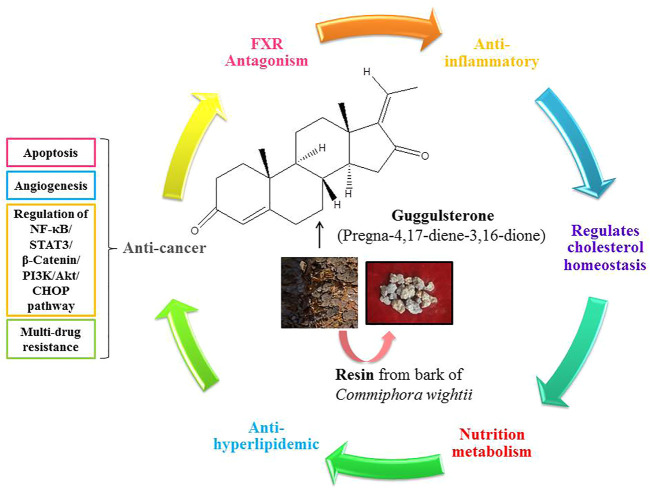
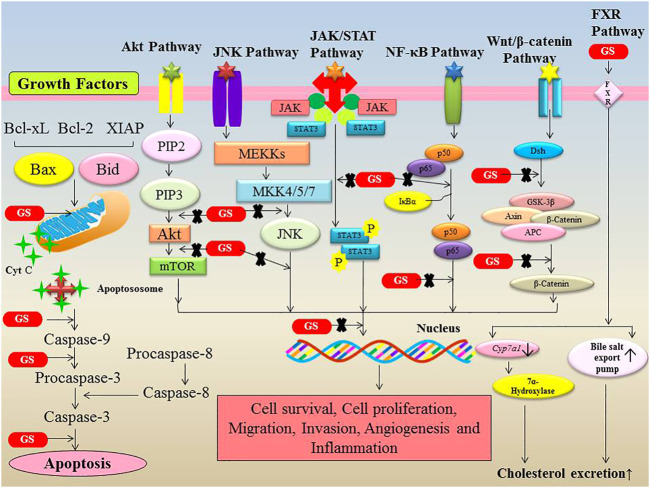
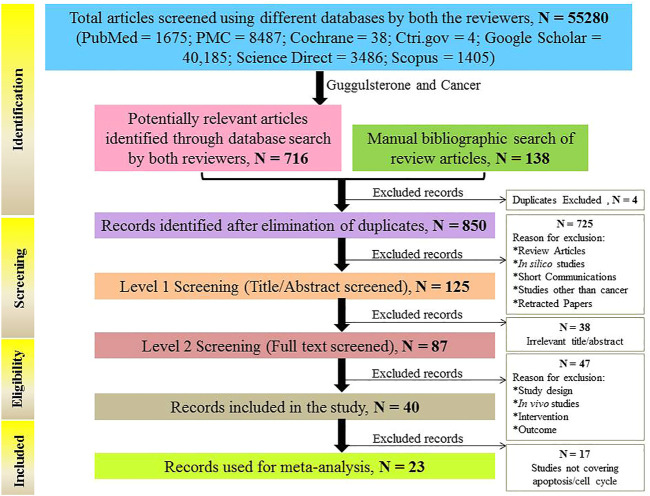
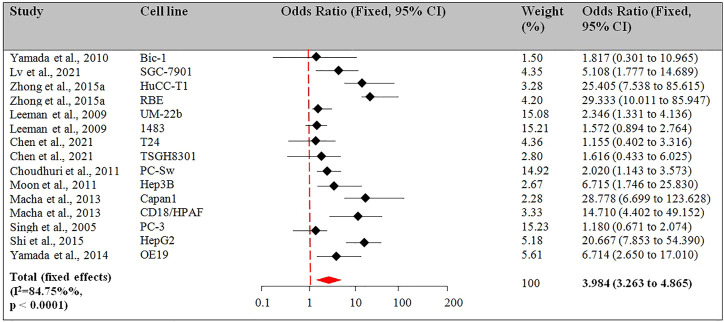
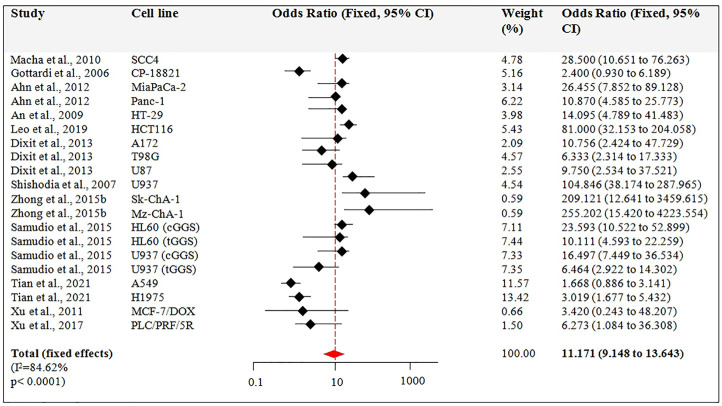
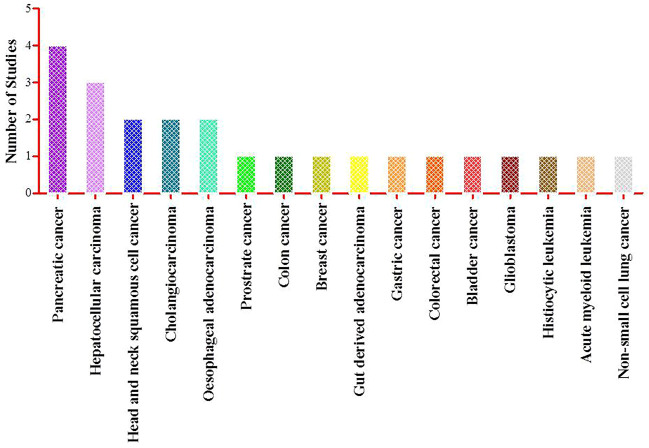
Guggulsterone (pregna-4,17-diene-3,16-dione; CHO) is an effective phytosterol isolated from the gum resin of the tree (Family Burseraceae) and is responsible for many of the properties of guggul. This plant is widely used as traditional medicine in Ayurveda and Unani system of medicine. It exhibits several pharmacological activities, such as anti-inflammatory, analgesic, antibacterial, anti-septic and anticancer. In this article, the activities of Guggulsterone against cancerous cells were determined and summarized. Using 7 databases (PubMed, PMC, Google Scholar, Science Direct, Scopus, Cochrane and Ctri.gov), the literature search was conducted since conception until June 2021. Extensive literature search yielded 55,280 studies from all the databases. A total of 40 articles were included in the systematic review and of them, 23 articles were included in the meta-analysis.The cancerous cell lines used in the studies were for pancreatic cancer, hepatocellular carcinoma, head and neck squamous cell carcinoma, cholangiocarcinoma, oesophageal adenocarcinoma, prostrate cancer, colon cancer, breast cancer, gut derived adenocarcinoma, gastric cancer, colorectal cancer, bladder cancer, glioblastoma, histiocytic leukemia, acute myeloid leukemia and non-small cell lung cancer. The reliability of the selected studies was assessed using ToxRTool. Based on this review, guggulsterone significantly affected pancreatic cancer (MiaPaCa-2, Panc-1, PC-Sw, CD18/HPAF, Capan1, PC-3), hepatocellular carcinoma (Hep3B, HepG2, PLC/PRF/5R), head and neck squamous cell carcinoma (SCC4, UM-22b, 1483), cholangiocarcinoma (HuCC-T1, RBE, Sk-ChA-1, Mz-ChA-1) and oesophageal adenocarcinoma (CP-18821, OE19), prostrate cancer (PC-3), colon cancer (HT-29), breast cancer (MCF7/DOX), gut derived adenocarcinoma (Bic-1), gastric cancer (SGC-7901), colorectal cancer (HCT116), bladder cancer (T24, TSGH8301), glioblastoma (A172, U87MG, T98G), histiocytic leukemia (U937), acute myeloid leukemia (HL60, U937) and non-small cell lung cancer (A549, H1975) by inducing apoptotic pathways, inhibiting cell proliferation, and regulating the expression of genes involved in apoptosis. Guggulsterone is known to have therapeutic and preventive effects on various categories of cancers. It can inhibit the progression of tumors and can even reduce their size by inducing apoptosis, exerting anti-angiogenic effects, and modulating various signaling cascades. studies reveal that Guggulsterone inhibits and suppresses the proliferation of an extensive range of cancer cells by decreasing intrinsic mitochondrial apoptosis, regulating NF-kB/STAT3/β-Catenin/PI3K/Akt/CHOP pathway, modulating the expression of associated genes/proteins, and inhibiting angiogenesis. Furthermore, Guggulsterone reduces the production of inflammatory markers, such as CDX2 and COX-2. The other mechanism of the Guggulsterone activity is the reversal of P-glycoprotein-mediated multidrug resistance. Twenty three studies were selected for meta-analysis following the PRISMA statements. Fixed effect model was used for reporting the odds ratio. The primary endpoint was percentage apoptosis. 11 of 23 studies reported the apoptotic effect at t = 24 h and pooled odds ratio was 3.984 (CI 3.263 to 4.865, < 0.001). 12 studies used Guggulsterone for t > 24 h and the odds ratio was 11.171 (CI 9.148 to 13.643, 95% CI, < 0.001). The sub-group analysis based on cancer type, Guggulsterone dose, and treatment effects. Significant alterations in the level of apoptotic markers were reported by Guggulsterone treatment. This study suggested that Guggulsterone has apoptotic effects against various cancer types. Further investigation of its pharmacological activity and mechanism of action should be conducted. experiments and clinical trials are required to confirm the anticancer activity.
古古甾酮(孕甾-4,17-二烯-3,16-二酮;CHO)是从没药树(橄榄科)的树胶脂中分离出的一种有效的植物甾醇,它具有没药的多种特性。这种植物在阿育吠陀医学和尤那尼医学体系中被广泛用作传统药物。它具有多种药理活性,如抗炎、镇痛、抗菌、防腐和抗癌。在本文中,对古古甾酮对癌细胞的活性进行了测定和总结。使用7个数据库(PubMed、PMC、谷歌学术、科学Direct、Scopus、Cochrane和Ctri.gov),从数据库建立到2021年6月进行了文献检索。广泛的文献检索从所有数据库中获得了55280项研究。共有40篇文章被纳入系统评价,其中23篇文章被纳入荟萃分析。研究中使用的癌细胞系包括胰腺癌、肝细胞癌、头颈部鳞状细胞癌、胆管癌、食管腺癌、前列腺癌、结肠癌、乳腺癌、肠道来源腺癌、胃癌、结直肠癌、膀胱癌、胶质母细胞瘤、组织细胞白血病、急性髓性白血病和非小细胞肺癌。使用ToxRTool评估所选研究的可靠性。基于本综述,古古甾酮通过诱导凋亡途径、抑制细胞增殖以及调节参与凋亡的基因表达,对胰腺癌(MiaPaCa-2、Panc-1、PC-Sw、CD18/HPAF、Capan1、PC-3)、肝细胞癌(Hep3B、HepG2、PLC/PRF/5R)、头颈部鳞状细胞癌(SCC4、UM-22b、1483)、胆管癌(HuCC-T1、RBE、Sk-ChA-1、Mz-ChA-1)和食管腺癌(CP-18821、OE19)、前列腺癌(PC-3)、结肠癌(HT-29)、乳腺癌(MCF7/DOX)、肠道来源腺癌(Bic-1)、胃癌(SGC-7901)、结直肠癌(HCT116)、膀胱癌(T24、TSGH8301)、胶质母细胞瘤(A172、U87MG、T98G)、组织细胞白血病(U937)、急性髓性白血病(HL60、U937)和非小细胞肺癌(A549、H1975)有显著影响。已知古古甾酮对各类癌症具有治疗和预防作用。它可以抑制肿瘤的进展,甚至可以通过诱导凋亡、发挥抗血管生成作用以及调节各种信号级联反应来缩小肿瘤大小。研究表明,古古甾酮通过降低内在线粒体凋亡、调节NF-κB/STAT3/β-连环蛋白/PI3K/Akt/CHOP途径、调节相关基因/蛋白的表达以及抑制血管生成,抑制和抑制广泛的癌细胞增殖。此外,古古甾酮可降低炎症标志物如CDX2和COX-2的产生。古古甾酮活性的另一个机制是逆转P-糖蛋白介导的多药耐药性。按照PRISMA声明选择了23项研究进行荟萃分析。使用固定效应模型报告比值比。主要终点是凋亡百分比。2