Toxicology Centre, University of Saskatchewan, Saskatoon, SK, Canada.
Toxicology Centre, University of Saskatchewan, Saskatoon, SK, Canada.
Chemosphere. 2023 Aug;333:138682. doi: 10.1016/j.chemosphere.2023.138682. Epub 2023 May 16.
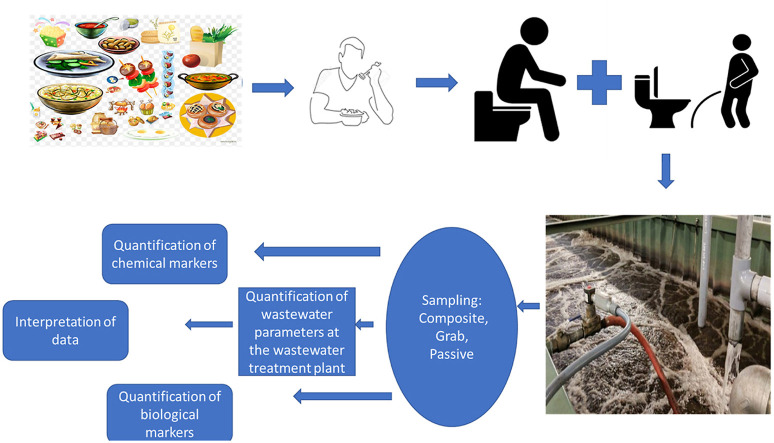
Wastewater monitoring and epidemiology have seen renewed interest during the recent COVID-19 pandemic. As a result, there is an increasing need to normalize wastewater-derived viral loads in local populations. Chemical tracers, both exogenous and endogenous compounds, have proven to be more stable and reliable for normalization than biological indicators. However, differing instrumentation and extraction methods can make it difficult to compare results. This review examines current extraction and quantification methods for ten common population indicators: creatinine, coprostanol, nicotine, cotinine, sucralose, acesulfame, androstenedione 5-hydroindoleacetic acid (5-HIAA), caffeine, and 1,7-dimethyluric acid. Some wastewater parameters such as ammonia, total nitrogen, total phosphorus, and daily flowrate were also evaluated. The analytical methods included direct injection, dilute and shoot, liquid/liquid, and solid phase extraction (SPE). Creatine, acesulfame, nicotine, 5-HIAA and androstenedione have been analysed by direct injection into LC-MS; however, most authors prefer to include SPE steps to avoid matrix effects. Both LC-MS and GC-MS have been successfully used to quantify coprostanol in wastewater, and the other selected indicators have been quantified successfully with LC-MS. Acidification to stabilize the sample before freezing to maintain the integrity of samples has been reported to be beneficial. However, there are arguments both for and against working at acidic pHs. Wastewater parameters mentioned earlier are quick and easy to quantify, but the data does not always represent the human population effectively. A preference for population indicators originating solely from humans is apparent. This review summarises methods employed for chemical indicators in wastewater, provides a basis for choosing an appropriate extraction and analysis method, and highlights the utility of accurate chemical tracer data for wastewater-based epidemiology.
废水监测和流行病学在最近的 COVID-19 大流行期间重新引起了人们的兴趣。因此,越来越需要对当地人群的废水衍生病毒载量进行标准化。化学示踪剂,无论是外源性还是内源性化合物,已被证明比生物指标更稳定可靠,可用于标准化。然而,不同的仪器和提取方法可能会使结果难以比较。本综述考察了十种常见人群指标的当前提取和定量方法:肌酸、粪甾烷醇、尼古丁、可替宁、蔗糖素、乙酰磺胺酸钾、雄烯二酮 5-羟吲哚乙酸(5-HIAA)、咖啡因和 1,7-二甲基尿酸。还评估了一些废水参数,如氨、总氮、总磷和日流量。分析方法包括直接进样、稀释和进样、液/液和固相萃取(SPE)。肌酸、乙酰磺胺酸钾、尼古丁、5-HIAA 和雄烯二酮已通过 LC-MS 直接进样进行分析;然而,大多数作者更喜欢包括 SPE 步骤以避免基质效应。LC-MS 和 GC-MS 均已成功用于定量废水中的粪甾烷醇,其他选定的指标也已成功用 LC-MS 定量。酸化以稳定样品在冷冻前的完整性已被报道是有益的。然而,对于在酸性 pH 值下工作存在正反两方面的争论。前面提到的废水参数易于快速定量,但数据并不总是能有效地代表人群。人们显然更倾向于使用完全来源于人类的人群指标。本综述总结了废水中化学指示剂所采用的方法,为选择合适的提取和分析方法提供了依据,并强调了准确的化学示踪剂数据在基于废水的流行病学中的实用性。