Laboratory of Experimental Cancer Research, Department of Human Structure and Repair, Ghent University, Ghent, Belgium.
Cancer Research Institute Ghent, Ghent, Belgium.
J Extracell Vesicles. 2023 May;12(5):e12315. doi: 10.1002/jev2.12315.
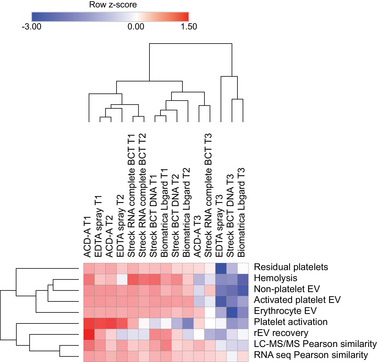
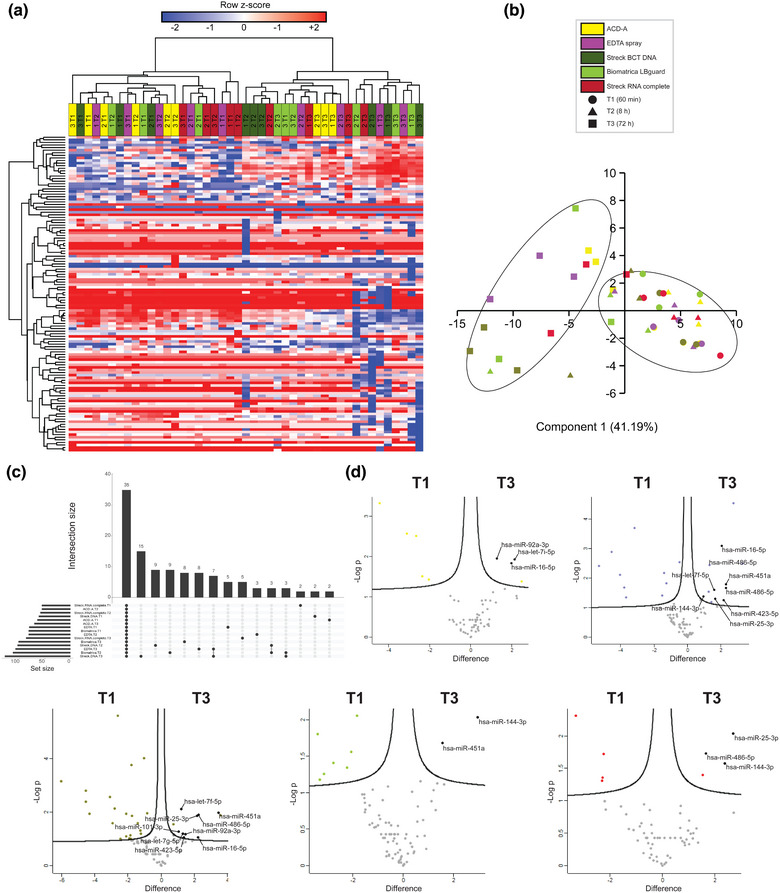
The analysis of extracellular vesicles (EV) in blood samples is under intense investigation and holds the potential to deliver clinically meaningful biomarkers for health and disease. Technical variation must be minimized to confidently assess EV-associated biomarkers, but the impact of pre-analytics on EV characteristics in blood samples remains minimally explored. We present the results from the first large-scale EV Blood Benchmarking (EVBB) study in which we systematically compared 11 blood collection tubes (BCT; six preservation and five non-preservation) and three blood processing intervals (BPI; 1, 8 and 72 h) on defined performance metrics (n = 9). The EVBB study identifies a significant impact of multiple BCT and BPI on a diverse set of metrics reflecting blood sample quality, ex-vivo generation of blood-cell derived EV, EV recovery and EV-associated molecular signatures. The results assist the informed selection of the optimal BCT and BPI for EV analysis. The proposed metrics serve as a framework to guide future research on pre-analytics and further support methodological standardization of EV studies.
对血液样本中外泌体(EV)的分析正在深入研究中,有可能为健康和疾病提供具有临床意义的生物标志物。为了有信心地评估与 EV 相关的生物标志物,必须将技术差异最小化,但血液样本中 EV 特征的预分析影响仍未得到充分探索。我们展示了首次大规模 EV 血液基准测试(EVBB)研究的结果,该研究系统地比较了 11 种血液采集管(BCT;六种保存管和五种非保存管)和三种血液处理间隔(BPI;1、8 和 72 小时)在规定的性能指标上(n=9)。EVBB 研究确定了多种 BCT 和 BPI 对反映血液样本质量、体外产生的血细胞衍生 EV、EV 回收和 EV 相关分子特征的多种指标的显著影响。结果有助于为 EV 分析选择最佳的 BCT 和 BPI。所提出的指标可作为指导未来预分析研究的框架,并进一步支持 EV 研究的方法标准化。