Global Brain Health Institute and Institute of Neuroscience, Trinity College Dublin, Dublin, Ireland.
School of Medicine, Texas Tech School of Medicine, Lubbock, United States.
Elife. 2023 May 19;12:e75586. doi: 10.7554/eLife.75586.
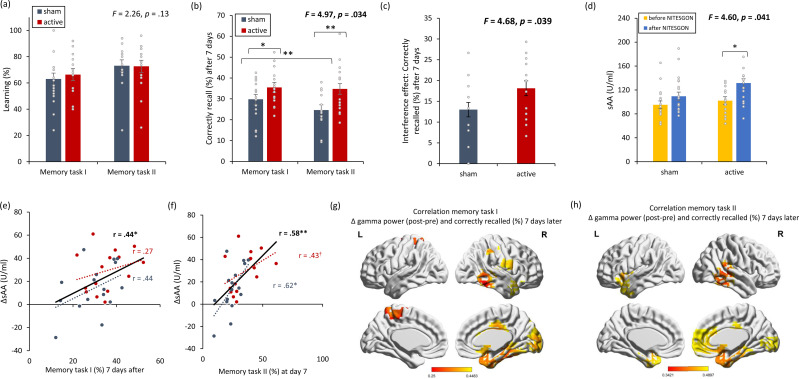
Most memories that are formed are forgotten, while others are retained longer and are subject to memory stabilization. We show that non-invasive transcutaneous electrical stimulation of the greater occipital nerve (NITESGON) using direct current during learning elicited a long-term memory effect. However, it did not trigger an immediate effect on learning. A neurobiological model of long-term memory proposes a mechanism by which memories that are initially unstable can be strengthened through subsequent novel experiences. In a series of studies, we demonstrate NITESGON's capability to boost the retention of memories when applied shortly before, during, or shortly after the time of learning by enhancing memory consolidation via activation and communication in and between the locus coeruleus pathway and hippocampus by plausibly modulating dopaminergic input. These findings may have a significant impact for neurocognitive disorders that inhibit memory consolidation such as Alzheimer's disease.
大多数形成的记忆都会被遗忘,而有些记忆则会被保留更长时间,并受到记忆稳定化的影响。我们表明,在学习过程中使用直流电对枕大神经进行非侵入性经皮电刺激(NITESGON)会产生长期记忆效应。然而,它并没有立即对学习产生影响。长期记忆的神经生物学模型提出了一种机制,即最初不稳定的记忆可以通过随后的新体验得到加强。在一系列研究中,我们证明了 NITESGON 通过激活和协调蓝斑通路和海马体内部及之间的交流,增强记忆巩固,从而在学习前后不久施加时能够提高记忆的保留能力,从而增强记忆巩固,从而提高记忆的保留能力。这种可能性通过合理调节多巴胺能输入。这些发现可能对抑制记忆巩固的神经认知障碍(如阿尔茨海默病)产生重大影响。