Department of Microbiology and Immunology, University of Michigan Medical School, Ann Arbor, Michigan, United States of America.
Department of Ecology and Evolution, University of Michigan, Ann Arbor, Michigan, United States of America.
PLoS Biol. 2023 May 19;21(5):e3001822. doi: 10.1371/journal.pbio.3001822. eCollection 2023 May.
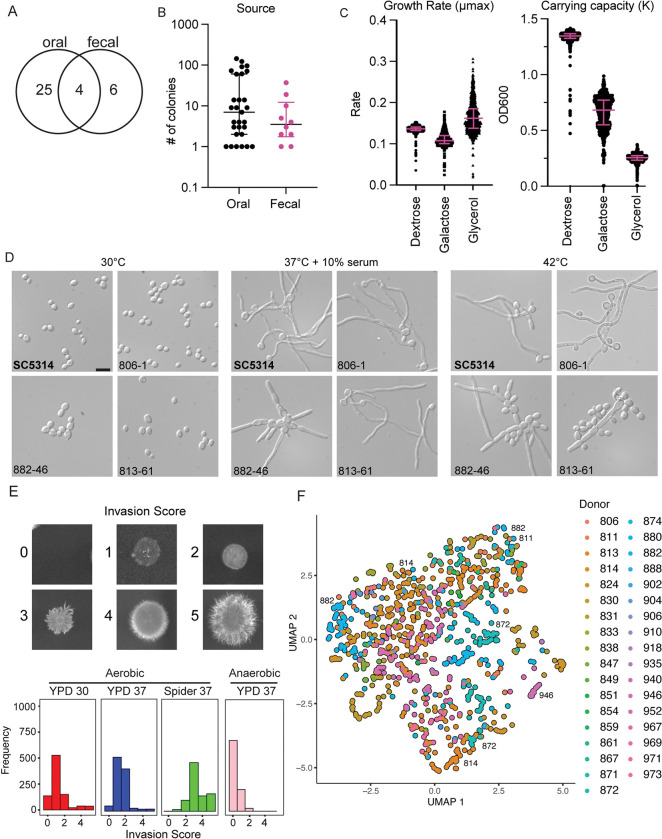
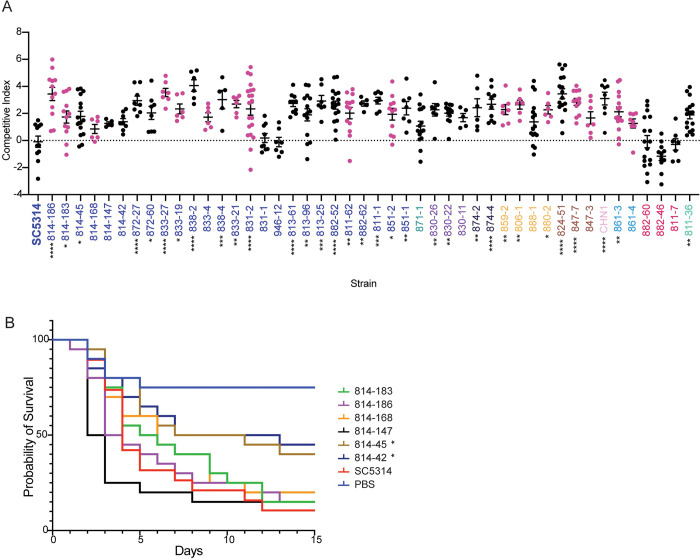
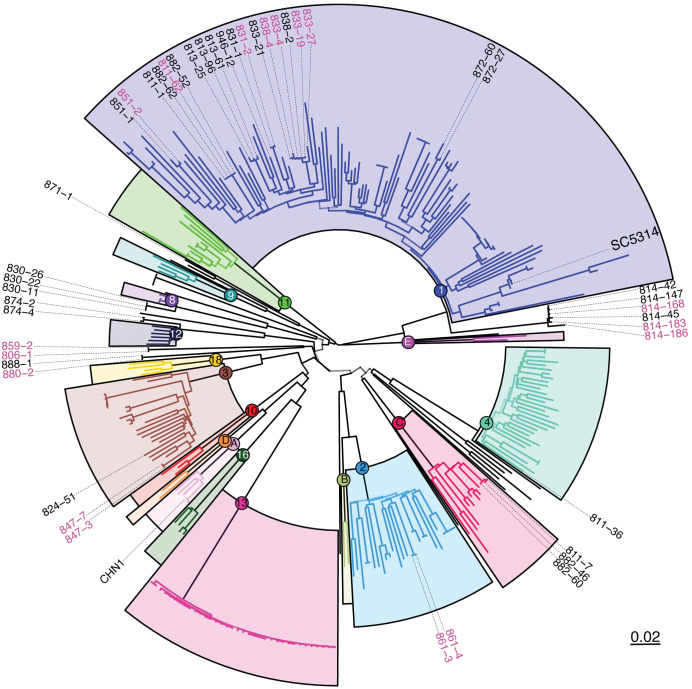
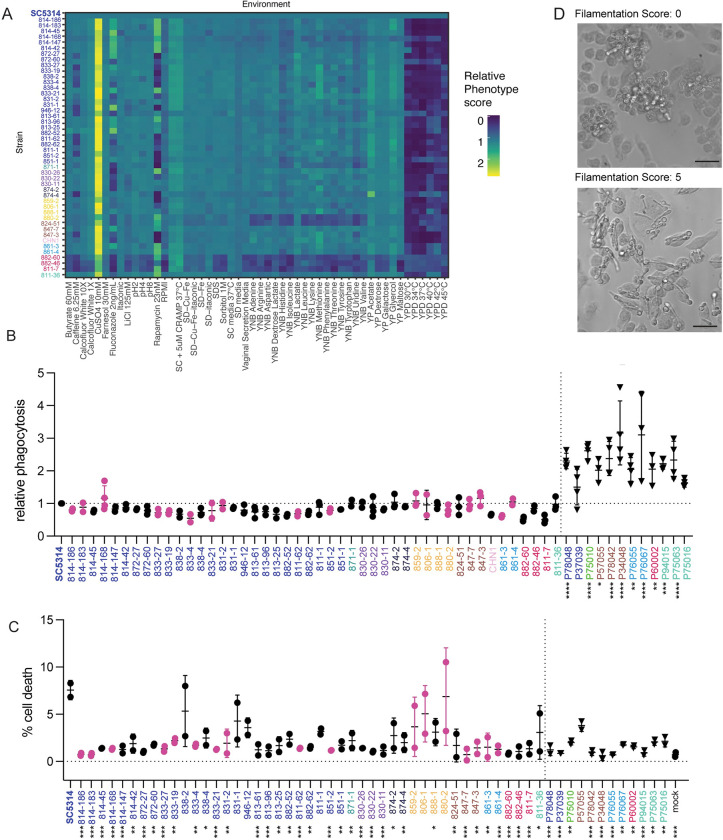
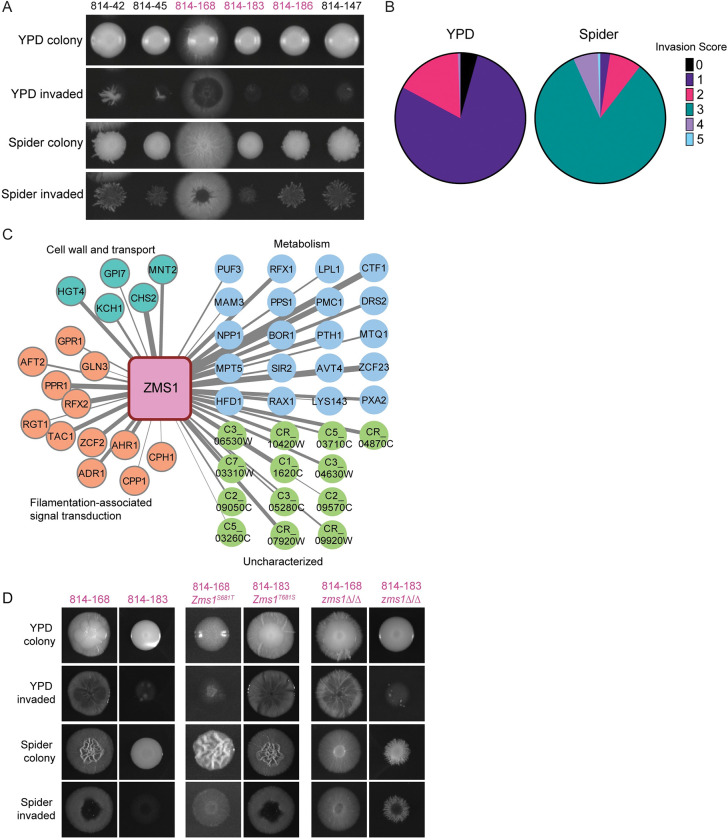
Candida albicans is a frequent colonizer of human mucosal surfaces as well as an opportunistic pathogen. C. albicans is remarkably versatile in its ability to colonize diverse host sites with differences in oxygen and nutrient availability, pH, immune responses, and resident microbes, among other cues. It is unclear how the genetic background of a commensal colonizing population can influence the shift to pathogenicity. Therefore, we examined 910 commensal isolates from 35 healthy donors to identify host niche-specific adaptations. We demonstrate that healthy people are reservoirs for genotypically and phenotypically diverse C. albicans strains. Using limited diversity exploitation, we identified a single nucleotide change in the uncharacterized ZMS1 transcription factor that was sufficient to drive hyper invasion into agar. We found that SC5314 was significantly different from the majority of both commensal and bloodstream isolates in its ability to induce host cell death. However, our commensal strains retained the capacity to cause disease in the Galleria model of systemic infection, including outcompeting the SC5314 reference strain during systemic competition assays. This study provides a global view of commensal strain variation and within-host strain diversity of C. albicans and suggests that selection for commensalism in humans does not result in a fitness cost for invasive disease.
白色念珠菌是人类黏膜表面的常见定植菌,也是一种机会致病菌。白色念珠菌在定植于不同宿主部位的能力非常多样,这些宿主部位在氧气和营养物质的可利用性、pH 值、免疫反应和常驻微生物等方面存在差异。目前尚不清楚共生定植群体的遗传背景如何影响其向致病性的转变。因此,我们检查了 35 名健康供体的 910 个共生分离株,以确定宿主小生境特异性的适应性。我们证明,健康人是具有遗传和表型多样性的白色念珠菌菌株的储存库。通过有限的多样性开发,我们在未被表征的 ZMS1 转录因子中发现了一个单核苷酸变化,该变化足以驱动其在琼脂中的超侵入。我们发现,与大多数共生和血流分离株相比,SC5314 在诱导宿主细胞死亡的能力方面存在显著差异。然而,我们的共生菌株在系统性感染的大蜡螟模型中保留了致病能力,包括在系统性竞争测定中与 SC5314 参考菌株竞争。这项研究提供了白色念珠菌共生菌株变异和宿主内菌株多样性的全球视角,并表明人类中对共生的选择不会导致侵袭性疾病的适应性成本。