Glazier Virginia E, Kramara Juraj, Ollinger Tomye, Solis Norma V, Zarnowski Robert, Wakade Rohan S, Kim Min-Ju, Weigel Gabriel J, Liang Shen-Huan, Bennett Richard J, Wellington Melanie, Andes David R, Stamnes Mark A, Filler Scott G, Krysan Damian J
Department of Biology, Niagara University, Niagara Falls NY.
Department of Pediatrics, Carver College of Medicine, University of Iowa, Iowa City IA.
bioRxiv. 2023 Jun 17:2023.06.17.545405. doi: 10.1101/2023.06.17.545405.
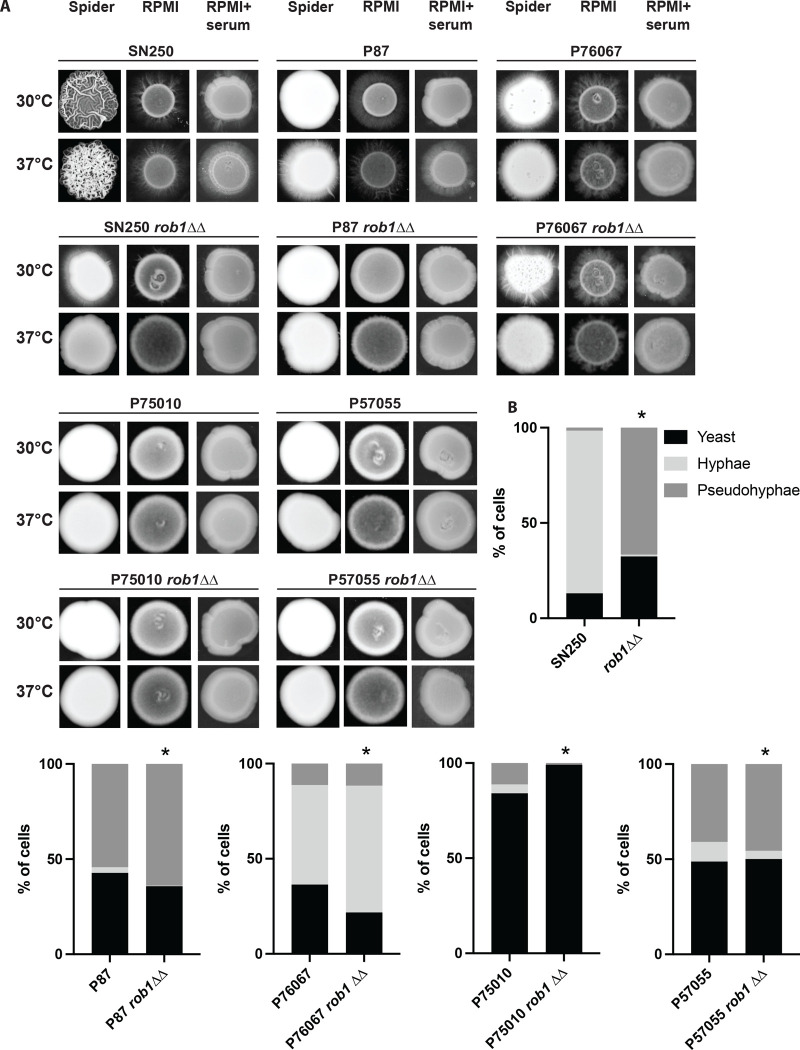
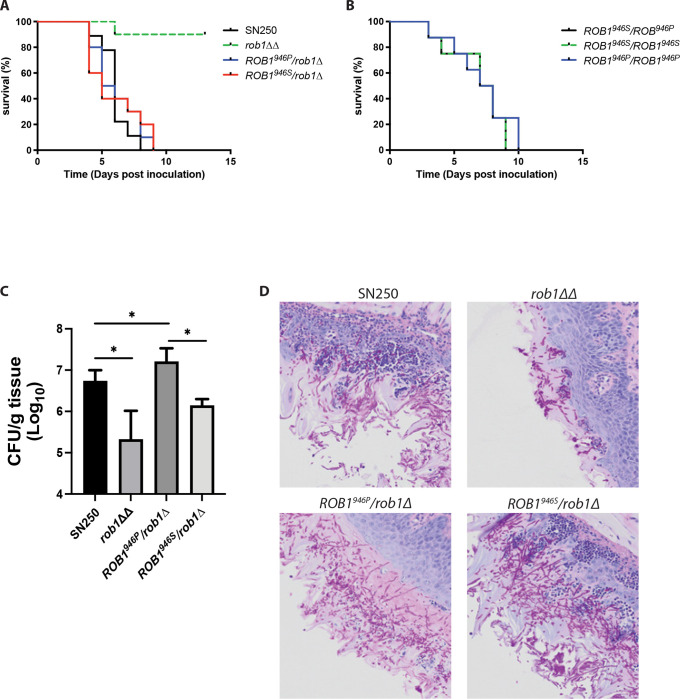
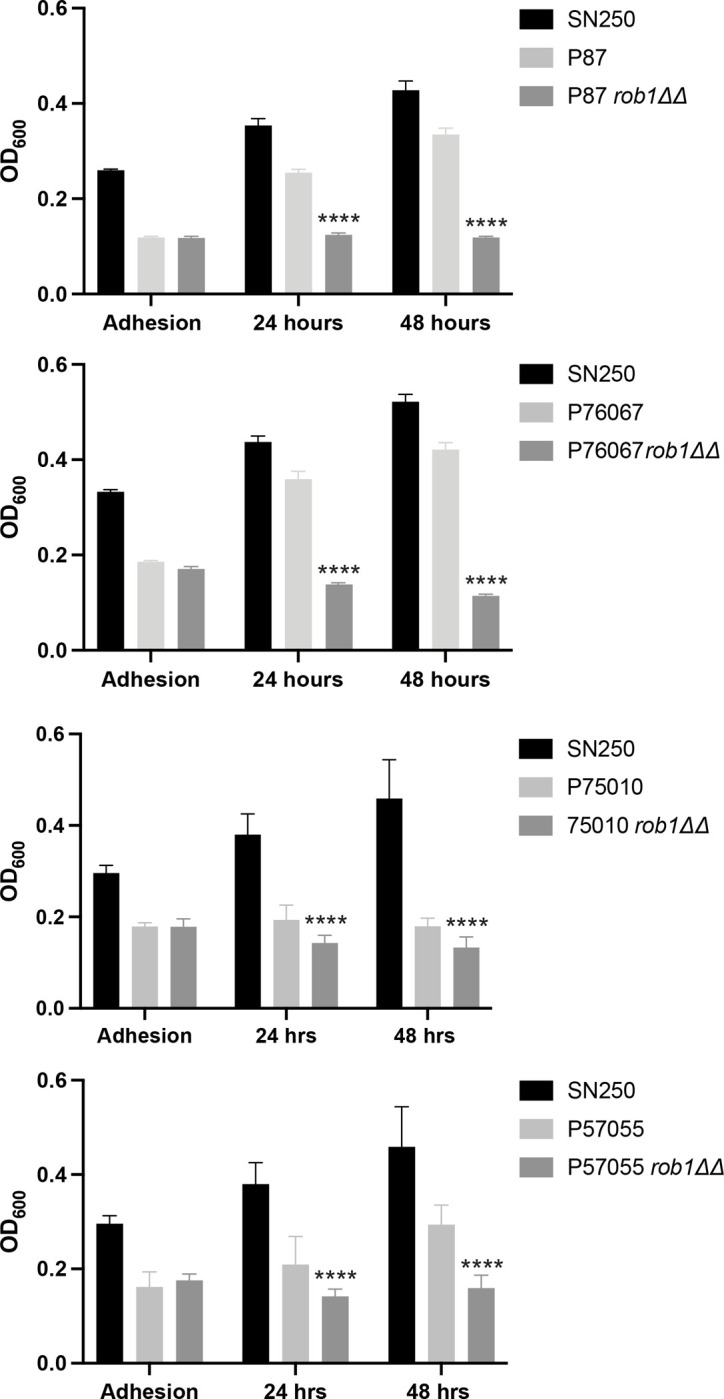
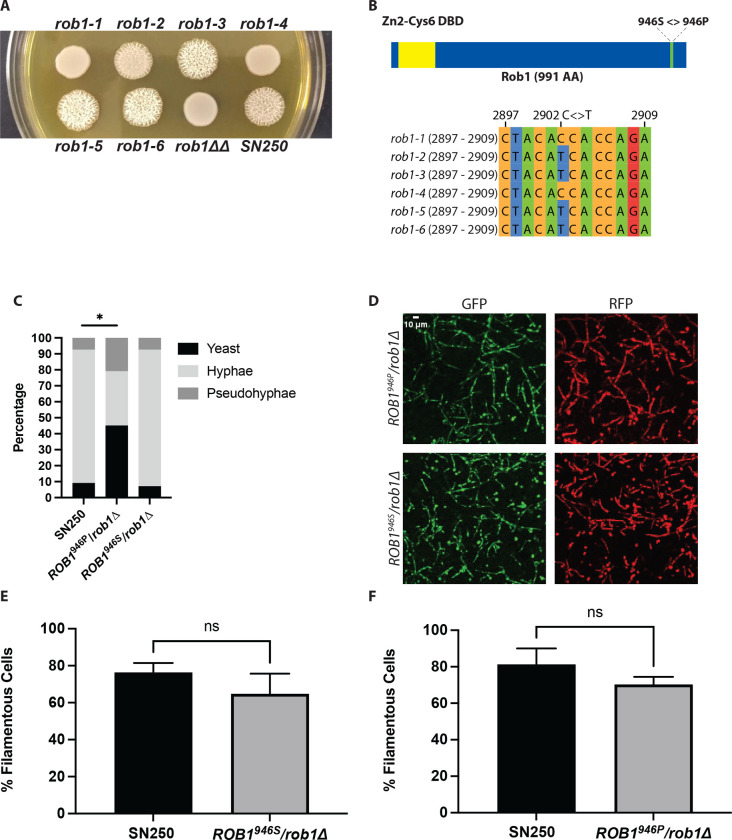
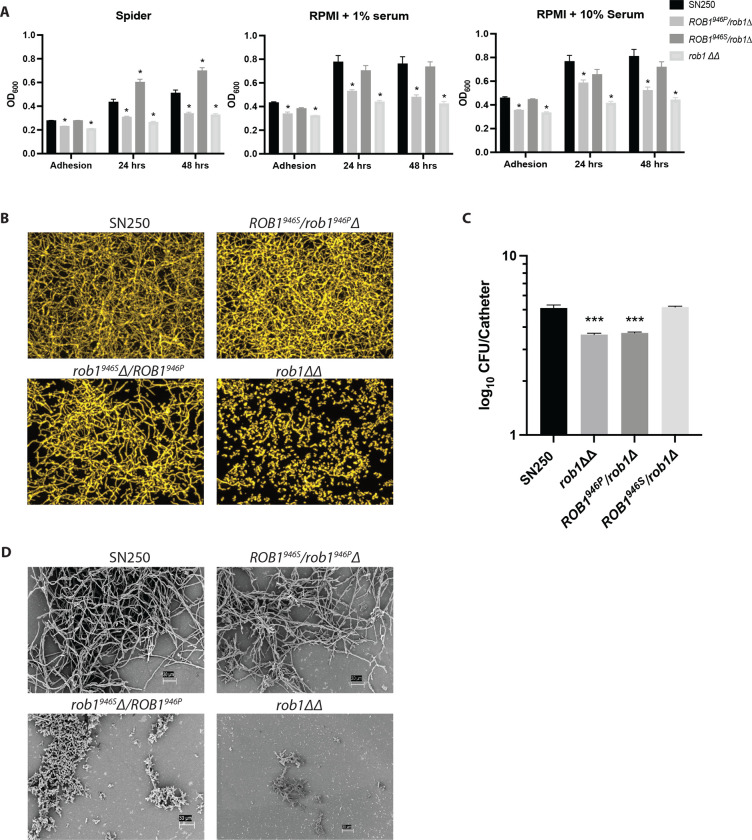
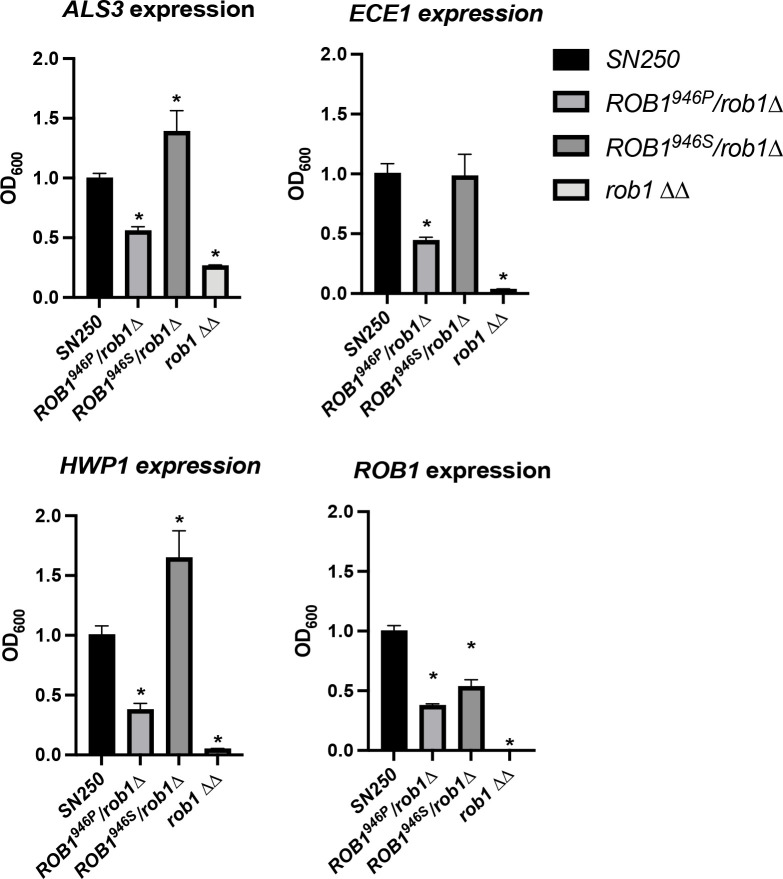
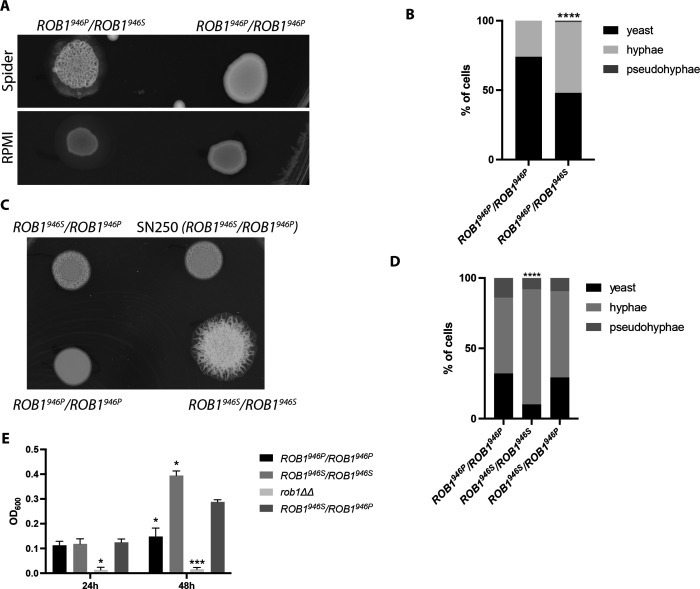
is a diploid human fungal pathogen that displays significant genomic and phenotypic heterogeneity over a range of virulence traits and in the context of a variety of environmental niches. Here, we show that the effects of Rob1 on biofilm and filamentation virulence traits is dependent on both the specific environmental condition and the clinical strain of . The reference strain SC5314 is a heterozygote with two alleles that differ by a single nucleotide polymorphism at position 946 resulting in a serine or proline containing isoform. An analysis of 224 sequenced genomes indicates that SC5314 is the only heterozygote documented to date and that the dominant allele contains a proline at position 946. Remarkably, the alleles are functionally distinct and the rare allele supports increased filamentation in vitro and increased biofilm formation in vitro and in vivo, suggesting it is a phenotypic gain-of-function allele. SC5314 is amongst the most highly filamentous and invasive strains characterized to date. Introduction of the allele into a poorly filamenting clinical isolate increases filamentation and conversion of an SC5314 laboratory strain to a homozygote increases in vitro filamentation and biofilm formation. In a mouse model of oropharyngeal infection, the predominant allele establishes a commensal state while the phenocopies the parent strain and invades into the mucosae. These observations provide an explanation for the distinct phenotypes of SC5314 and highlight the role of heterozygosity as a driver of phenotypic heterogeneity.
is a commensal fungus that colonizes human oral cavity and gastrointestinal tracts but also causes mucosal as well as invasive disease. The expression of virulence traits in clinical isolates is heterogenous and the genetic basis of this heterogeneity is of high interest. The reference strain SC5314 is highly invasive and expresses robust filamentation and biofilm formation relative to many other clinical isolates. Here, we show that SC5314 derivatives are heterozygous for the transcription factor Rob1 and contain an allele with a rare gain-of-function SNP that drives filamentation, biofilm formation, and virulence in a model of oropharyngeal candidiasis. These finding explain, in part, the outlier phenotype of the reference strain and highlight the role of heterozygosity plays in the strain-to-strain variation of diploid fungal pathogens.
是一种二倍体人类真菌病原体,在一系列毒力性状以及多种环境生态位背景下表现出显著的基因组和表型异质性。在此,我们表明Rob1对生物膜和丝状化毒力性状的影响取决于特定的环境条件和的临床菌株。参考菌株SC5314是一个杂合子,有两个等位基因,在第946位存在单核苷酸多态性差异,导致一种含丝氨酸或脯氨酸的异构体。对224个测序基因组的分析表明,SC5314是迄今为止记录的唯一杂合子,且显性等位基因在第946位含有脯氨酸。值得注意的是,这些等位基因在功能上是不同的,罕见的等位基因在体外支持增加丝状化,在体外和体内支持增加生物膜形成,表明它是一个功能获得性表型等位基因。SC5314是迄今为止特征最明显的高度丝状化和侵袭性菌株之一。将该等位基因导入丝状化较差的临床分离株中会增加丝状化,而将SC5314实验室菌株转化为纯合子会增加体外丝状化和生物膜形成。在口咽感染的小鼠模型中,主要的等位基因建立共生状态,而该等位基因的拟表型类似于亲代菌株并侵入黏膜。这些观察结果解释了SC5314的不同表型,并突出了杂合性作为表型异质性驱动因素的作用。
是一种定殖于人类口腔和胃肠道的共生真菌,但也会引起黏膜以及侵袭性疾病。临床分离株中毒力性状的表达是异质的,这种异质性的遗传基础备受关注。参考菌株SC5314具有高度侵袭性,相对于许多其他临床分离株,它表现出强大的丝状化和生物膜形成能力。在此,我们表明SC5314衍生物在转录因子Rob1方面是杂合的,并且含有一个具有罕见功能获得性单核苷酸多态性的等位基因,该等位基因在口咽念珠菌病模型中驱动丝状化、生物膜形成和毒力。这些发现部分解释了参考菌株的异常表型,并突出了杂合性在二倍体真菌病原体菌株间变异中所起的作用。