Laboratory of Cell Fate Control, School of Life Sciences, Westlake University, Hangzhou, China.
Center for Cell Lineage and Atlas (CCLA), Bioland Laboratory, Guangzhou Regenerative Medicine and Health Guangdong Laboratory, Guangzhou, China.
Nat Commun. 2023 May 18;14(1):2846. doi: 10.1038/s41467-023-38543-0.
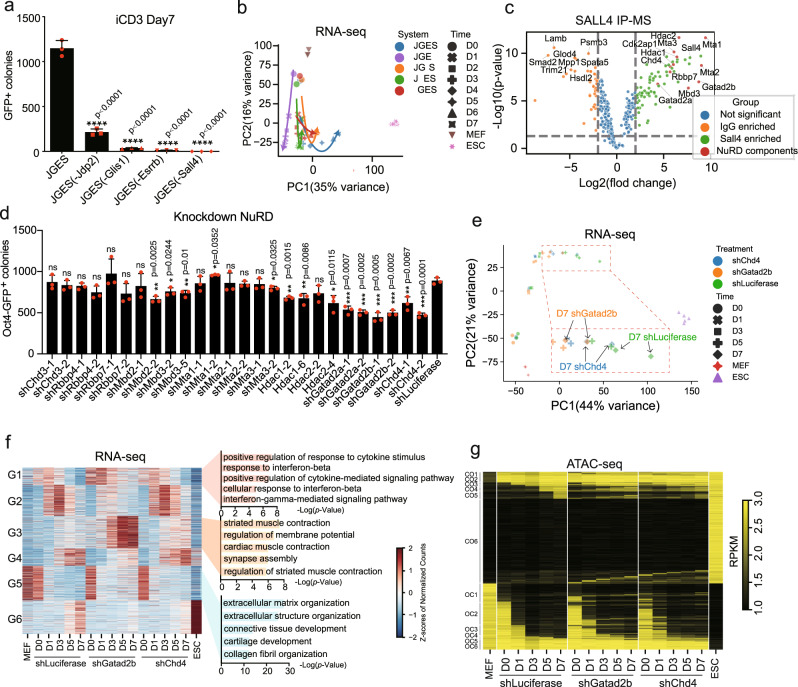
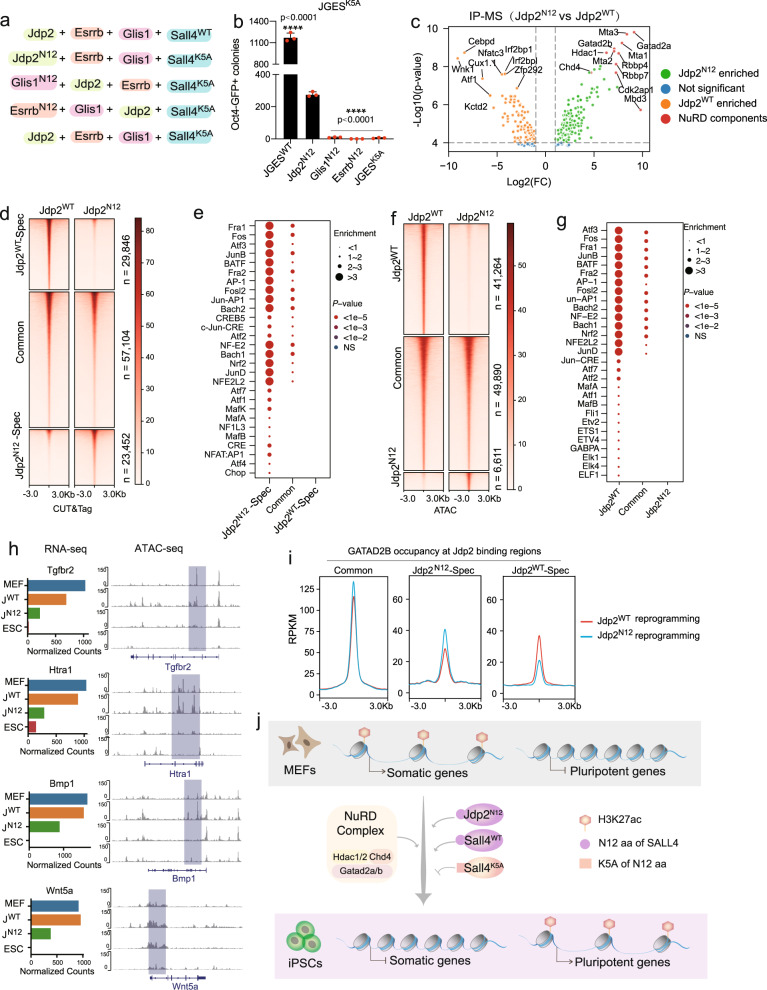
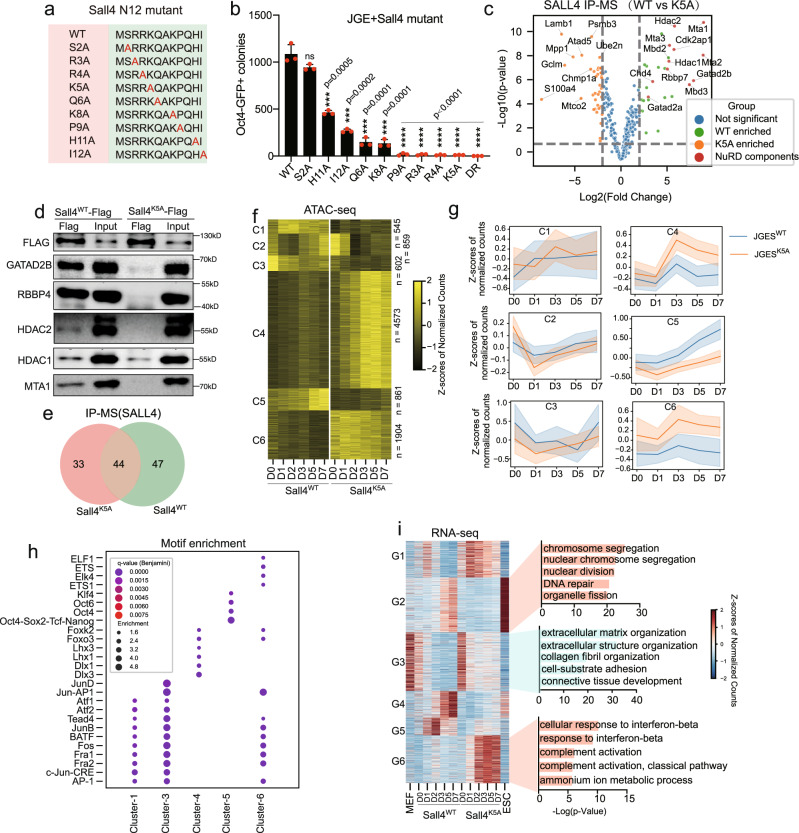
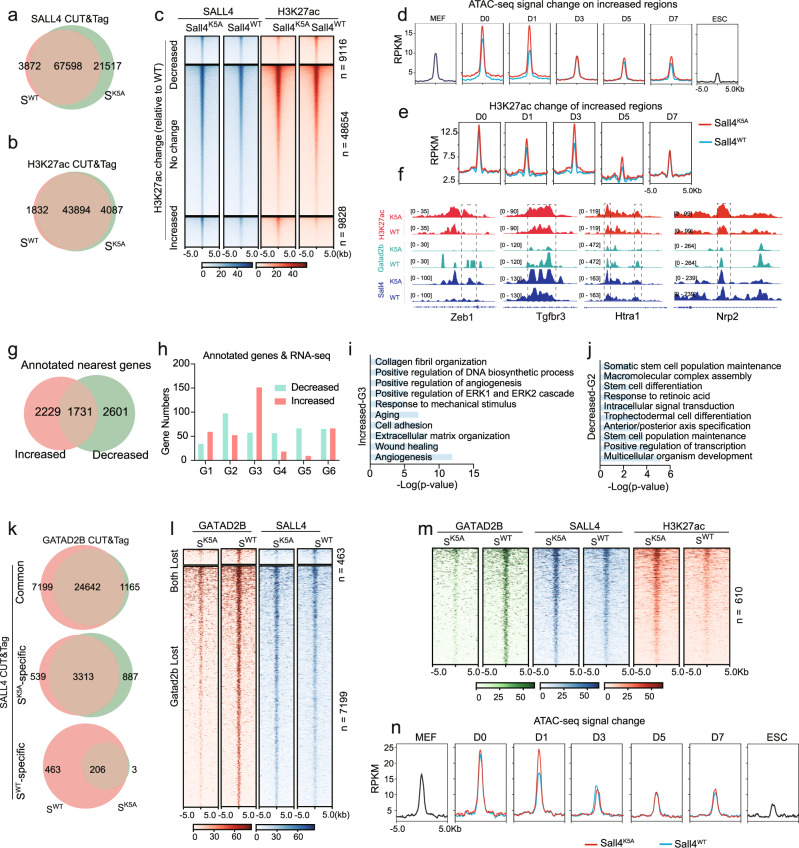
Cell fate decision involves rewiring of the genome, but remains poorly understood at the chromatin level. Here, we report that chromatin remodeling complex NuRD participates in closing open chromatin in the early phase of somatic reprogramming. Sall4, Jdp2, Glis1 and Esrrb can reprogram MEFs to iPSCs efficiently, but only Sall4 is indispensable capable of recruiting endogenous components of NuRD. Yet knocking down NuRD components only reduces reprogramming modestly, in contrast to disrupting the known Sall4-NuRD interaction by mutating or deleting the NuRD interacting motif at its N-terminus that renders Sall4 inept to reprogram. Remarkably, these defects can be partially rescured by grafting NuRD interacting motif onto Jdp2. Further analysis of chromatin accessibility dynamics demonstrates that the Sall4-NuRD axis plays a critical role in closing the open chromatin in the early phase of reprogramming. Among the chromatin loci closed by Sall4-NuRD encode genes resistant to reprogramming. These results identify a previously unrecognized role of NuRD in reprogramming, and may further illuminate chromatin closing as a critical step in cell fate control.
细胞命运的决定涉及基因组的重排,但在染色质水平上仍知之甚少。在这里,我们报告染色质重塑复合物 NuRD 参与体细胞重编程早期开放染色质的关闭。Sall4、Jdp2、Glis1 和 Esrrb 可以有效地将 MEF 重编程为 iPSC,但只有 Sall4 能够招募 NuRD 的内源性成分。然而,敲低 NuRD 组件仅适度降低重编程效率,与通过突变或删除其 N 端的 NuRD 相互作用基序破坏已知的 Sall4-NuRD 相互作用不同,这使得 Sall4 无法进行重编程。值得注意的是,通过将 NuRD 相互作用基序嫁接到 Jdp2 上,可以部分挽救这些缺陷。进一步分析染色质可及性动力学表明,Sall4-NuRD 轴在重编程早期阶段在关闭开放染色质中发挥关键作用。由 Sall4-NuRD 封闭的染色质基因座编码对重编程有抗性的基因。这些结果确定了 NuRD 在重编程中的一个以前未被识别的作用,并且可能进一步阐明染色质关闭作为细胞命运控制的关键步骤。