State Key Laboratory of Pollution Control and Resources Reuse, College of Environmental Science and Engineering, Tongji University, Shanghai, 200092, P. R. China.
College of Environmental Science and Engineering, Donghua University, Shanghai, 201620, P. R. China.
Nat Commun. 2023 May 19;14(1):2881. doi: 10.1038/s41467-023-38677-1.
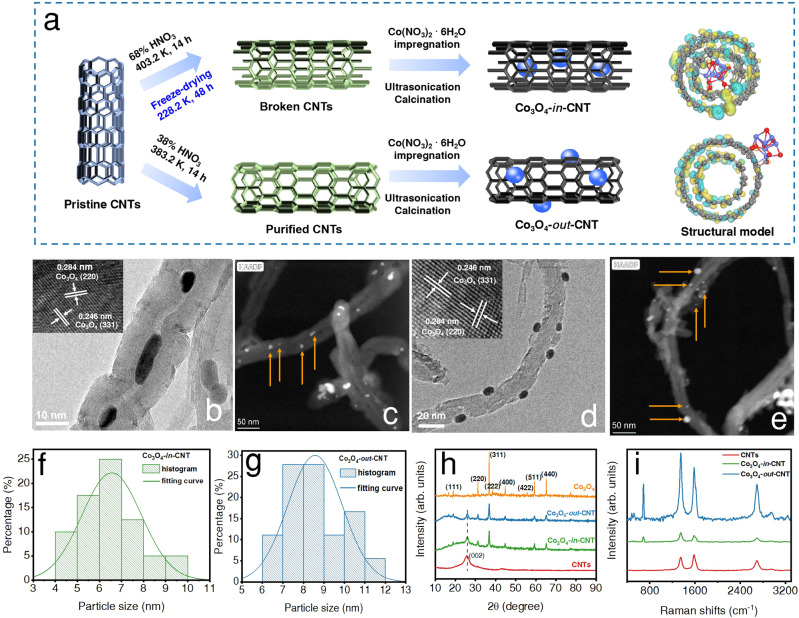
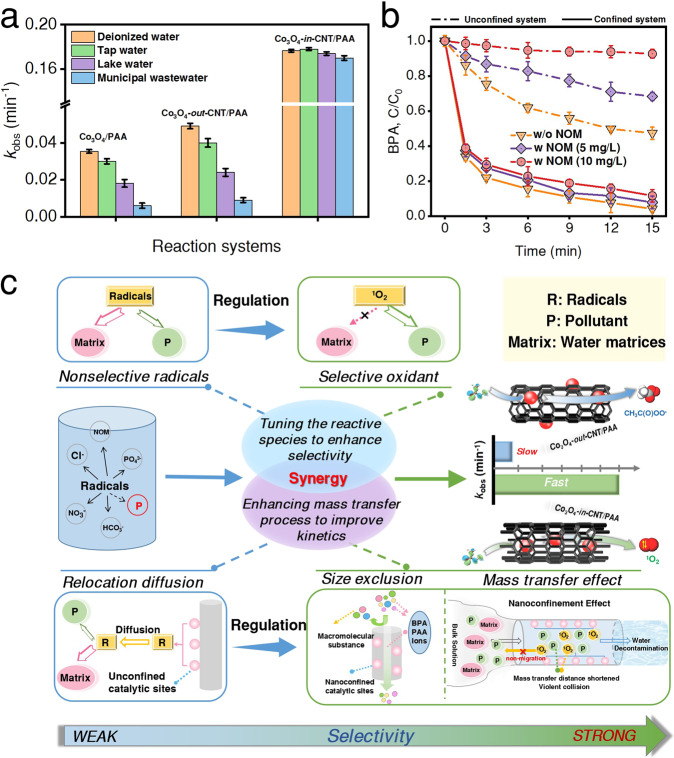
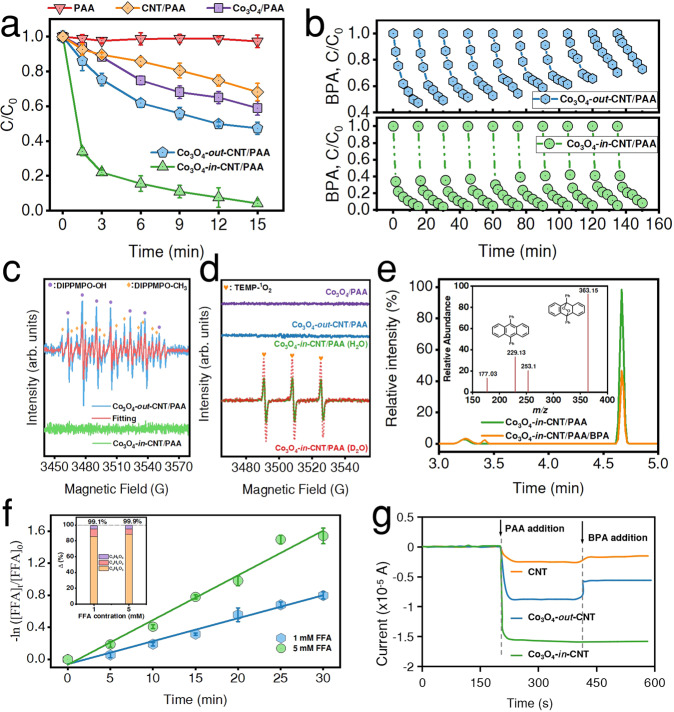
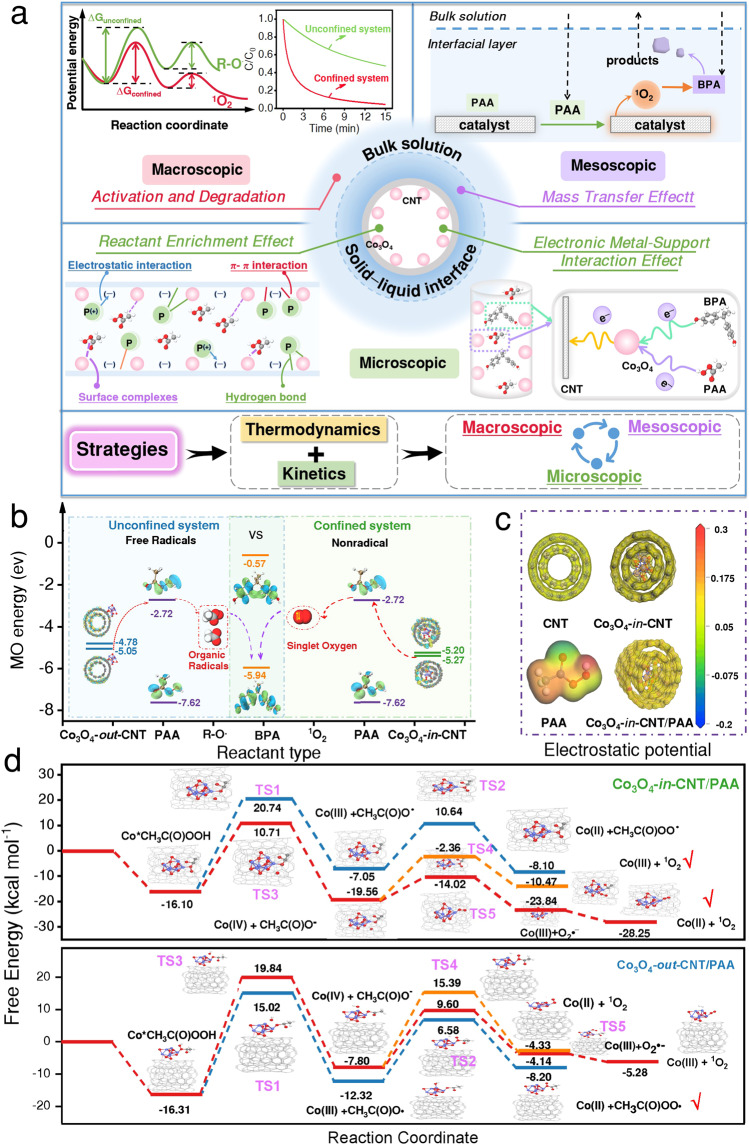
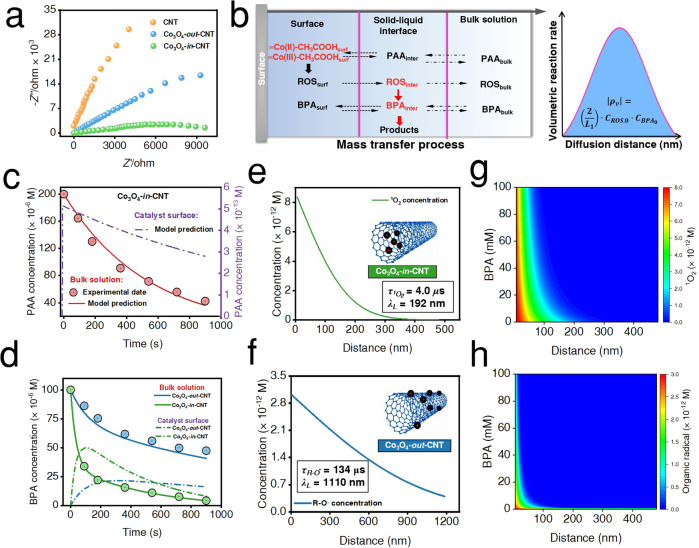
There is an urgent need to develop effective and sustainable solutions to reduce water pollution. Heterogeneous Fenton-like catalysts are frequently used to eliminate contaminants from water. However, the applicability of these catalysts is limited due to low availability of the reactive species (RS). Herein, nanoconfinement strategy was applied to encapsulate short-lived RS at nanoscale to boost the utilization efficiency of the RS in Fenton-like reactions. The nanoconfined catalyst was fabricated by assembling CoO nanoparticles in carbon nanotube nanochannels to achieve exceptional reaction rate and excellent selectivity. Experiments collectively suggested that the degradation of contaminants was attributed to singlet oxygen (O). Density functional theory calculations demonstrated the nanoconfined space contributes to quantum mutation and alters the transition state to lower activation energy barriers. Simulation results revealed that the enrichment of contaminant on the catalyst reduced the migration distance and enhanced the utilization of O. The synergy between the shell layer and core-shell structure further improved the selectivity of O towards contaminant oxidation in real waters. The nanoconfined catalyst is expected to provide a viable strategy for water pollution control.
目前迫切需要开发有效且可持续的解决方案来减少水污染。非均相类 Fenton 催化剂常用于去除水中的污染物。然而,由于活性物质(RS)的可用性低,这些催化剂的适用性受到限制。在此,采用纳米限域策略将短寿命的 RS 纳米限域以提高类 Fenton 反应中 RS 的利用效率。纳米限域催化剂是通过将 CoO 纳米颗粒组装在碳纳米管纳米通道中制备的,以实现卓越的反应速率和优异的选择性。实验结果表明,污染物的降解归因于单线态氧(O)。密度泛函理论计算表明,纳米限域空间有助于量子突变并改变过渡态以降低活化能垒。模拟结果表明,催化剂上污染物的富集降低了迁移距离并提高了 O 的利用率。壳层和核壳结构之间的协同作用进一步提高了 O 对实际水中污染物氧化的选择性。该纳米限域催化剂有望为水污染控制提供一种可行的策略。