Makhija Nidhi, Tayade Surekha, Toshniwal Shikha, Tilva Hard
Department of Obstetrics and Gynaecology, Jawaharlal Nehru Medical College, Datta Meghe Institute of Higher Education and Research, Wardha, IND.
Cureus. 2023 Apr 19;15(4):e37809. doi: 10.7759/cureus.37809. eCollection 2023 Apr.
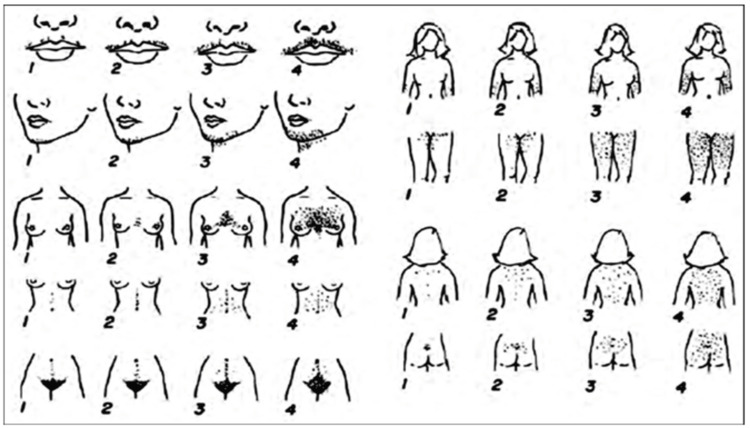
Background Polycystic ovarian syndrome (PCOS), which affects women of reproductive age, is the most prevalent endocrine disorder. Signs of excessive androgen, irregular menses, prolonged anovulation, and infertility are characteristics of the clinical phenotype. Women with PCOS are more likely to have diabetes, obesity, dyslipidemia, hypertension, anxiety, and depression. PCOS affects women's health starting before conception and continuing through their post-menopausal years. Methods Ninety-six study subjects were recruited from women visiting the gynaecology clinic according to the Rotterdam criteria for PCOS. Study subjects were then divided into lean and obese groups according to their body mass index (BMI). Demographic data, and obstetrical and gynaecological history were obtained including marital status, menstrual cycle regularity, recent abnormal weight gain (in the preceding six months), and subfertility. To identify any clinical signs of hyperandrogenism such as acne, acanthosis nigricans, or hirsutism, a general and systemic examination was conducted. Data were analyzed after the clinico-metabolic profile was assessed, compared, and contrasted between the two groups. Results The findings showed a significant correlation between obese women with PCOS and the clinical profile of PCOS i.e. menstrual irregularities, acne vulgaris, acanthosis nigricans and hirsutism; the waist-hip ratio was higher in both groups. Higher levels of fasting insulin, fasting glucose: insulin ratio, postprandial sugars, homeostasis model assessment of insulin resistance (HOMA-IR) index, total testosterone, free testosterone, and luteinizing hormone/follicle-stimulating hormone (LH: FSH) ratio were seen in obese women with PCOS, whereas the levels of fasting glucose, serum triglycerides, serum high-density lipoprotein cholesterol (HDL) were higher in all the study subjects irrespective of BMI. Conclusion The study showed that women with PCOS have a deranged metabolic profile like abnormal blood sugar, insulin resistance (IR), and hyperandrogenemia with clinical derangements like irregular menses, subfertility, and recent weight gain more frequently with higher BMI.
多囊卵巢综合征(PCOS)影响育龄女性,是最常见的内分泌紊乱疾病。雄激素过多、月经不规律、长期无排卵和不孕是其临床表型的特征。患有PCOS的女性更易患糖尿病、肥胖、血脂异常、高血压、焦虑和抑郁。PCOS在受孕前就开始影响女性健康,并持续到绝经后。方法:根据鹿特丹PCOS诊断标准,从妇科门诊就诊的女性中招募了96名研究对象。然后根据体重指数(BMI)将研究对象分为瘦型和肥胖型两组。收集人口统计学数据以及妇产科病史,包括婚姻状况、月经周期规律、近期体重异常增加(前六个月内)和生育力低下情况。为了识别高雄激素血症的任何临床体征,如痤疮、黑棘皮病或多毛症,进行了全身检查。在评估、比较和对比两组的临床代谢特征后对数据进行分析。结果:研究结果显示,肥胖型PCOS女性与PCOS的临床特征之间存在显著相关性,即月经不规律、寻常痤疮、黑棘皮病和多毛症;两组的腰臀比均较高。肥胖型PCOS女性的空腹胰岛素水平、空腹血糖:胰岛素比值、餐后血糖、胰岛素抵抗稳态模型评估(HOMA-IR)指数、总睾酮、游离睾酮和黄体生成素/促卵泡激素(LH:FSH)比值较高,而无论BMI如何,所有研究对象的空腹血糖、血清甘油三酯、血清高密度脂蛋白胆固醇(HDL)水平均较高。结论:该研究表明,PCOS女性存在代谢紊乱,如血糖异常、胰岛素抵抗(IR)和高雄激素血症,且临床紊乱如月经不规律、生育力低下和近期体重增加在BMI较高的情况下更为常见。