Sharma Ravish, Mishanina Tatiana V
Department of Chemistry and Biochemistry, University of California San Diego, 9500 Gilman Dr, La Jolla, CA 92093.
bioRxiv. 2023 May 8:2023.05.07.539761. doi: 10.1101/2023.05.07.539761.
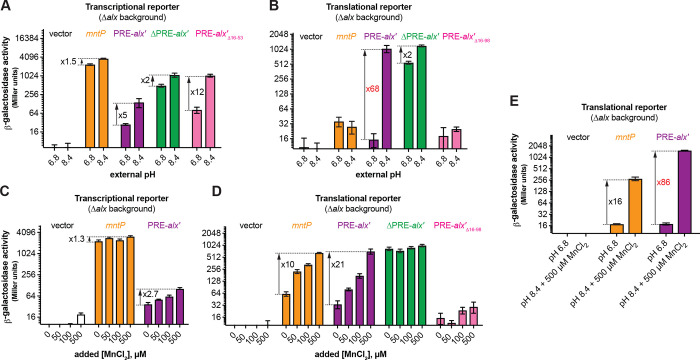
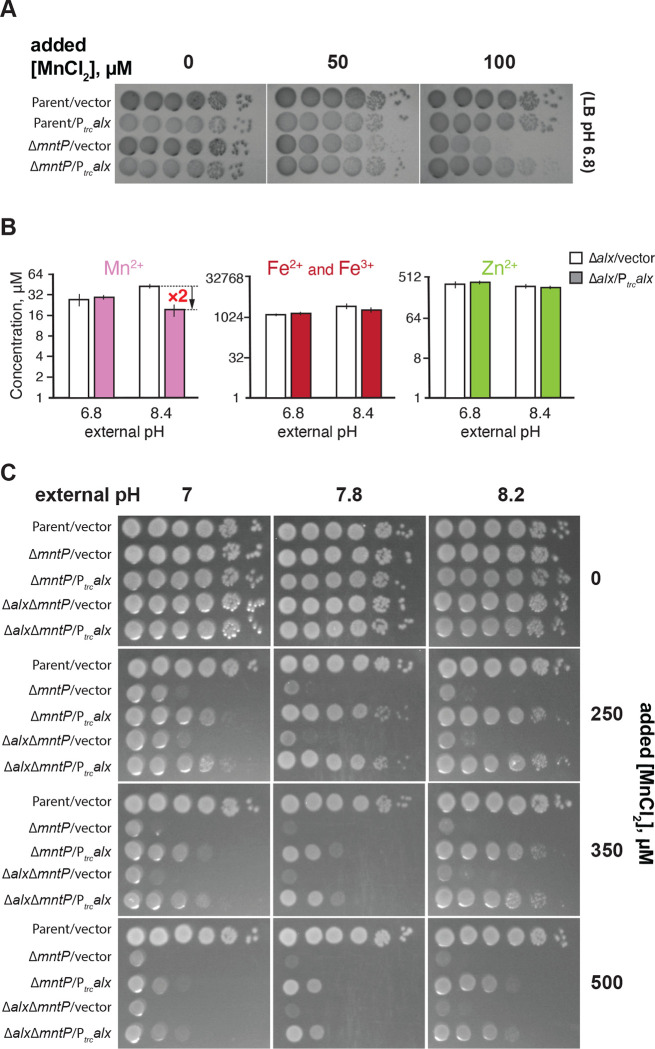
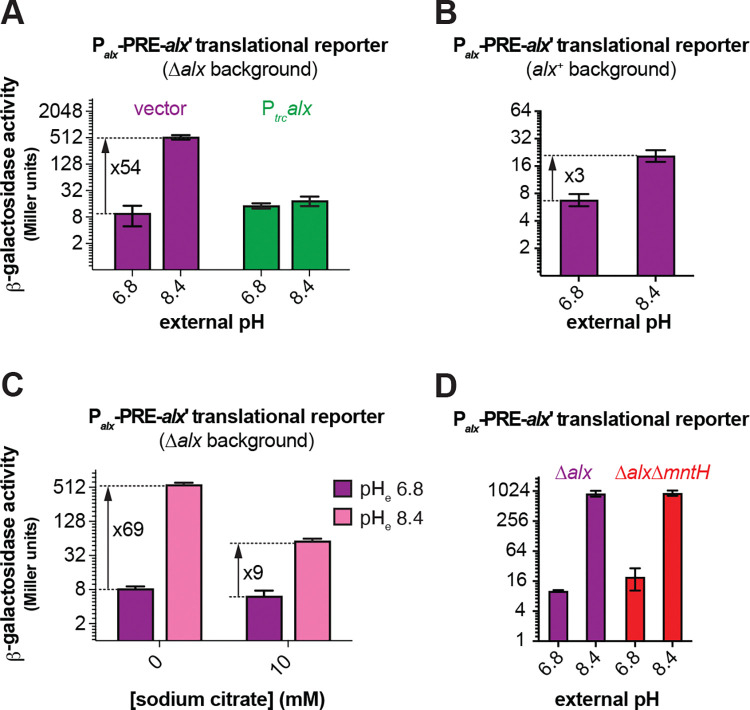
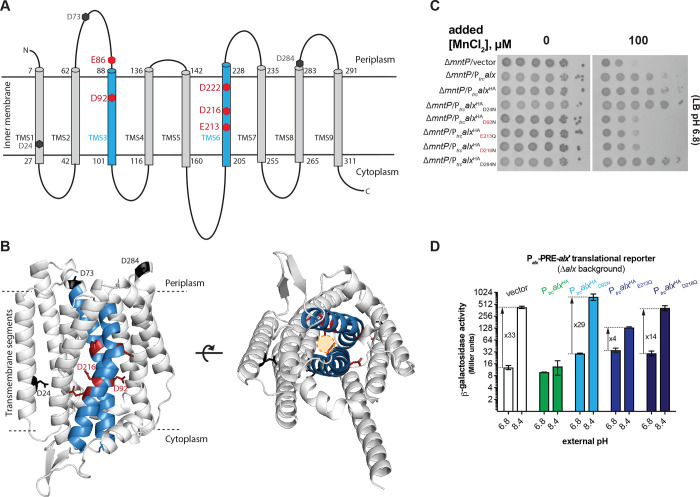
Cells use transition metal ions as structural components of biomolecules and cofactors in enzymatic reactions, making transition metals vital cellular components. The buildup of a particular metal ion in certain stress conditions becomes harmful to the organism due to the misincorporation of the excess ion into biomolecules, resulting in perturbed enzymatic activity or metal-catalyzed formation of reactive oxygen species. Organisms optimize metal concentration by regulating the expression of proteins that import and export that metal, often in a metal concentration-dependent manner. One such regulation mechanism is via riboswitches, which are 5'-untranslated regions (UTR) of an mRNA that undergo conformational changes to promote or inhibit the expression of the downstream gene, commonly in response to a ligand. The family of bacterial riboswitches shares a conserved aptamer domain that binds manganese (Mn). In , the riboswitch precedes and regulates the expression of two genes: , which based on extensive genetic evidence encodes an Mn exporter, and , which encodes a putative metal ion transporter whose cognate ligand is currently in question. Expression of is upregulated by both elevated intracellular concentrations of Mn and alkaline pH. With metal ion measurements and gene expression studies, we demonstrate that the alkalinization of media increases cytoplasmic Mn content, which in turn enhances expression. Alx then exports excess Mn to prevent toxic buildup of the metal inside the cell, with the export activity maximal at alkaline pH. Using mutational and complementation experiments, we pinpoint a set of acidic residues in the predicted transmembrane segments of Alx that play a crucial role in its Mn export. We propose that Alx-mediated Mn export provides a primary protective layer that fine-tunes the cytoplasmic Mn levels, especially during alkaline stress.
细胞将过渡金属离子用作生物分子的结构成分以及酶促反应中的辅因子,这使得过渡金属成为细胞的重要组成部分。在某些应激条件下,特定金属离子的积累会对生物体有害,因为过量的离子会错误地掺入生物分子中,导致酶活性受到干扰或金属催化形成活性氧。生物体通常以金属浓度依赖的方式,通过调节导入和输出该金属的蛋白质的表达来优化金属浓度。一种这样的调节机制是通过核糖开关,核糖开关是mRNA的5'非翻译区(UTR),通常会响应配体而发生构象变化,以促进或抑制下游基因的表达。细菌核糖开关家族共享一个结合锰(Mn)的保守适体结构域。在[具体研究对象]中,[核糖开关名称]核糖开关位于两个基因之前并调节其表达:[基因名称1],基于大量遗传学证据编码一种锰输出蛋白;以及[基因名称2],编码一种推定的金属离子转运蛋白,其同源配体目前尚不清楚。[基因名称1]的表达在细胞内锰浓度升高和碱性pH条件下均会上调。通过金属离子测量和基因表达研究,我们证明培养基碱化会增加细胞质中的锰含量,进而增强[基因名称1]的表达。然后,Alx输出过量的锰以防止金属在细胞内有毒积累,其输出活性在碱性pH条件下最大。通过突变和互补实验,我们确定了Alx预测跨膜区段中的一组酸性残基,它们在其锰输出中起关键作用。我们提出,Alx介导的锰输出提供了一层主要的保护层,可微调细胞质中的锰水平,尤其是在碱性应激期间。