InterVenn Biosciences, South San Francisco, California.
Theranostics. 2023 Apr 23;13(8):2605-2615. doi: 10.7150/thno.81760. eCollection 2023.
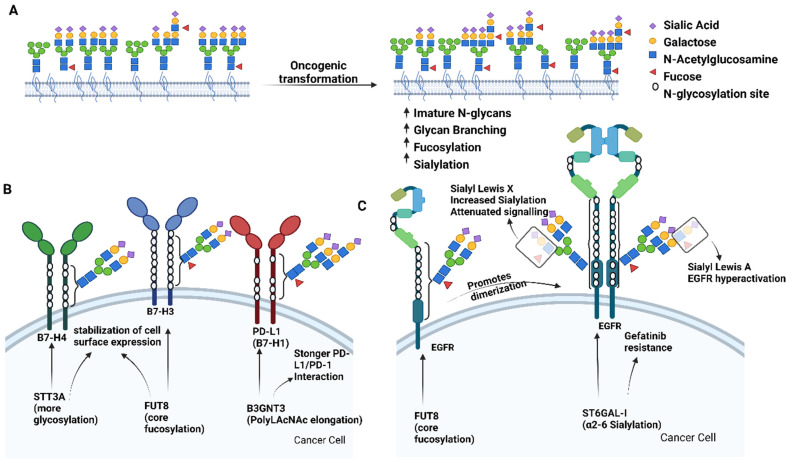
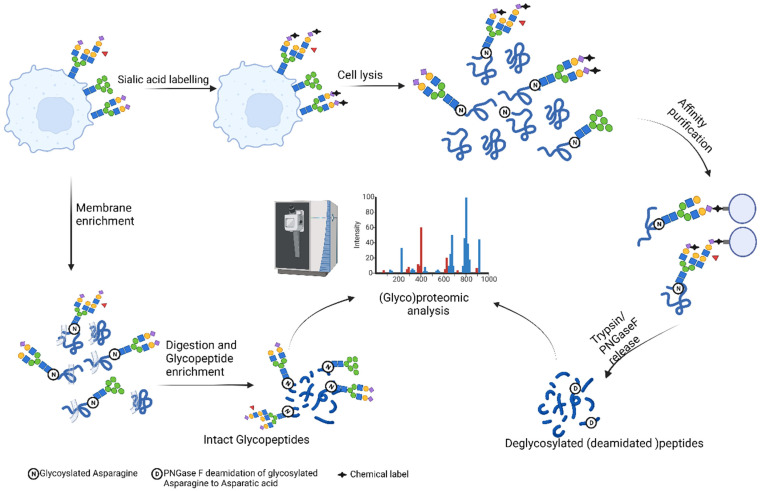
Cell surface glycosylation has a variety of functions, and its dysregulation in cancer contributes to impaired signaling, metastasis and the evasion of the immune responses. Recently, a number of glycosyltransferases that lead to altered glycosylation have been linked to reduced anti-tumor immune responses: B3GNT3, which is implicated in PD-L1 glycosylation in triple negative breast cancer, FUT8, through fucosylation of B7H3, and B3GNT2, which confers cancer resistance to T cell cytotoxicity. Given the increased appreciation of the relevance of protein glycosylation, there is a critical need for the development of methods that allow for an unbiased interrogation of cell surface glycosylation status. Here we provide an overview of the broad changes in glycosylation at the surface of cancer cell and describe selected examples of receptors with aberrant glycosylation leading to functional changes, with emphasis on immune checkpoint inhibitors, growth-promoting and growth-arresting receptors. Finally, we posit that the field of glycoproteomics has matured to an extent where large-scale profiling of intact glycopeptides from the cell surface is feasible and is poised for discovery of new actionable targets against cancer.
细胞表面糖基化具有多种功能,其在癌症中的失调导致信号转导受损、转移和免疫逃避。最近,许多导致糖基化改变的糖基转移酶与抗肿瘤免疫反应的降低有关:B3GNT3,与三阴性乳腺癌中 PD-L1 的糖基化有关;FUT8 通过 B7H3 的岩藻糖化;B3GNT2 赋予癌细胞对 T 细胞细胞毒性的抵抗力。鉴于对蛋白质糖基化相关性的认识不断提高,迫切需要开发能够对细胞表面糖基化状态进行无偏检测的方法。本文概述了癌细胞表面糖基化的广泛变化,并描述了一些具有异常糖基化导致功能改变的受体的例子,重点介绍了免疫检查点抑制剂、促生长和生长抑制受体。最后,我们认为糖蛋白质组学领域已经成熟到可以从细胞表面大规模分析完整糖肽的程度,并准备好发现针对癌症的新的可操作靶标。