University of Ontario Institute of Technology, 2000 Simcoe St N, Oshawa, ON, L1G 0C5, Canada.
BMC Geriatr. 2023 May 22;23(1):317. doi: 10.1186/s12877-023-03997-w.
The purpose of this analysis was to evaluate the relationship between baseline physical activity levels of older adults and geriatric-relevant health outcomes at 3-year follow-up, and to determine whether baseline neighbourhood characteristics alter this association.
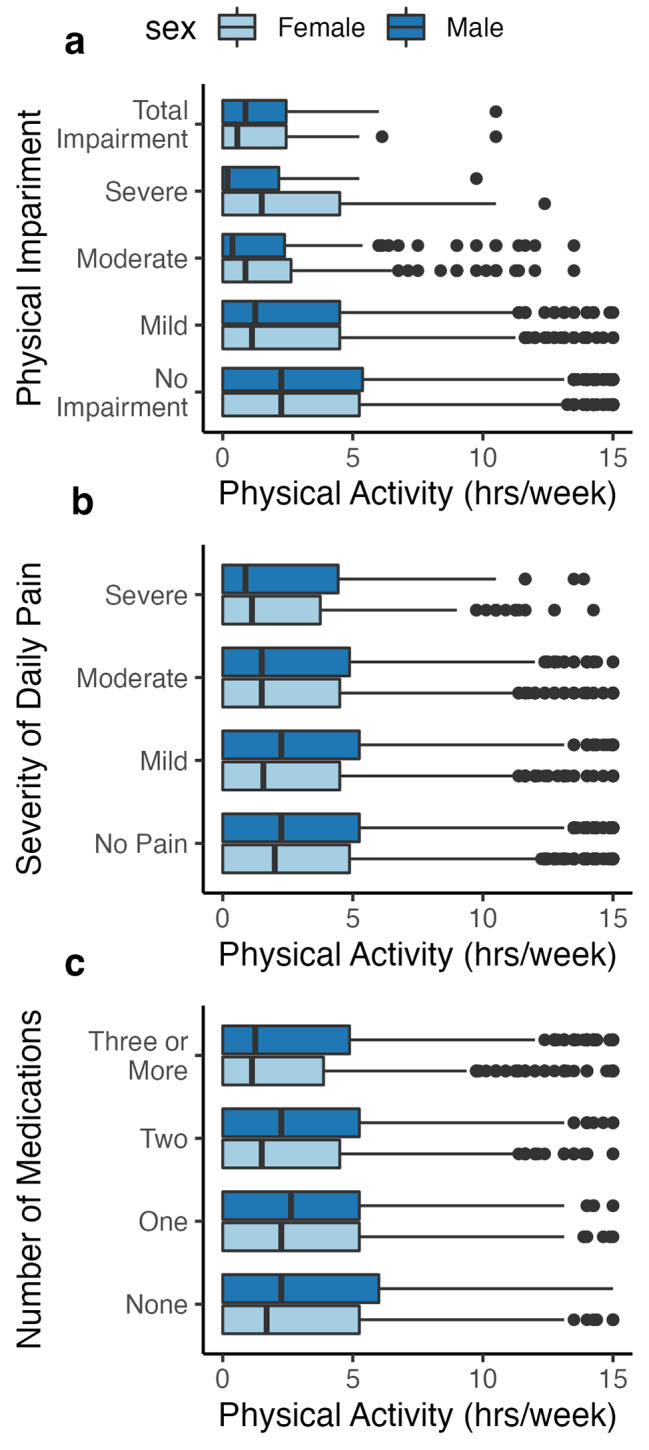
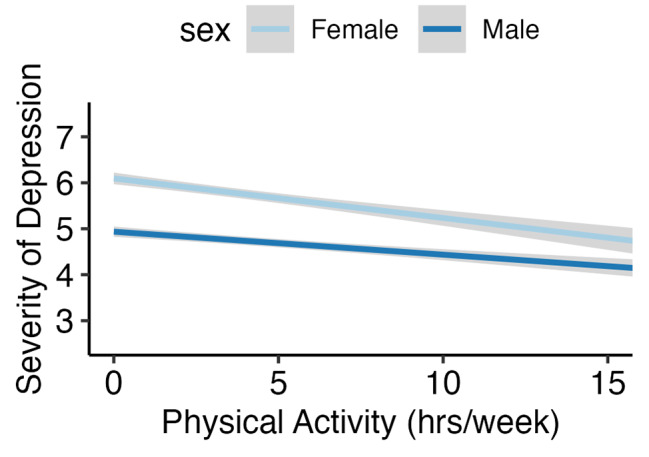
Data from the Canadian Longitudinal Study on Aging (CLSA) were used to assess geriatric-relevant outcomes of physical impairment, medication use, severity of daily pain, and depressive symptoms. Data from the Canadian Active Living Environments (Can-ALE) and the Normalized Difference Vegetative Index (NDVI) were used to determine neighbourhood walkability and greenness, respectively. The analytic sample included adults who were 65 years or older at baseline [Formula: see text]. Adjusted odds ratios and 95% confidence intervals for the base relationships were calculated using proportional odds logistic regression (physical impairment, pain, medication use), and linear regression (depressive symptoms). Moderation effects of environmental factors were assessed using greenness and walkability.
The base relationships showed protective associations between each additional hour per week of total physical activity and physical impairment [Formula: see text] daily pain severity [Formula: see text] medication use [Formula: see text], and depressive symptoms [Formula: see text]. Additive moderation effects were seen when greenness was added to physical impairment [Formula: see text], daily pain severity [Formula: see text], and depressive symptoms [Formula: see text] but no moderation was seen with walkability. Sex differences were observed. For example, greenness moderation was found in severity of daily pain in males but not in females.
Future research investigating geriatric-relevant health outcomes and physical activity should consider neighbourhood greenness as a potential moderator.
本分析旨在评估老年人基线体力活动水平与 3 年随访时老年相关健康结局之间的关系,并确定基线社区特征是否会改变这种关联。
使用加拿大老龄化纵向研究(CLSA)的数据评估与老年相关的身体机能障碍、药物使用、日常疼痛严重程度和抑郁症状等健康结局。使用加拿大积极生活环境(Can-ALE)和归一化差异植被指数(NDVI)数据分别确定社区步行能力和绿化程度。分析样本包括基线时年龄在 65 岁或以上的成年人[Formula: see text]。使用比例优势逻辑回归(身体机能障碍、疼痛、药物使用)和线性回归(抑郁症状)计算基本关系的调整比值比和 95%置信区间。使用绿化程度和步行能力评估环境因素的调节作用。
基础关系显示,每周额外增加 1 小时的总体力活动与身体机能障碍[Formula: see text]日常疼痛严重程度[Formula: see text]药物使用[Formula: see text]以及抑郁症状[Formula: see text]之间存在保护关联。当将绿化程度纳入身体机能障碍[Formula: see text]日常疼痛严重程度[Formula: see text]和抑郁症状[Formula: see text]时,观察到了附加的调节作用,但在步行能力方面没有观察到调节作用。还观察到了性别差异。例如,在男性中观察到了绿化程度对日常疼痛严重程度的调节作用,但在女性中没有观察到。
未来研究调查与老年相关的健康结局和体力活动时,应将社区绿化程度作为一个潜在的调节因素。