School of Health Sciences, University of Southampton, Southampton, UK.
Southern Health NHS Foundation Trust, Southampton, UK.
Cochrane Database Syst Rev. 2023 May 23;5(5):CD013088. doi: 10.1002/14651858.CD013088.pub2.
Ageing populations globally have contributed to increasing numbers of people living with frailty, which has significant implications for use of health and care services and costs. The British Geriatrics Society defines frailty as "a distinctive health state related to the ageing process in which multiple body systems gradually lose their inbuilt reserves". This leads to an increased susceptibility to adverse outcomes, such as reduced physical function, poorer quality of life, hospital admissions, and mortality. Case management interventions delivered in community settings are led by a health or social care professional, supported by a multidisciplinary team, and focus on the planning, provision, and co-ordination of care to meet the needs of the individual. Case management is one model of integrated care that has gained traction with policymakers to improve outcomes for populations at high risk of decline in health and well-being. These populations include older people living with frailty, who commonly have complex healthcare and social care needs but can experience poorly co-ordinated care due to fragmented care systems.
To assess the effects of case management for integrated care of older people living with frailty compared with usual care.
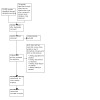
We searched CENTRAL, MEDLINE, Embase, CINAHL, Health Systems Evidence, and PDQ Evidence and databases from inception to 23 September 2022. We also searched clinical registries and relevant grey literature databases, checked references of included trials and relevant systematic reviews, conducted citation searching of included trials, and contacted topic experts.
We included randomised controlled trials (RCTs) that compared case management with standard care in community-dwelling people aged 65 years and older living with frailty.
We followed standard methodological procedures recommended by Cochrane and the Effective Practice and Organisation of Care Group. We used the GRADE approach to assess the certainty of the evidence.
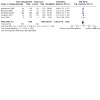
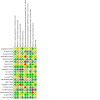
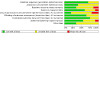
We included 20 trials (11,860 participants), all of which took place in high-income countries. Case management interventions in the included trials varied in terms of organisation, delivery, setting, and care providers involved. Most trials included a variety of healthcare and social care professionals, including nurse practitioners, allied healthcare professionals, social workers, geriatricians, physicians, psychologists, and clinical pharmacists. In nine trials, the case management intervention was delivered by nurses only. Follow-up ranged from three to 36 months. We judged most trials at unclear risk of selection and performance bias; this consideration, together with indirectness, justified downgrading the certainty of the evidence to low or moderate. Case management compared to standard care may result in little or no difference in the following outcomes. • Mortality at 12 months' follow-up (7.0% in the intervention group versus 7.5% in the control group; risk ratio (RR) 0.98, 95% confidence interval (CI) 0.84 to 1.15; I = 11%; 14 trials, 9924 participants; low-certainty evidence) • Change in place of residence to a nursing home at 12 months' follow-up (9.9% in the intervention group versus 13.4% in the control group; RR 0.73, 95% CI 0.53 to 1.01; I = 0%; 4 trials, 1108 participants; low-certainty evidence) • Quality of life at three to 24 months' follow-up (results not pooled; mean differences (MDs) ranged from -6.32 points (95% CI -11.04 to -1.59) to 6.1 points (95% CI -3.92 to 16.12) when reported; 11 trials, 9284 participants; low-certainty evidence) • Serious adverse effects at 12 to 24 months' follow-up (results not pooled; 2 trials, 592 participants; low-certainty evidence) • Change in physical function at three to 24 months' follow-up (results not pooled; MDs ranged from -0.12 points (95% CI -0.93 to 0.68) to 3.4 points (95% CI -2.35 to 9.15) when reported; 16 trials, 10,652 participants; low-certainty evidence) Case management compared to standard care probably results in little or no difference in the following outcomes. • Healthcare utilisation in terms of hospital admission at 12 months' follow-up (32.7% in the intervention group versus 36.0% in the control group; RR 0.91, 95% CI 0.79 to 1.05; I = 43%; 6 trials, 2424 participants; moderate-certainty evidence) • Change in costs at six to 36 months' follow-up (results not pooled; 14 trials, 8486 participants; moderate-certainty evidence), which usually included healthcare service costs, intervention costs, and other costs such as informal care.
AUTHORS' CONCLUSIONS: We found uncertain evidence regarding whether case management for integrated care of older people with frailty in community settings, compared to standard care, improved patient and service outcomes or reduced costs. There is a need for further research to develop a clear taxonomy of intervention components, to determine the active ingredients that work in case management interventions, and identify how such interventions benefit some people and not others.
全球人口老龄化导致越来越多的体弱多病者,这对卫生和保健服务的使用以及成本产生了重大影响。英国老年医学会将虚弱定义为“一种与衰老过程相关的独特健康状态,其中多个身体系统逐渐失去其内在储备”。这导致对不良结果的敏感性增加,例如身体功能下降、生活质量较差、住院和死亡。在社区环境中由医疗或社会保健专业人员领导的病例管理干预措施,由多学科团队提供支持,重点是规划、提供和协调护理,以满足个人的需求。病例管理是一种整合护理模式,已引起政策制定者的关注,以改善健康和福祉状况下降风险较高的人群的结局。这些人群包括患有虚弱症的老年人,他们通常有复杂的医疗和社会保健需求,但由于护理系统碎片化,可能会经历护理协调不佳的情况。
评估针对体弱多病的老年人进行整合护理的病例管理与常规护理相比的效果。
我们检索了 CENTRAL、MEDLINE、Embase、CINAHL、Health Systems Evidence 和 PDQ Evidence 数据库,检索时间为 2022 年 9 月 23 日。我们还检索了临床登记处和相关灰色文献数据库,检查了纳入试验的参考文献和相关系统评价,进行了纳入试验的引文搜索,并联系了专题专家。
我们纳入了比较社区居住的体弱多病的老年人接受病例管理与标准护理的随机对照试验(RCT)。
我们遵循了 Cochrane 和有效实践与护理组织推荐的标准方法学程序。我们使用 GRADE 方法评估证据的确定性。
我们纳入了 20 项试验(11860 名参与者),这些试验均在高收入国家进行。纳入试验中的病例管理干预措施在组织、实施、地点和参与的护理提供者方面有所不同。大多数试验包括各种医疗保健和社会保健专业人员,包括护士从业者、联合保健专业人员、社会工作者、老年病学家、医生、心理学家和临床药师。在 9 项试验中,病例管理干预措施仅由护士提供。随访时间从 3 个月到 36 个月不等。我们判断大多数试验的选择和绩效偏倚风险不明确;考虑到间接性,这一考虑以及间接性,证明证据的确定性为低或中。与标准护理相比,病例管理可能对以下结果没有差异或差异很小。
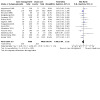
12 个月随访时的死亡率(干预组为 7.0%,对照组为 7.5%;风险比(RR)0.98,95%置信区间(CI)0.84 至 1.15;I = 11%;14 项试验,9924 名参与者;低确定性证据)
12 个月随访时居住地转移至疗养院(干预组为 9.9%,对照组为 13.4%;RR 0.73,95%CI 0.53 至 1.01;I = 0%;4 项试验,1108 名参与者;低确定性证据)
3 至 24 个月随访时的生活质量(结果未汇总;当报告时,差异平均值(MD)范围为-6.32 分(95%CI -11.04 至-1.59)至 6.1 分(95%CI -3.92 至 16.12);11 项试验,9284 名参与者;低确定性证据)
12 至 24 个月随访时的严重不良事件(结果未汇总;2 项试验,592 名参与者;低确定性证据)
3 至 24 个月随访时的身体功能变化(结果未汇总;MD 范围为-0.12 分(95%CI -0.93 至 0.68)至 3.4 分(95%CI -2.35 至 9.15);16 项试验,10652 名参与者;低确定性证据)
与标准护理相比,病例管理可能对以下结果没有差异或差异很小。
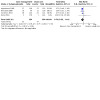
12 个月随访时的医疗保健利用情况,包括住院率(干预组为 32.7%,对照组为 36.0%;RR 0.91,95%CI 0.79 至 1.05;I = 43%;6 项试验,2424 名参与者;中等确定性证据)
6 至 36 个月随访时的成本变化(结果未汇总;14 项试验,8486 名参与者;中等确定性证据),通常包括医疗服务成本、干预成本和其他成本,如非正式护理。
我们发现,关于针对体弱多病的老年人进行社区环境中的整合护理病例管理与标准护理相比是否能改善患者和服务结局或降低成本,证据尚不确定。需要进一步研究以制定干预措施组件的明确分类法,确定在病例管理干预中起作用的有效成分,并确定这些干预措施如何使一些人受益而不是其他人受益。