Duque Sofia, Piotrowicz Karolina, Masud Tahir, Wissendorff Ekdahl Anne, Herghelegiu Anna Marie, Pavic Tajana, Kravvariti Evrydiki, Bogdanović Nenad, Bonin-Guillaume Sylvie, Martínez Velilla Nicolas, Roller Wirnsberger Regina, Vassallo Michael, Kossioni Anastassia, Frost Rachael, Macijauskiene Jurate, Koca Meltem, Benetos Athanase, Petrovic Mirko, Kotsani Marina
Department of Internal Medicine, Hospital CUF Descobertas; Preventive Medicine and Public Health Institute, Faculty of Medicine, University of Lisbon, Lisbon, Portugal.
Department of Internal Medicine and Gerontology, Faculty of Medicine, Jagiellonian University Medical College, Jakubowskiego 2 Str., 30-688, Kraków, Poland.
Eur Geriatr Med. 2025 Apr;16(2):411-423. doi: 10.1007/s41999-024-01137-0. Epub 2025 Feb 19.
The growing challenges of population aging create a pressing need for specialized geriatric medicine services to effectively address the complex health needs of older adults and influence supportive healthcare policies. Older patients may present clinical complexity with multimorbidity, disability, and/or frailty, necessitating a shift from the traditional organ-oriented clinical approach to a holistic, patient-centered care model.
Despite recommendations from the World Health Organization and scientific and professional societies, geriatric medicine is not universally recognized as a distinct specialty in Europe, and education in this field remains heterogeneous. A notable discrepancy in the availability of geriatric services and education in this field across European countries can be found. Many healthcare professionals lack basic training in geriatric medicine, contributing to fragmented care and poorer health outcomes. To address these challenges, it is essential to integrate geriatric medicine into undergraduate and postgraduate curricula for all healthcare professionals.
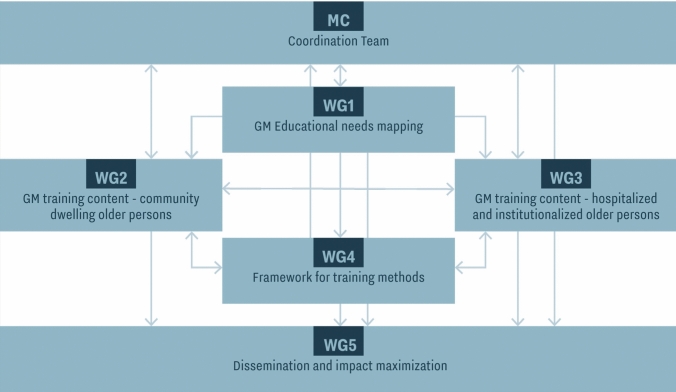
The COST Action 21,122 PROGRAMMING (PROmoting GeRiAtric Medicine in countries where it is still eMergING) initiative aims to promote geriatric medicine by developing targeted educational goals and programs and fostering interdisciplinary collaboration. This initiative aims to assess the current state of geriatric medicine education and identify both global and local educational needs for developing clinical skills among healthcare professionals. In addition, it seeks to establish consensus on core curricula tailored to local contexts and disseminate findings and recommendations to stakeholders, policymakers, and the public. By uniting diverse stakeholders, PROGRAMMING aspires to create sustainable changes in geriatric care across Europe.
人口老龄化带来的挑战日益严峻,迫切需要专业的老年医学服务,以有效满足老年人复杂的健康需求,并影响支持性的医疗政策。老年患者可能存在多种疾病、残疾和/或虚弱等临床复杂性问题,这就需要从传统的以器官为导向的临床方法转向整体的、以患者为中心的护理模式。
尽管世界卫生组织以及科学和专业协会提出了建议,但老年医学在欧洲并未被普遍认可为一个独特的专业领域,该领域的教育也仍然参差不齐。在欧洲各国,老年医学服务和该领域教育的可及性存在显著差异。许多医疗保健专业人员缺乏老年医学的基础培训,这导致了护理的碎片化和较差的健康结果。为应对这些挑战,将老年医学纳入所有医疗保健专业人员的本科和研究生课程至关重要。
“成本行动21122——在老年医学仍在兴起的国家推广老年医学”倡议旨在通过制定有针对性的教育目标和计划以及促进跨学科合作来推广老年医学。该倡议旨在评估老年医学教育的现状,并确定医疗保健专业人员培养临床技能的全球和本地教育需求。此外,它还寻求就适合当地情况的核心课程达成共识,并将研究结果和建议传播给利益相关者、政策制定者和公众。通过团结不同的利益相关者,“成本行动21122”希望在整个欧洲的老年护理方面创造可持续的变革。