Fang Fei, Feng Tang, Li Jianwei, Zhang Huaiyi, Wang Qin, Chen Yidan, Wang Guixue, Shen Yang, Liu Xiaoheng
Institute of Biomedical Engineering, West China School of Basic Medical Sciences & Forensic Medicine, Sichuan University, Chengdu, Sichuan 610041, China.
Department of Endocrinology and Metabolism, West China Hospital, Sichuan University, Chengdu, Sichuan 610041, China.
Genes Dis. 2022 Apr 25;10(2):583-595. doi: 10.1016/j.gendis.2022.03.020. eCollection 2023 Mar.
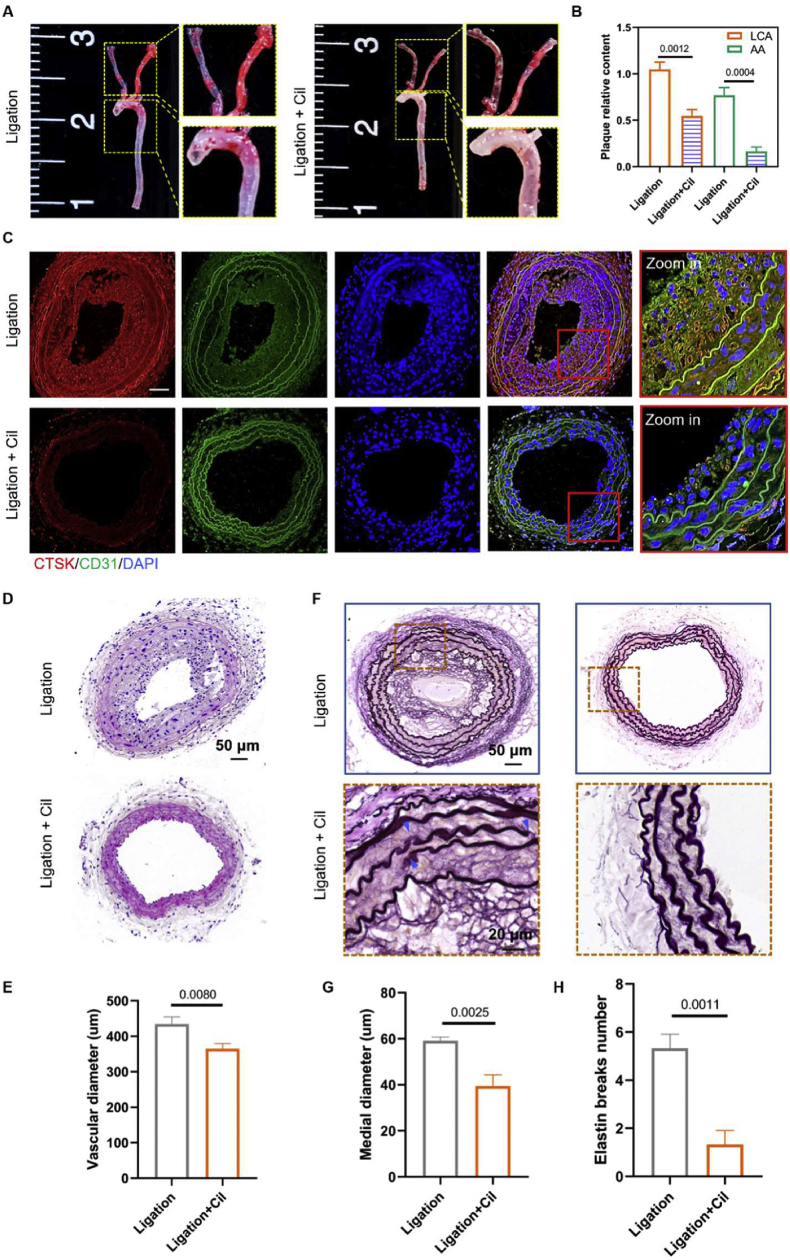
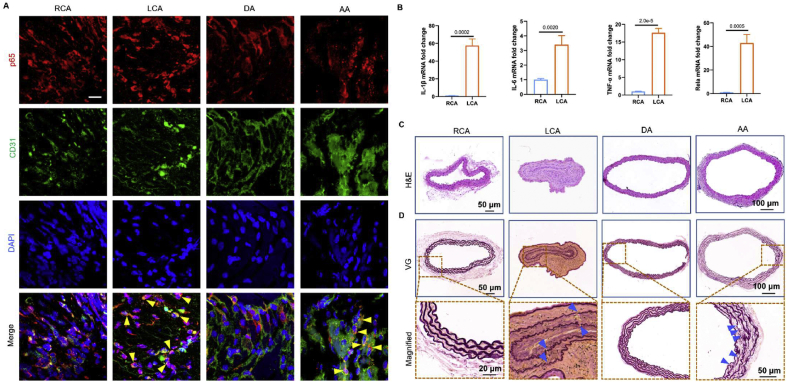
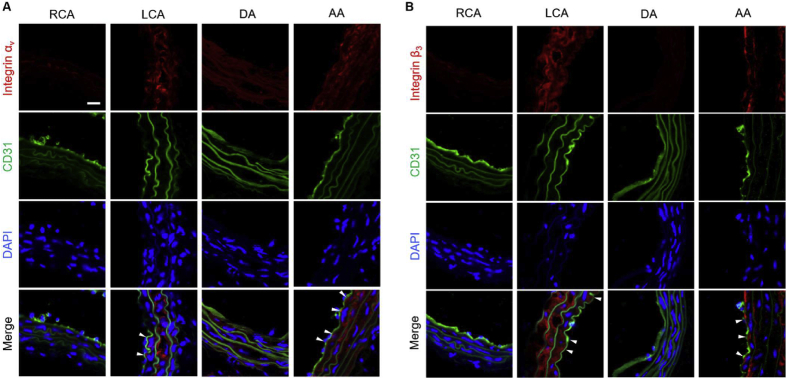
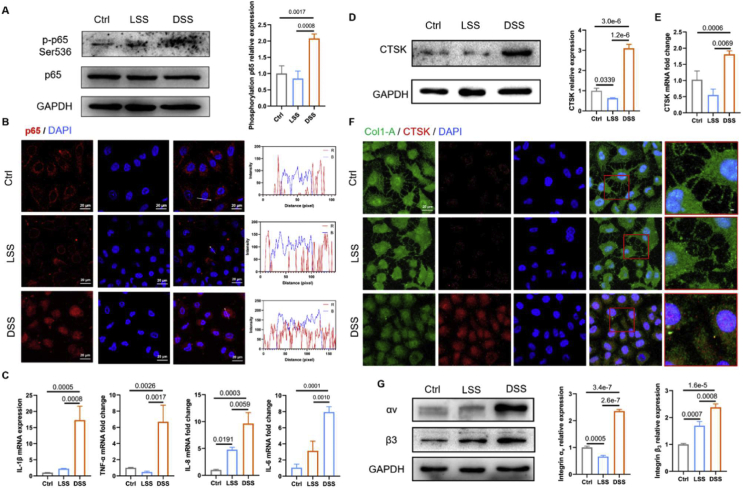
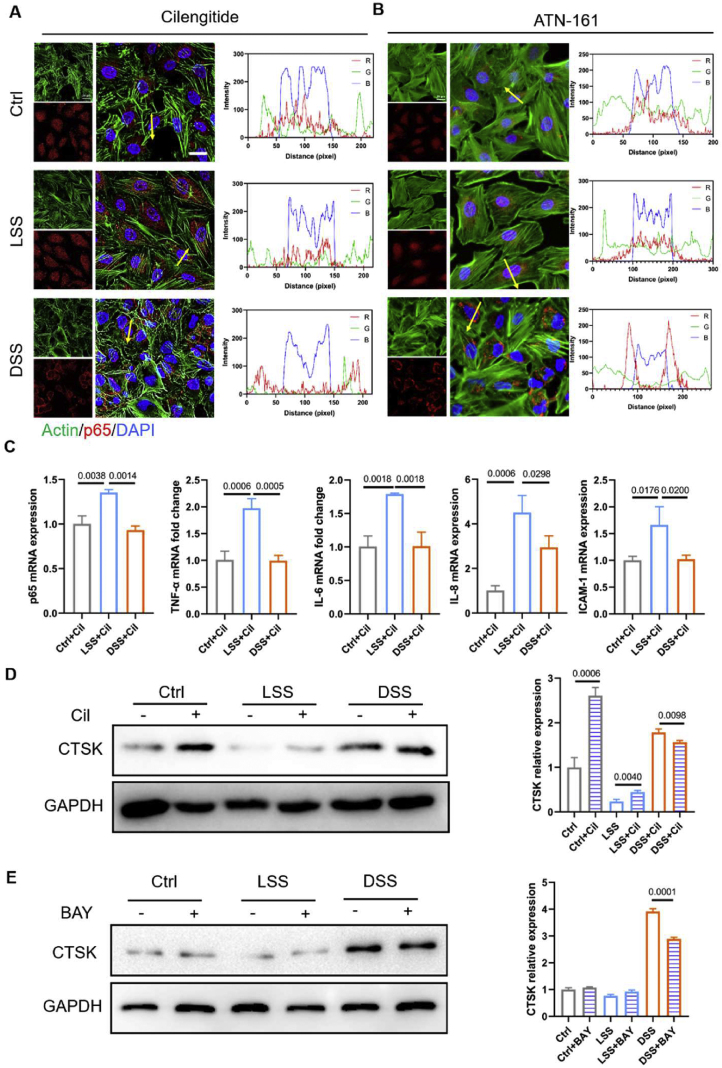
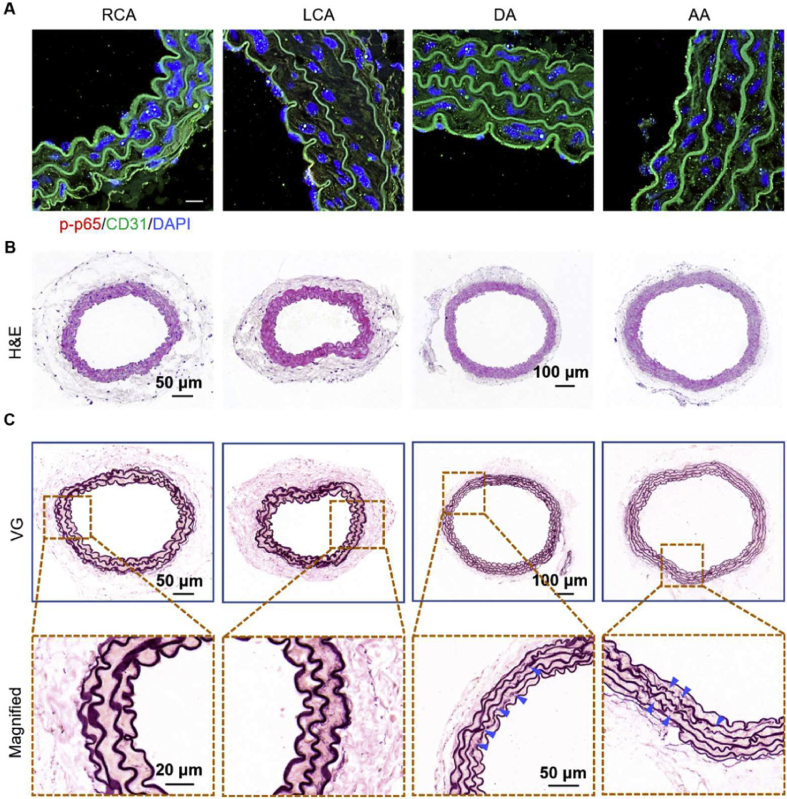
Atherosclerosis is a chronic inflammatory disease, occurring preferentially in bifurcation, branching, and bending of blood vessels exposed to disturbed flow. Disturbed flow in atheroprone areas activates elevated proteases, degrading elastin lamellae and collagenous matrix, resulting in endothelial dysfunction and vascular remodeling. As a mediator for extracellular matrix protein degradation, cathepsin K (CTSK) was directly regulated by hemodynamics and contributed to atherosclerosis. The mechanism of CTSK responding to disturbed flow and contributing to disturbed flow-induced atherosclerosis is unclear. In this study, the partial carotid ligation model of mice and disturbed shear stress model were constructed to explore the contribution and potential mechanism of CTSK in atherosclerosis. Our results indicated that CTSK elevated in the disturbed flow area and along with endothelial inflammation and atherogenesis. Additionally, the expression of integrin αvβ3 was upregulated in these atheroprone areas. We found that inhibition of the integrin αvβ3-cytoskeleton pathway could significantly block the activation of NF-κB and the expression of CTSK. Collectively, our findings unraveled that disturbed flow induces increased CTSK expression, and contributes to endothelial inflammation and vascular remodeling, leading to atherogenesis eventually. This study is helpful to provide new enlightenment for the therapy of atherosclerosis.
动脉粥样硬化是一种慢性炎症性疾病,优先发生于暴露于紊乱血流的血管分叉、分支和弯曲处。易发生动脉粥样硬化区域的紊乱血流会激活蛋白酶水平升高,降解弹性蛋白层和胶原基质,导致内皮功能障碍和血管重塑。组织蛋白酶K(CTSK)作为细胞外基质蛋白降解的介质,直接受血流动力学调节并促进动脉粥样硬化。CTSK对紊乱血流作出反应并促进紊乱血流诱导的动脉粥样硬化的机制尚不清楚。在本研究中,构建了小鼠部分颈动脉结扎模型和紊乱剪切应力模型,以探讨CTSK在动脉粥样硬化中的作用及潜在机制。我们的结果表明,CTSK在紊乱血流区域升高,并伴有内皮炎症和动脉粥样硬化形成。此外,整合素αvβ3在这些易发生动脉粥样硬化的区域表达上调。我们发现抑制整合素αvβ3-细胞骨架途径可显著阻断NF-κB的激活和CTSK的表达。总的来说,我们的研究结果揭示了紊乱血流诱导CTSK表达增加,促进内皮炎症和血管重塑,最终导致动脉粥样硬化形成。本研究有助于为动脉粥样硬化的治疗提供新的启示。