Qin Xian, Zhang Kun, Qiu Juhui, Wang Nan, Qu Kai, Cui Yuliang, Huang Junli, Luo Li, Zhong Yuan, Tian Tian, Wu Wei, Wang Yi, Wang Guixue
Key Laboratory for Biorheological Science and Technology of Ministry of Education, State and Local Joint Engineering Laboratory for Vascular Implants, Bioengineering College of Chongqing University, Chongqing, 400030, China.
The Nanoscience Centre, University of Cambridge, Cambridge, CB3 0FF, UK.
Bioact Mater. 2021 Nov 6;9:397-410. doi: 10.1016/j.bioactmat.2021.10.038. eCollection 2022 Mar.
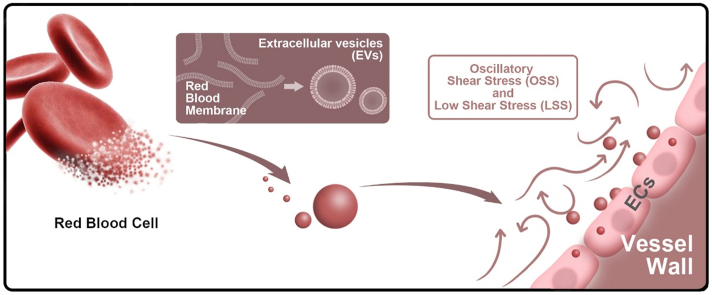
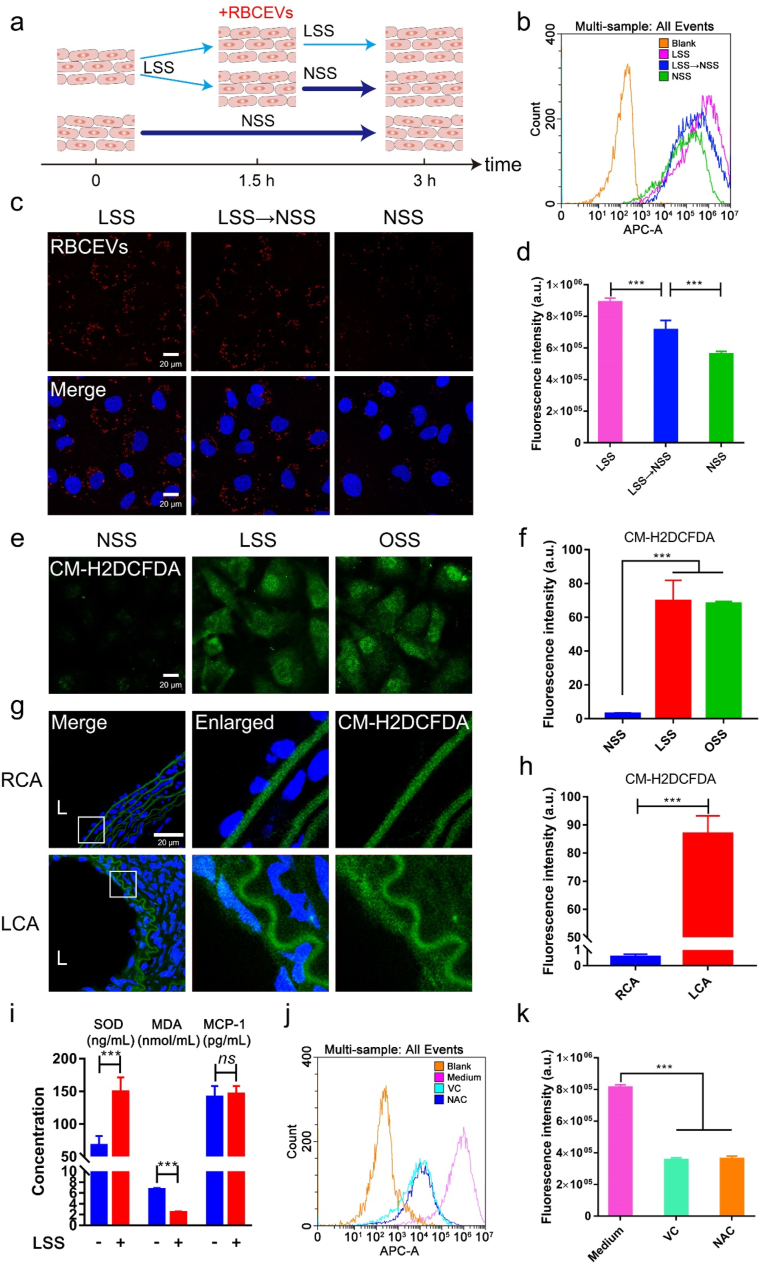
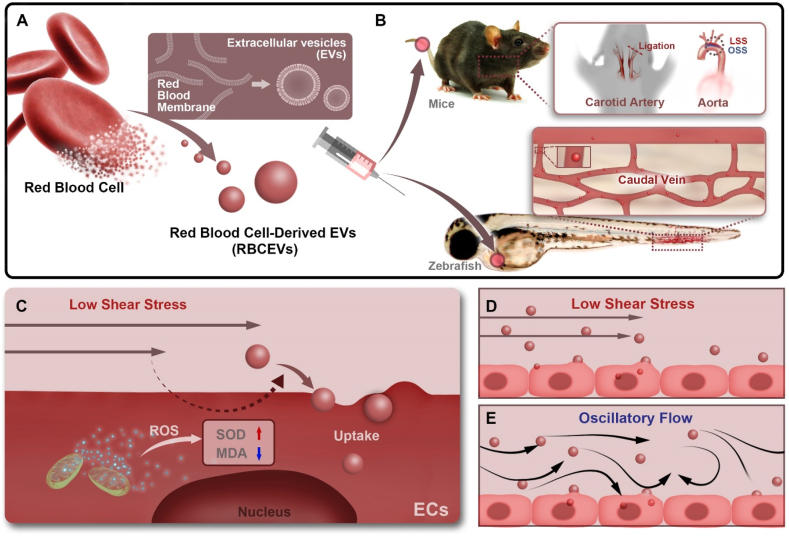
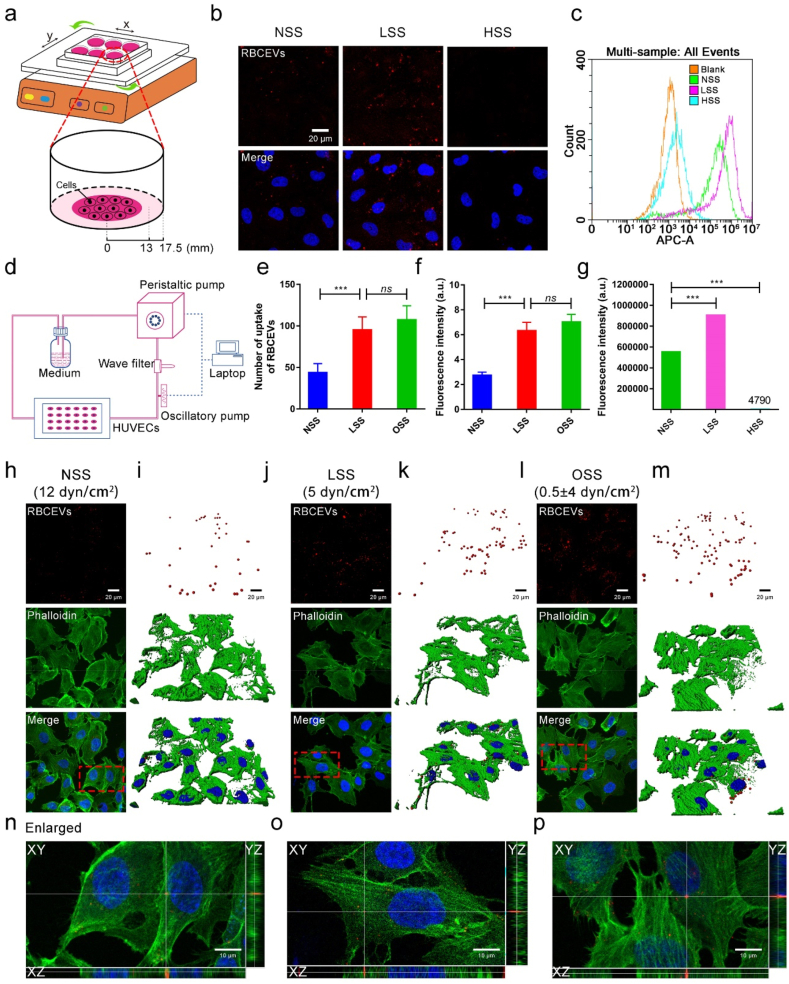
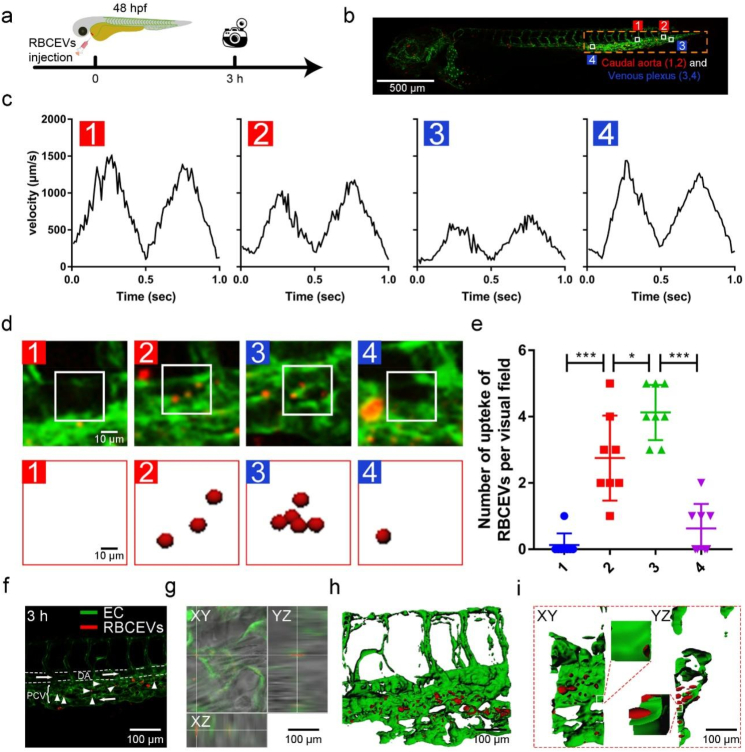
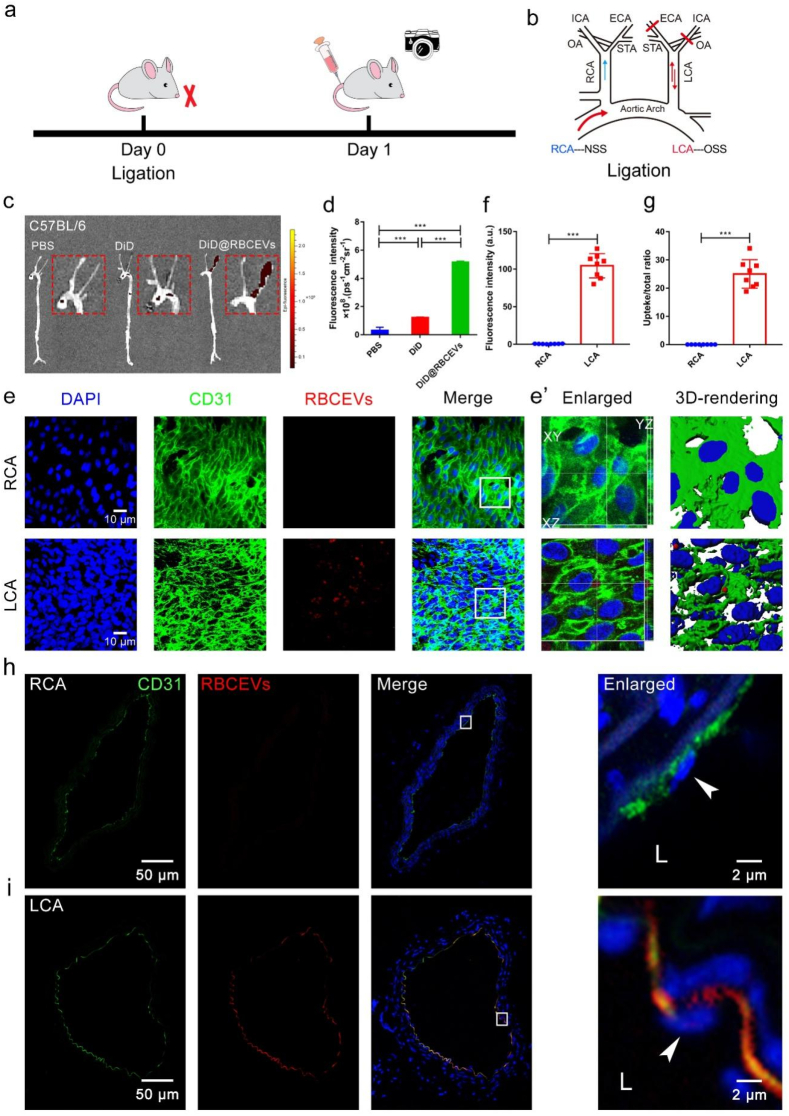
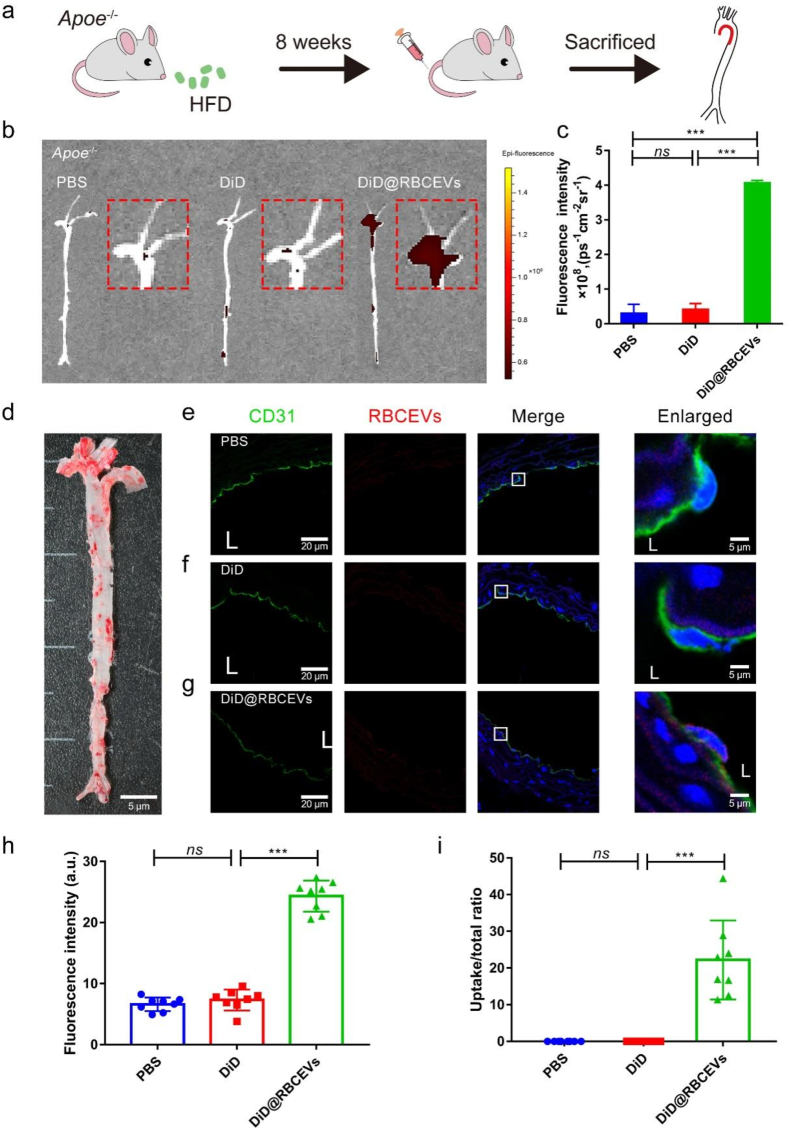
Extracellular vesicles (EVs) are increasingly used as delivery vehicles for drugs and bioactive molecules, which usually require intravascular administration. The endothelial cells covering the inner surface of blood vessels are susceptible to the shear stress of blood flow. Few studies demonstrate the interplay of red blood cell-derived EVs (RBCEVs) and endothelial cells. Thus, the phagocytosis of EVs by vascular endothelial cells during blood flow needs to be elucidated. In this study, red blood cell-derived extracellular vesicles (RBCEVs) were constructed to investigate endothelial cell phagocytosis and animal models. Results showed that low magnitude shear stress including low shear stress (LSS) and oscillatory shear stress (OSS) could promote the uptake of RBCEVs by endothelial cells . In addition, in zebrafish and mouse models, RBCEVs tend to be internalized by endothelial cells under LSS or OSS. Moreover, RBCEVs are easily engulfed by endothelial cells in atherosclerotic plaques exposed to LSS or OSS. In terms of mechanism, oxidative stress induced by LSS is part of the reason for the increased uptake of endothelial cells. Overall, this study shows that vascular endothelial cells can easily engulf EVs in areas of low magnitude shear stress, which will provide a theoretical basis for the development and utilization of EVs-based nano-drug delivery systems .
细胞外囊泡(EVs)越来越多地被用作药物和生物活性分子的递送载体,这些药物和生物活性分子通常需要血管内给药。覆盖血管内表面的内皮细胞易受血流剪切应力的影响。很少有研究证明红细胞衍生的细胞外囊泡(RBCEVs)与内皮细胞之间的相互作用。因此,需要阐明血流过程中血管内皮细胞对EVs的吞噬作用。在本研究中,构建了红细胞衍生的细胞外囊泡(RBCEVs)以研究内皮细胞吞噬作用和动物模型。结果表明,低强度剪切应力,包括低剪切应力(LSS)和振荡剪切应力(OSS),可促进内皮细胞对RBCEVs的摄取。此外,在斑马鱼和小鼠模型中,RBCEVs在LSS或OSS作用下倾向于被内皮细胞内化。而且,在暴露于LSS或OSS的动脉粥样硬化斑块中,RBCEVs很容易被内皮细胞吞噬。在机制方面,LSS诱导的氧化应激是内皮细胞摄取增加的部分原因。总体而言,本研究表明血管内皮细胞在低强度剪切应力区域能够轻松吞噬EVs,这将为基于EVs的纳米药物递送系统的开发和利用提供理论依据。