eBrain Lab, School of Mechatronic Systems Engineering, Simon Fraser University, 13750-96 Ave, Surrey, BC, V3V 1Z2, Canada.
University of Toronto, 27 King's College Circle, Toronto, ON, M5S 1A1, Canada.
Sci Rep. 2023 May 24;13(1):8418. doi: 10.1038/s41598-023-35179-4.
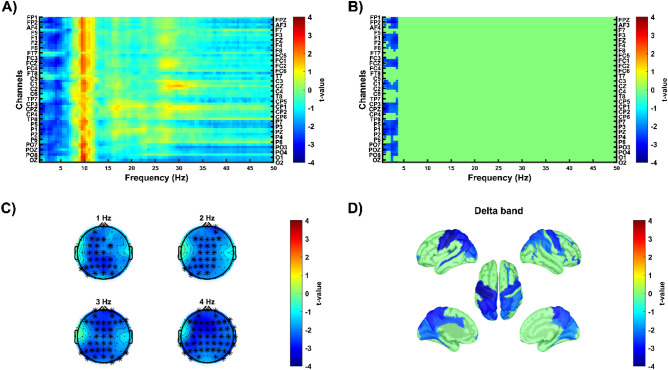
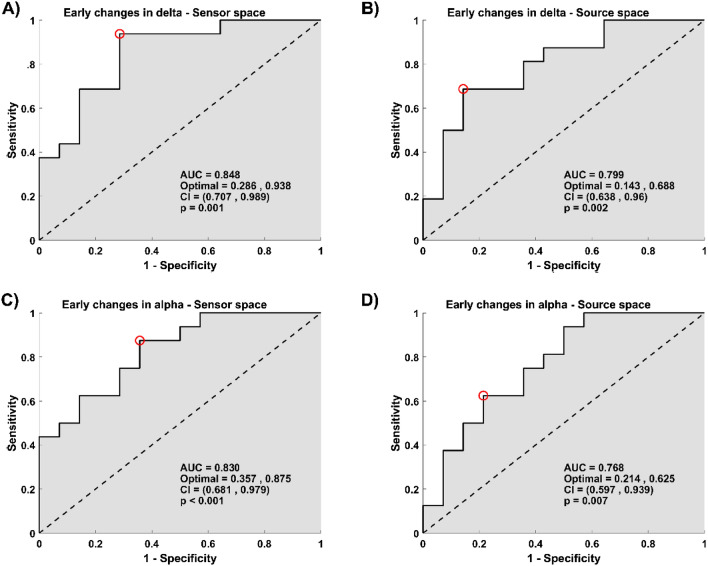
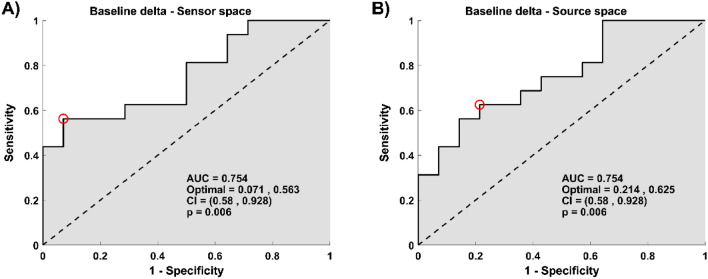
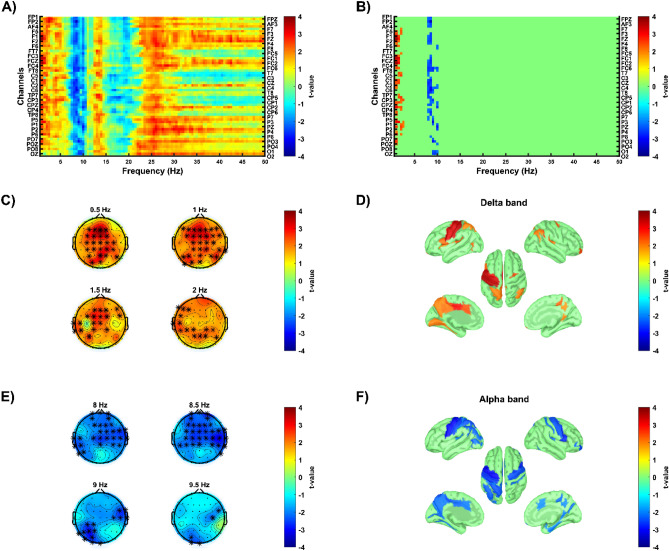
Cognitive behavioral therapy (CBT) is often recommended as a first-line treatment in depression. However, access to CBT remains limited, and up to 50% of patients do not benefit from this therapy. Identifying biomarkers that can predict which patients will respond to CBT may assist in designing optimal treatment allocation strategies. In a Canadian Biomarker Integration Network for Depression (CAN-BIND) study, forty-one adults with depression were recruited to undergo a 16-week course of CBT with thirty having resting-state electroencephalography (EEG) recorded at baseline and week 2 of therapy. Successful clinical response to CBT was defined as a 50% or greater reduction in Montgomery-Åsberg Depression Rating Scale (MADRS) score from baseline to post-treatment completion. EEG relative power spectral measures were analyzed at baseline, week 2, and as early changes from baseline to week 2. At baseline, lower relative delta (0.5-4 Hz) power was observed in responders. This difference was predictive of successful clinical response to CBT. Furthermore, responders exhibited an early increase in relative delta power and a decrease in relative alpha (8-12 Hz) power compared to non-responders. These changes were also found to be good predictors of response to the therapy. These findings showed the potential utility of resting-state EEG in predicting CBT outcomes. They also further reinforce the promise of an EEG-based clinical decision-making tool to support treatment decisions for each patient.
认知行为疗法(CBT)通常被推荐作为抑郁症的一线治疗方法。然而,CBT 的可及性仍然有限,多达 50%的患者无法从这种治疗中获益。确定能够预测哪些患者将对 CBT 有反应的生物标志物,可能有助于设计最佳的治疗分配策略。在加拿大抑郁症生物标志物综合网络(CAN-BIND)研究中,招募了 41 名抑郁症成年人接受为期 16 周的 CBT 治疗,其中 30 人在基线和治疗第 2 周进行静息态脑电图(EEG)记录。CBT 成功的临床反应定义为从基线到治疗完成时蒙哥马利-阿斯伯格抑郁评定量表(MADRS)评分降低 50%或更多。在基线、第 2 周以及从基线到第 2 周的早期变化时分析 EEG 相对功率谱测量值。在基线时, responder 观察到相对 delta(0.5-4 Hz)功率较低。这种差异可预测 CBT 的临床反应。此外,与 non-responder 相比,responder 在早期表现出相对 delta 功率的增加和相对 alpha(8-12 Hz)功率的降低。这些变化也被发现是对治疗反应的良好预测指标。这些发现表明静息态 EEG 在预测 CBT 结果方面具有潜在的应用价值。它们还进一步强化了基于 EEG 的临床决策工具的承诺,以支持每位患者的治疗决策。