Centre for Genomic Pathogen Surveillance, Big Data Institute, University of Oxford, Oxford OX3 7LF, UK.
Specialist Antimicrobial Chemotherapy Unit, Public Health Wales Microbiology, Cardiff CF14 4XW, UK.
Microb Genom. 2023 May;9(5). doi: 10.1099/mgen.0.001016.
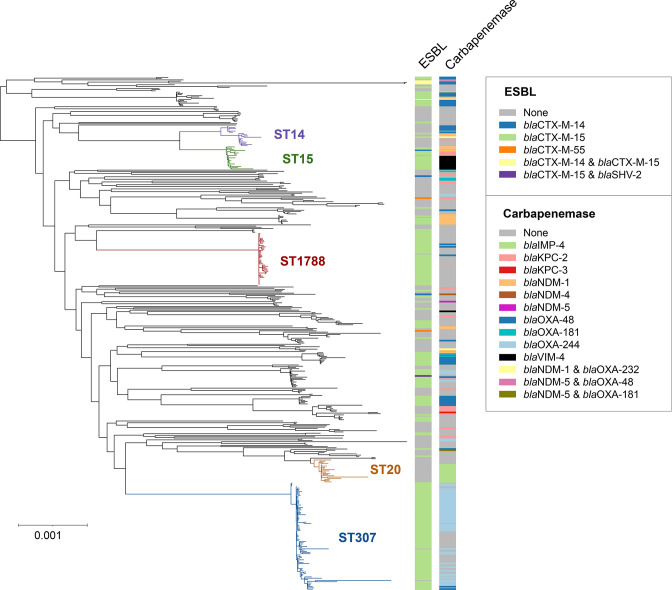
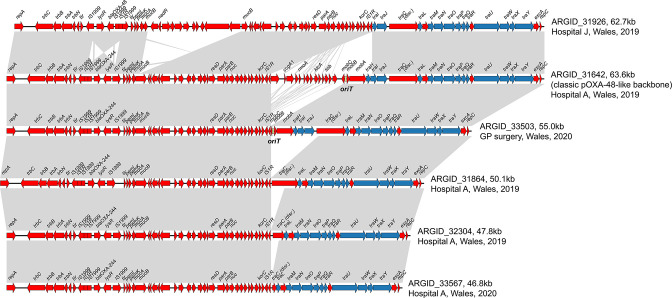
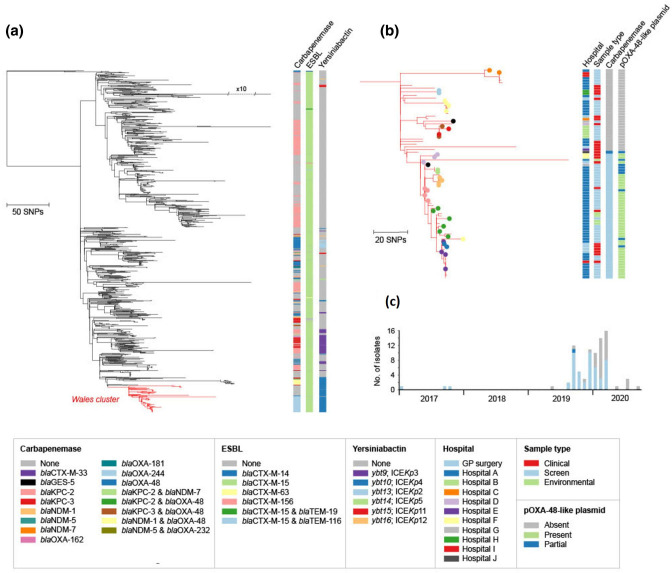
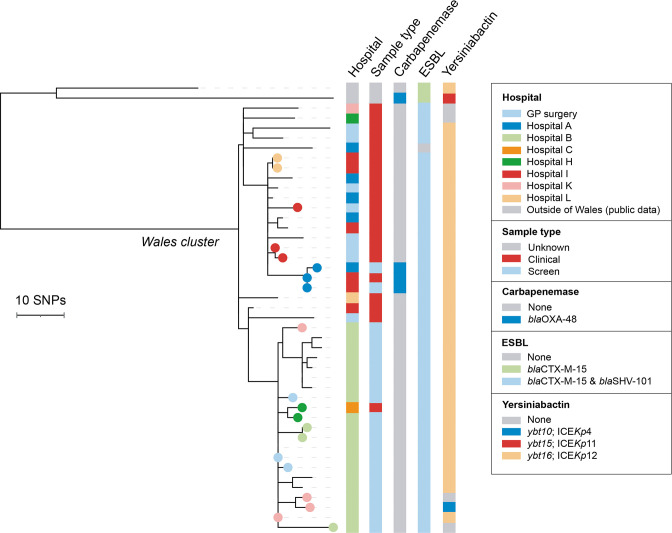
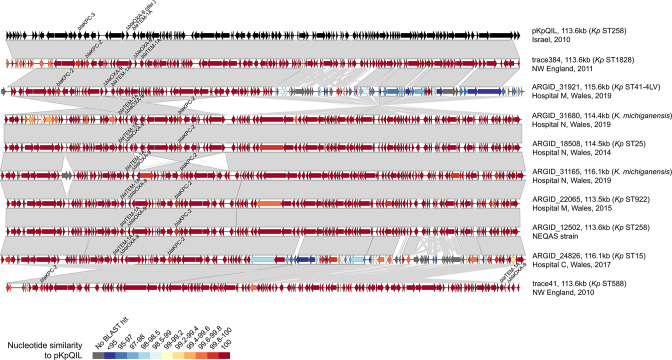
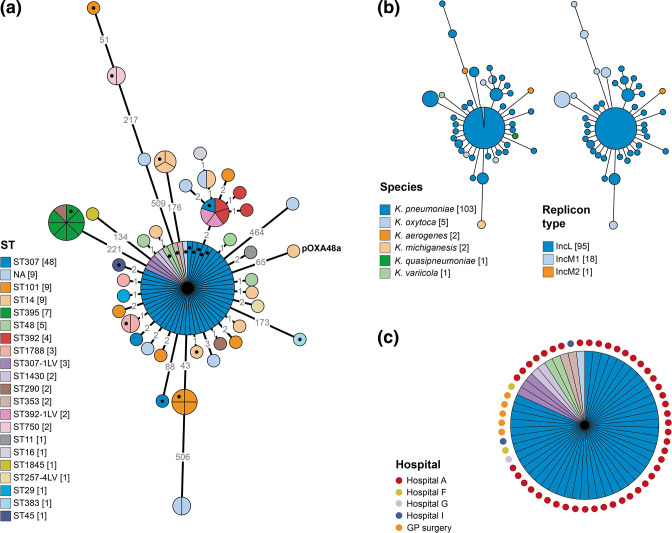
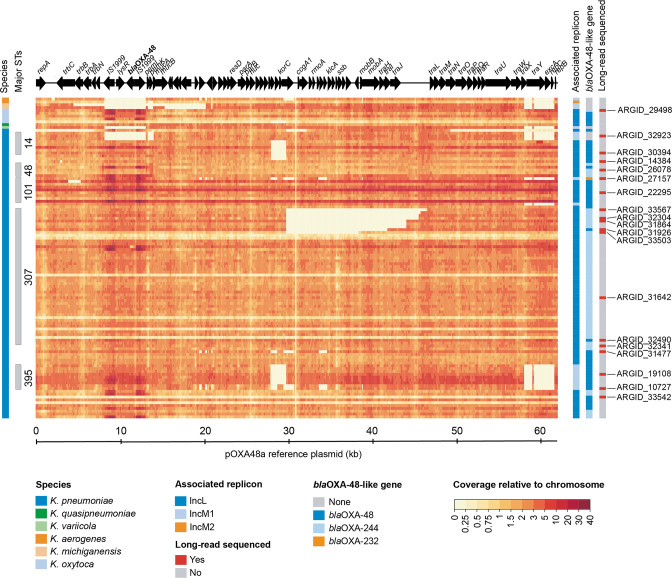
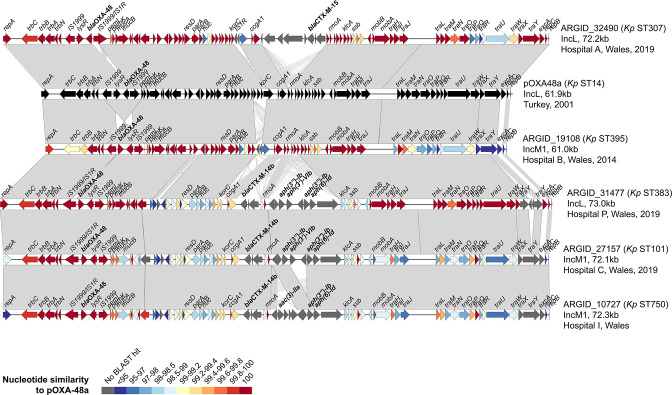
Rising rates of multidrug-resistant infections necessitate a comprehensive understanding of the major strains and plasmids driving spread of resistance elements. Here, we analysed 540 clinical, screen and environmental isolates recovered from across Wales between 2007 and 2020 using combined short- and long-read sequencing approaches. We identified resistant clones that have spread within and between hospitals including the high-risk strain sequence type (ST)307, which acquired the carbapenemase gene on a pOXA-48-like plasmid. We found evidence that this strain, which caused an acute outbreak largely centred on a single hospital in 2019, had been circulating undetected across South Wales for several years prior to the outbreak. In addition to clonal transmission, our analyses revealed evidence for substantial plasmid spread, mostly notably involving and (including ) carbapenemase genes that were found among many species and strain backgrounds. Two thirds (20/30) of the genes were carried on the Tn transposon and associated with IncF plasmids. These were mostly recovered from patients in North Wales, reflecting an outward expansion of the plasmid-driven outbreak of -producing in North-West England. A total of 92.1 % (105/114) of isolates with a carbapenemase carried the gene on a pOXA-48-like plasmid. While this plasmid family is highly conserved, our analyses revealed novel accessory variation including integrations of additional resistance genes. We also identified multiple independent deletions involving the gene cluster among pOXA-48-like plasmids in the ST307 outbreak lineage. These resulted in loss of conjugative ability and signal adaptation of the plasmids to carriage by the host strain. Altogether, our study provides, to our knowledge, the first high resolution view of the diversity, transmission and evolutionary dynamics of major resistant clones and plasmids of in Wales, and forms an important basis for ongoing surveillance efforts. This article contains data hosted by Microreact.
耐药感染率不断上升,这就需要全面了解主要菌株和质粒,以掌握耐药基因传播的驱动力。在这里,我们使用短读长和长读长测序方法相结合,对 2007 年至 2020 年期间从威尔士各地采集的 540 株临床、筛查和环境分离株进行了分析。我们鉴定出了在医院内部和医院之间传播的耐药克隆,包括高风险菌株序列型(ST)307,该菌株在 pOXA-48 样质粒上获得了碳青霉烯酶基因。我们发现,这种菌株在 2019 年主要集中在一家医院爆发急性疫情之前,已经在南威尔士地区潜伏传播了数年而未被发现。除了克隆传播外,我们的分析还表明存在大量质粒传播的证据,尤其是涉及 和 (包括 )碳青霉烯酶基因,这些基因在许多物种和菌株背景中都有发现。三分之二(20/30)的 基因位于 Tn 转座子上,并与 IncF 质粒相关。这些质粒主要从北威尔士的患者中回收,反映了在英格兰西北部爆发的产 -型 质粒驱动的疫情向外扩展。携带 碳青霉烯酶的 114 株分离株中有 92.1%(105/114)携带该基因的 pOXA-48 样质粒。虽然该质粒家族高度保守,但我们的分析揭示了新的附加变异,包括其他耐药基因的整合。我们还在 ST307 爆发株系的 pOXA-48 样质粒中发现了多个独立的缺失,这些缺失涉及 基因簇,导致质粒丧失了接合能力,并使质粒适应了宿主菌株的携带。总的来说,我们的研究提供了(据我们所知)威尔士地区主要耐药克隆和质粒的多样性、传播和进化动态的第一个高分辨率视图,并为正在进行的监测工作奠定了重要基础。本文包含由 Microreact 托管的数据。