Department of Infectomics and Molecular Pathogenesis, Center for Research and Advanced Studies (CINVESTAV-IPN), Mexico City, Mexico.
Research Division, National Institute of Perinatology, Mexico City, Mexico.
Microbiol Spectr. 2023 Jun 15;11(3):e0063023. doi: 10.1128/spectrum.00630-23. Epub 2023 May 25.
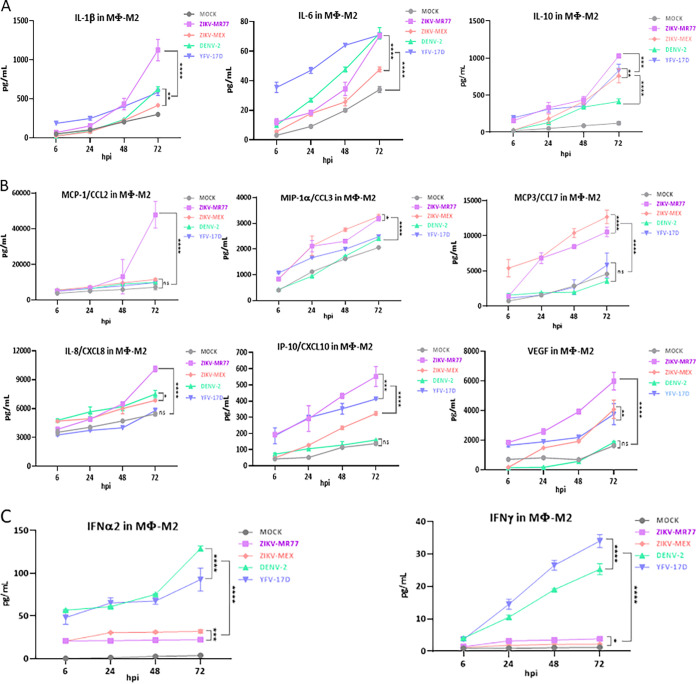
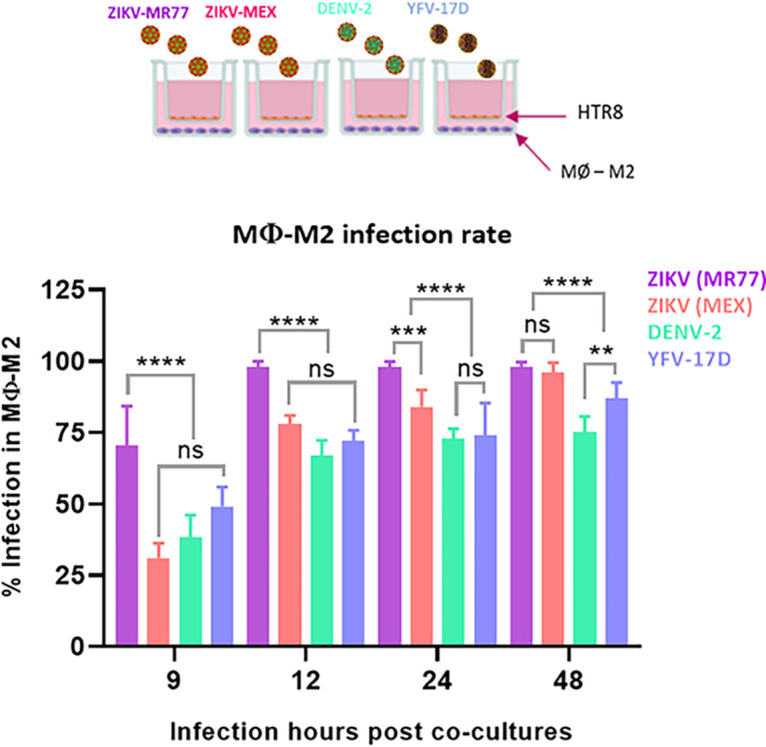
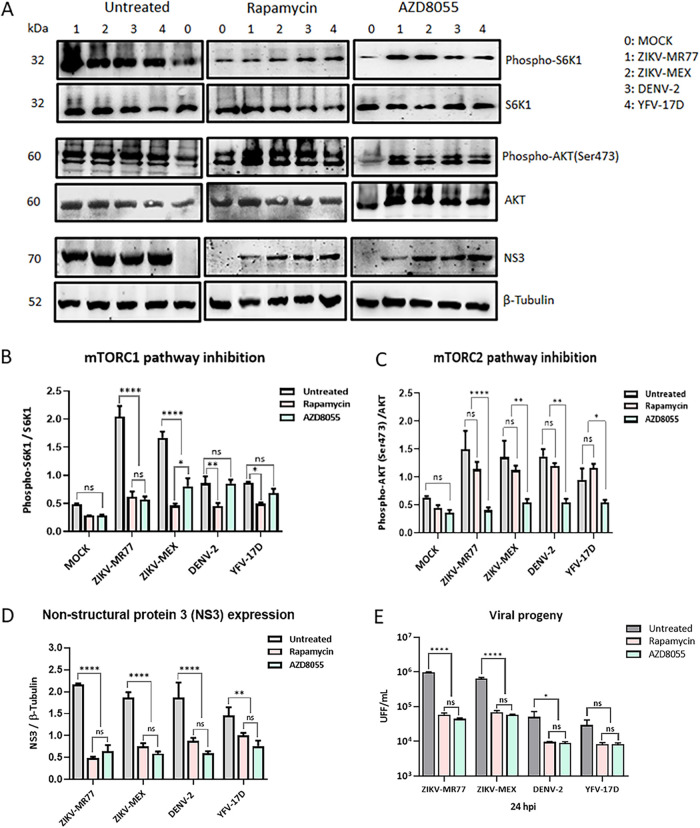
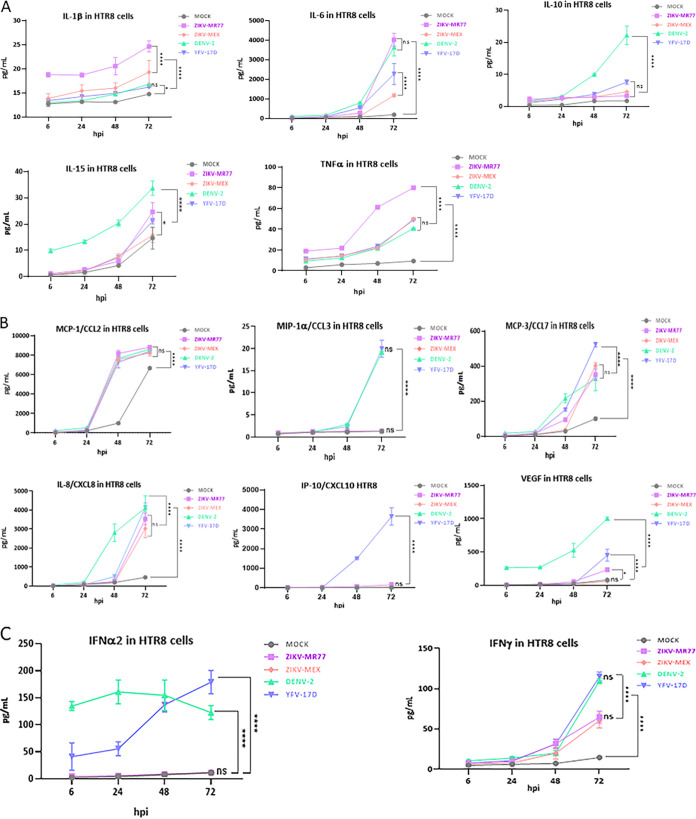
The Zika virus (ZIKV) is teratogenic and considered a TORCH pathogen (toxoplasmosis [Toxoplasma gondii], rubella, cytomegalovirus, herpes simplex virus [HSV], and other microorganisms capable of crossing the blood-placenta barrier). In contrast, the related flavivirus dengue virus (DENV) and the attenuated yellow fever virus vaccine strain (YFV-17D) are not. Understanding the mechanisms used by ZIKV to cross the placenta is necessary. In this work, parallel infections with ZIKV of African and Asian lineages, DENV, and YFV-17D were compared for kinetics and growth efficiency, activation of mTOR pathways, and cytokine secretion profile using cytotrophoblast-derived HTR8 cells and monocytic U937 cells differentiated to M2 macrophages. In HTR8 cells, ZIKV replication, especially the African strain, was significantly more efficient and faster than DENV or YFV-17D. In macrophages, ZIKV replication was also more efficient, although differences between strains were reduced. Greater activation of the mTORC1 and mTORC2 pathways in HTR8 cells infected with ZIKV than with DENV or YFV-17D was observed. HTR8 cells treated with mTOR inhibitors showed a 20-fold reduction in ZIKV yield, versus 5- and 3.5-fold reductions for DENV and YFV-17D, respectively. Finally, infection with ZIKV, but not DENV or YFV-17D, efficiently inhibited the interferon (IFN) and chemoattractant responses in both cell lines. These results suggest a gating role for the cytotrophoblast cells in favoring entry of ZIKV, but not DENV and YFV-17D, into the placental stroma. Zika virus acquisition during pregnancy is associated with severe fetal damage. The Zika virus is related to dengue virus and yellow fever virus, yet fetal damage has not been related to dengue or inadvertent vaccination for yellow fever during pregnancy. Mechanisms used by the Zika virus to cross the placenta need to be deciphered. By comparing parallel infections of Zika virus strains belonging to the African and Asian lineages, dengue virus, and the yellow fever vaccine virus strain YFV-17D in placenta-derived cytotrophoblast cells and differentiated macrophages, evidence was found that Zika virus infections, especially by the African strains, were more efficient in cytotrophoblast cells than dengue virus or yellow fever vaccine virus strain infections. Meanwhile, no significant differences were observed in macrophages. Robust activation of the mTOR signaling pathways and inhibition of the IFN and chemoattractant response appear to be related to the better growth capacity of the Zika viruses in the cytotrophoblast-derived cells.
寨卡病毒(ZIKV)是致畸的,被认为是 TORCH 病原体(弓形虫 [刚地弓形虫]、风疹、巨细胞病毒、单纯疱疹病毒 [HSV] 和其他能够穿过血胎盘屏障的微生物)。相比之下,相关的黄病毒登革热病毒(DENV)和减毒黄热病疫苗株(YFV-17D)则不是。了解 ZIKV 穿过胎盘的机制是必要的。在这项工作中,对来自非洲和亚洲谱系的 ZIKV、DENV 和 YFV-17D 的平行感染进行了比较,以研究细胞滋养层衍生的 HTR8 细胞和分化为 M2 巨噬细胞的单核细胞 U937 细胞中的动力学和生长效率、mTOR 途径的激活以及细胞因子分泌谱。在 HTR8 细胞中,ZIKV 复制,特别是非洲株,比 DENV 或 YFV-17D 更有效和更快。在巨噬细胞中,ZIKV 复制也更有效,尽管株间差异较小。与 DENV 或 YFV-17D 感染相比,ZIKV 感染 HTR8 细胞中 mTORC1 和 mTORC2 途径的激活更为明显。用 mTOR 抑制剂处理的 HTR8 细胞中 ZIKV 的产量降低了 20 倍,而 DENV 和 YFV-17D 的产量分别降低了 5 倍和 3.5 倍。最后,ZIKV 感染而不是 DENV 或 YFV-17D 有效地抑制了这两种细胞系中的干扰素(IFN)和趋化因子反应。这些结果表明,滋养层细胞在有利于 ZIKV 进入胎盘基质方面具有门控作用,但不有利于 DENV 和 YFV-17D 的进入。怀孕期间获得 Zika 病毒与严重的胎儿损伤有关。寨卡病毒与登革热病毒和黄热病病毒有关,但胎儿损伤与登革热或怀孕期间意外接种黄热病疫苗无关。寨卡病毒穿过胎盘的机制需要被破译。通过比较属于非洲和亚洲谱系的寨卡病毒株、登革热病毒和黄热病疫苗株 YFV-17D 在胎盘衍生的细胞滋养层细胞和分化的巨噬细胞中的平行感染,发现寨卡病毒感染,特别是非洲株,在细胞滋养层细胞中的效率高于登革热病毒或黄热病疫苗株感染。同时,在巨噬细胞中没有观察到显著差异。mTOR 信号通路的强烈激活和 IFN 和趋化因子反应的抑制似乎与 ZIKV 在细胞滋养层衍生细胞中的更好生长能力有关。