Grumach Anete S, Gadir Noga, Kessel Aharon, Yegin Ashley, Martinez-Saguer Inmaculada, Bernstein Jonathan A
Clinical Immunology, Faculdade de Medicina, Centro Universitario Faculdade de Medicina ABC (FMABC), Santo Andre, Brazil.
Takeda Development Center Americas, Inc., Lexington, Massachusetts, USA.
Clin Transl Allergy. 2023 May;13(5):e12243. doi: 10.1002/clt2.12243.
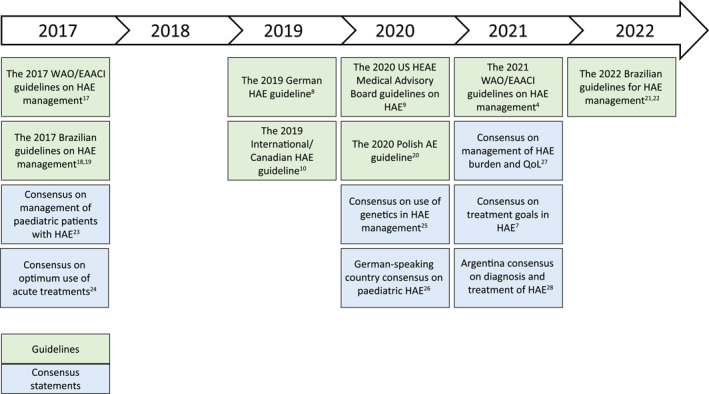
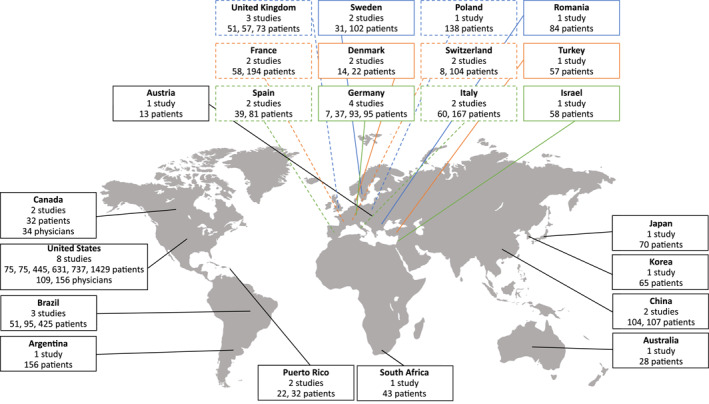
Patients with hereditary angioedema (HAE) experience a high burden of disease due to unpredictable, painful, disfiguring, and potentially life-threatening HAE attacks. Multiple HAE-specific medications for the on-demand treatment, short-term and long-term prophylaxis of HAE attacks have entered the market in recent years; however, the availability and access to these medications may vary between different countries. For this review, PubMed and EMBASE databases were searched for guidelines, consensus statements, and other publications on HAE management as well as publications on quality of life in patients with HAE. The current guidelines and recent literature on HAE management in specific countries are summarized with the aim to highlight the similarities and differences between guideline recommendations and the country-specific clinical practice. Improvement in quality of life, which is a key goal in HAE management, is also discussed and the country-specific trends are highlighted. Finally, the ways to achieve a more patient-centric approach to HAE management within the framework set by the clinical management guidelines are examined.
遗传性血管性水肿(HAE)患者由于不可预测、疼痛、毁容且可能危及生命的HAE发作而承受着沉重的疾病负担。近年来,多种用于HAE发作按需治疗、短期和长期预防的HAE特异性药物已进入市场;然而,这些药物在不同国家的可及性和获取情况可能有所不同。为了进行本综述,我们在PubMed和EMBASE数据库中检索了关于HAE管理的指南、共识声明及其他出版物,以及关于HAE患者生活质量的出版物。总结了特定国家目前关于HAE管理的指南和近期文献,旨在突出指南建议与各国具体临床实践之间的异同。还讨论了作为HAE管理关键目标的生活质量改善情况,并突出了各国的特定趋势。最后,研究了在临床管理指南设定的框架内实现更以患者为中心的HAE管理方法。