Amatya Isha, Regmi Pradeep R, Adhikari Gauri, Pokhrel Bidushi, Baniya Anish, Dangol Anisha
Research Section, Nepal Health Research Council (NHRC) Ramshah Path.
Tribhuvan University Teaching Hospital (TUTH).
Ann Med Surg (Lond). 2023 Apr 11;85(5):1661-1666. doi: 10.1097/MS9.0000000000000599. eCollection 2023 May.
Coronavirus disease 2019 (COVID-19) began to spread in December 2019 and was declared a pandemic by WHO on 11 March 2020. Pulmonary embolism (PE) is a known sequel to COVID-19 infection. Many patients showed worsened symptoms of thrombotic events of pulmonary arteries during the second week of the disease for which computed tomography pulmonary angiography (CTPA) is recommended. The most frequent complications in critically ill patients are prothrombotic coagulation abnormalities and thromboembolism. So, this study aimed to assess the prevalence of PE in patients with COVID-19 infection and to evaluate the relation to disease severity on CTPA findings.
This cross-sectional study was performed to evaluate the patients who tested positive for COVID-19 and underwent CTPA. COVID-19 infection in participants was confirmed by a PCR of nasopharyngeal or oropharyngeal swab samples. Frequencies of computed tomography severity scores and CTPA were calculated and compared with clinical and laboratory findings.
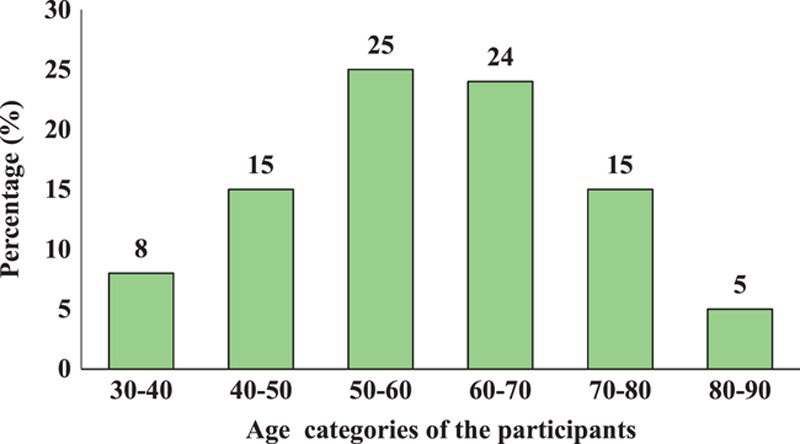
The study included 92 patients with COVID-19 infection. Positive PE was found in 18.5% of the patients. The mean age of the patients was 59.83±13.58 years with an age range of 30-86 years. Among the total participants, 27.2% underwent ventilation, 19.6% died during treatment, and 80.4% of them got discharged. PE was developed in patients who did not receive prophylactic anticoagulation, which is statistically significant (≤0.001). There was also a significant relationship between mechanical ventilation and CTPA findings.
The authors conclude from their study that PE is one of the complications of COVID-19 infection. Rising D-dimer during the second week of disease alerts clinicians to do CTPA to exclude or confirm PE. This will help in the early diagnosis and treatment of PE.
2019年冠状病毒病(COVID-19)于2019年12月开始传播,并于2020年3月11日被世界卫生组织宣布为大流行病。肺栓塞(PE)是COVID-19感染的已知后遗症。许多患者在疾病的第二周出现肺动脉血栓形成事件的症状恶化,对此建议进行计算机断层扫描肺动脉造影(CTPA)。重症患者最常见的并发症是促血栓形成的凝血异常和血栓栓塞。因此,本研究旨在评估COVID-19感染患者中PE的患病率,并根据CTPA结果评估其与疾病严重程度的关系。
本横断面研究旨在评估COVID-19检测呈阳性并接受CTPA检查的患者。通过对鼻咽或口咽拭子样本进行PCR来确认参与者的COVID-19感染。计算计算机断层扫描严重程度评分和CTPA的频率,并与临床和实验室检查结果进行比较。
该研究纳入了92例COVID-19感染患者。18.5%的患者PE呈阳性。患者的平均年龄为59.83±13.58岁,年龄范围为30 - 86岁。在所有参与者中,27.2%接受了通气治疗,19.6%在治疗期间死亡,80.4%出院。未接受预防性抗凝治疗的患者发生了PE,具有统计学意义(≤0.001)。机械通气与CTPA结果之间也存在显著关系。
作者从他们的研究中得出结论,PE是COVID-19感染的并发症之一。疾病第二周D-二聚体升高提醒临床医生进行CTPA以排除或确认PE。这将有助于PE的早期诊断和治疗。