Pablos Jesús L, Jiménez-Holguín Javier, Salcedo Sandra Sánchez, Salinas Antonio J, Corrales Teresa, Vallet-Regí María
Departamento de Química en Ciencias Farmacéuticas, Facultad de Farmacia, Instituto de Investigación Sanitaria Hospital 12 de Octubre, imas12, Universidad Complutense de Madrid (UCM), 28040 Madrid, Spain.
Networking Research Center on Bioengineering, Biomaterials and Nanomedicine (CIBER-BBN), 28040 Madrid, Spain.
Gels. 2023 May 11;9(5):403. doi: 10.3390/gels9050403.
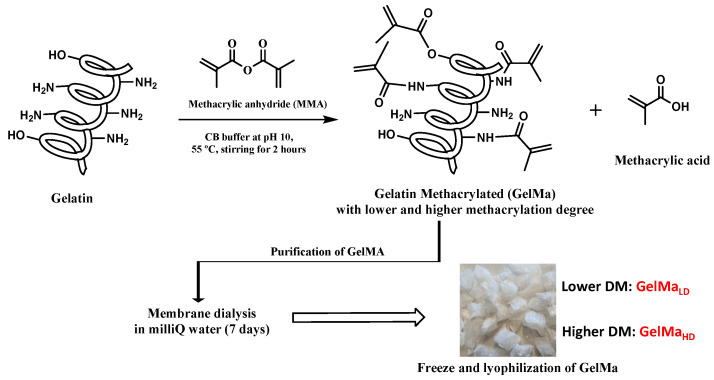
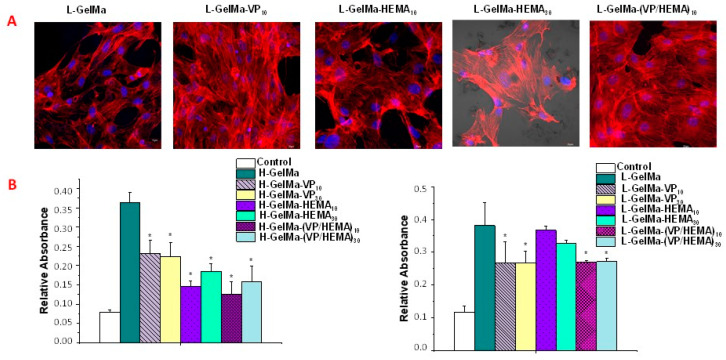
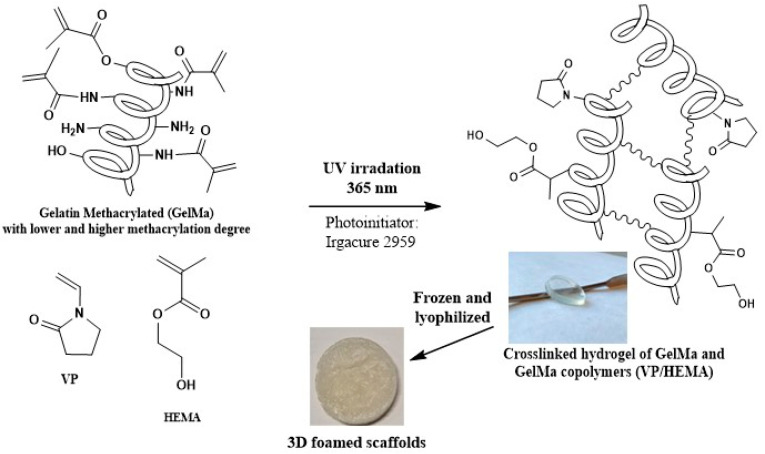
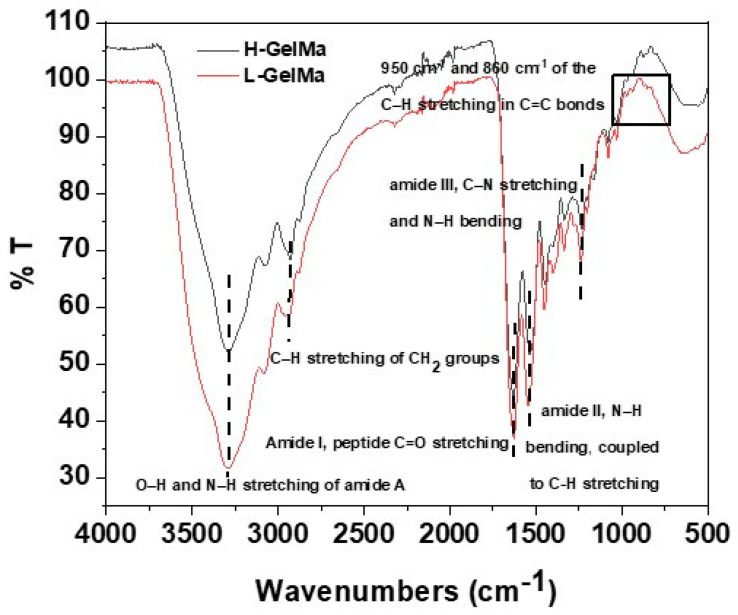
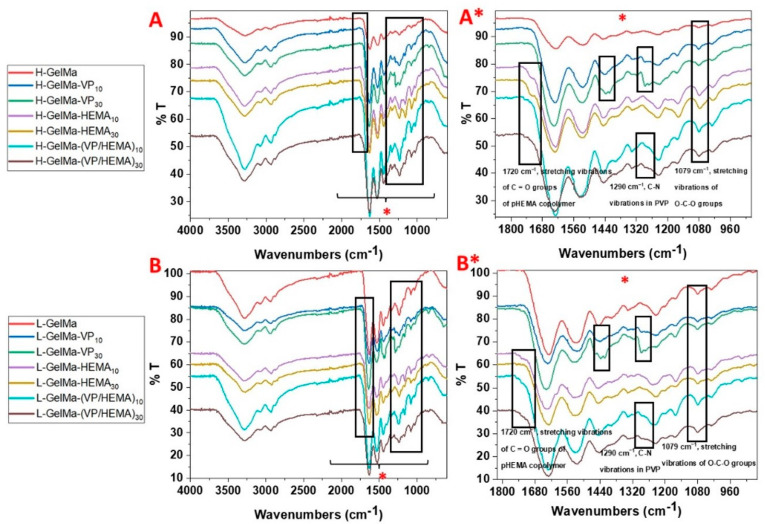
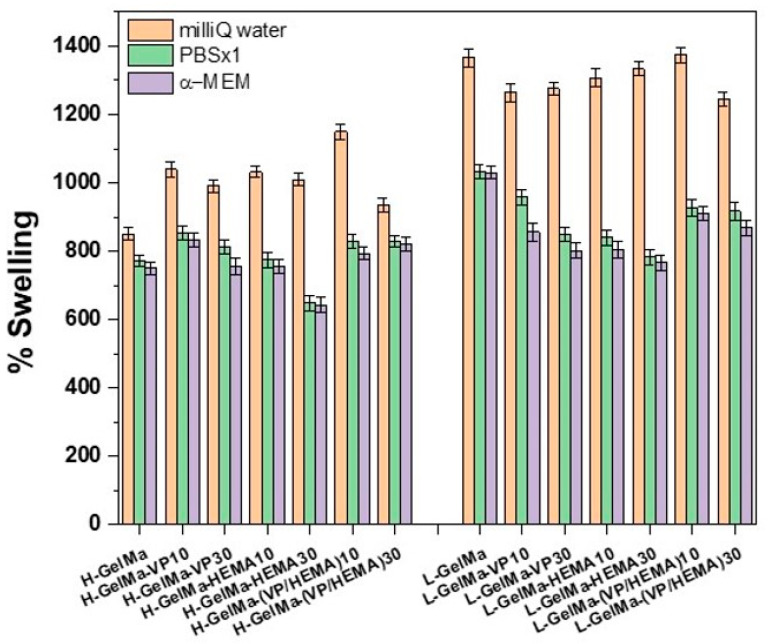
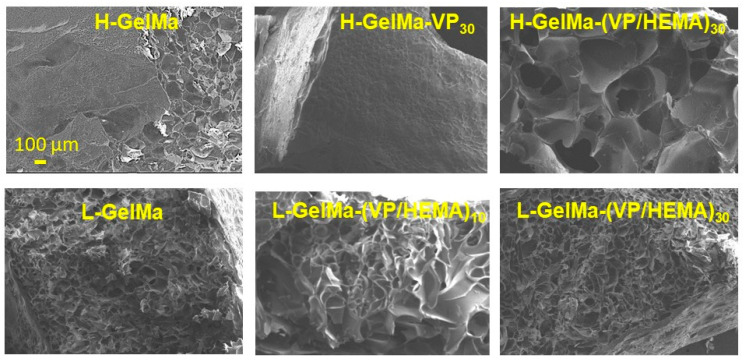
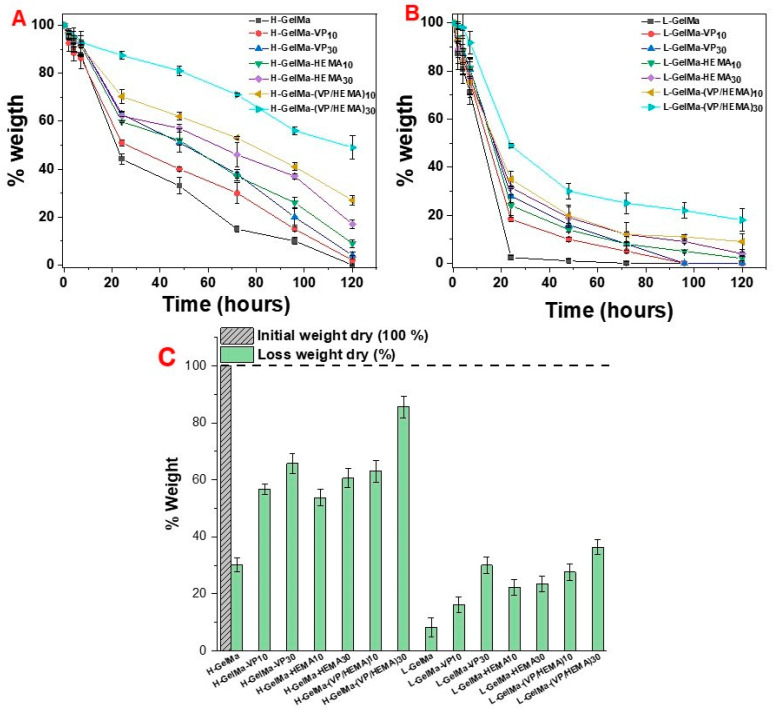
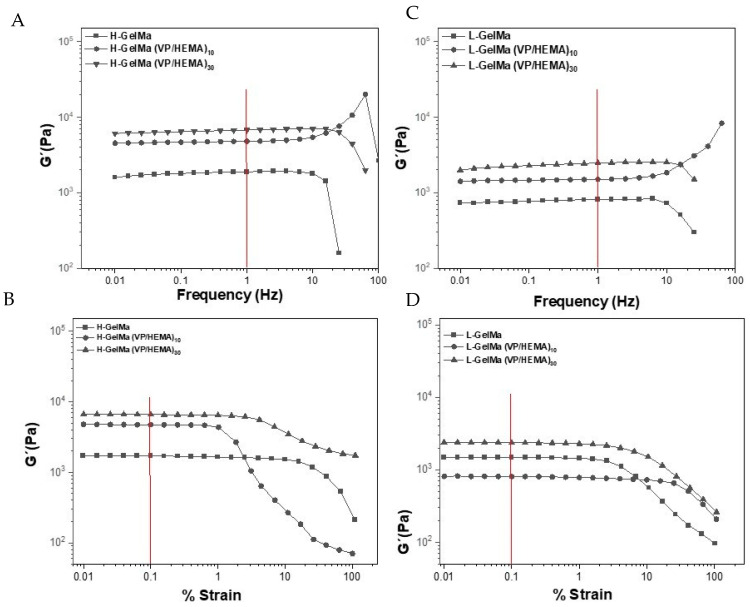
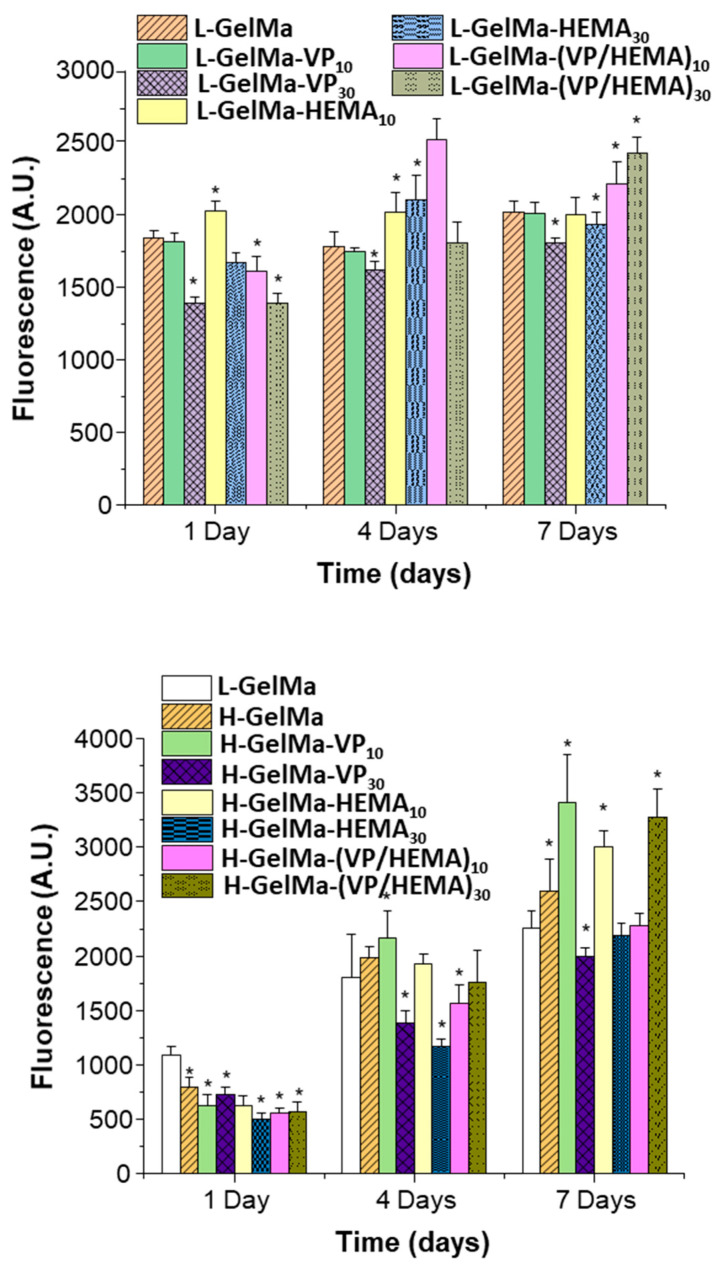
The production of customized polymeric hydrogels in the form of 3D scaffolds with application in bone tissue engineering is currently a topic of great interest. Based on gelatin methacryloyl (GelMa) as one of the most popular used biomaterials, GelMa with two different methacryloylation degrees (DM) was obtained, to achieve crosslinked polymer networks by photoinitiated radical polymerization. In this work, we present the obtention of new 3D foamed scaffolds based on ternary copolymers of GelMa with vinylpyrrolidone (VP) and 2-hydroxyethylmethacrylate (HEMA). All biopolymers obtained in this work were characterized by infrared spectroscopy (FTIR) and thermogravimetric analysis (TGA), whose results confirm the presence of all copolymers in the crosslinked biomaterial. In addition, scanning electron microscopy (SEM) pictures were obtained verifying the presence of the porosity created by freeze-drying process. In addition, the variation in its swelling degree and its enzymatic degradation in vitro was analyzed as a function of the different copolymers obtained. This has allowed us to observe good control of the variation in these properties described above in a simple way by varying the composition of the different comonomers used. Finally, with these concepts in mind, biopolymers obtained were tested through assessment of several biological parameters such as cell viability and differentiation with MC3T3-E1 pre-osteoblastic cell line. Results obtained show that these biopolymers maintain good results in terms of cell viability and differentiation, along with tunable properties in terms of hydrophilic character, mechanical properties and enzymatic degradation.
以3D支架形式生产定制化聚合物水凝胶并应用于骨组织工程,目前是一个备受关注的课题。基于明胶甲基丙烯酰(GelMa)作为最常用的生物材料之一,制备了两种不同甲基丙烯酰化程度(DM)的GelMa,通过光引发自由基聚合实现交联聚合物网络。在这项工作中,我们展示了基于GelMa与乙烯基吡咯烷酮(VP)和甲基丙烯酸2-羟乙酯(HEMA)的三元共聚物制备新型3D泡沫支架。在这项工作中获得的所有生物聚合物均通过红外光谱(FTIR)和热重分析(TGA)进行表征,其结果证实了交联生物材料中所有共聚物的存在。此外,通过扫描电子显微镜(SEM)图片验证了冷冻干燥过程产生的孔隙的存在。此外,还分析了其溶胀度变化及其在体外的酶促降解情况,并将其作为所获得的不同共聚物的函数。这使我们能够通过改变所用不同共聚单体的组成,以简单的方式很好地控制上述这些性质的变化。最后,基于这些概念,通过评估几个生物学参数,如用MC3T3-E1前成骨细胞系评估细胞活力和分化,对所获得的生物聚合物进行了测试。获得的结果表明,这些生物聚合物在细胞活力和分化方面保持良好的结果,同时在亲水性、机械性能和酶促降解方面具有可调节的性质。