Sanjurjo Lucía, Castelblanco Esmeralda, Julve Josep, Villalmanzo Nuria, Téllez Érica, Ramirez-Morros Anna, Alonso Núria, Mauricio Dídac, Sarrias Maria-Rosa
Innate Immunity Group, Health Sciences Research Institute Germans Trias i Pujol (IGTP), 08916 Badalona, Spain.
Division of Endocrinology, Metabolism and Lipid Research, Department of Internal Medicine, Washington University School of Medicine, St. Louis, MO 63110, USA.
Antioxidants (Basel). 2023 May 11;12(5):1083. doi: 10.3390/antiox12051083.
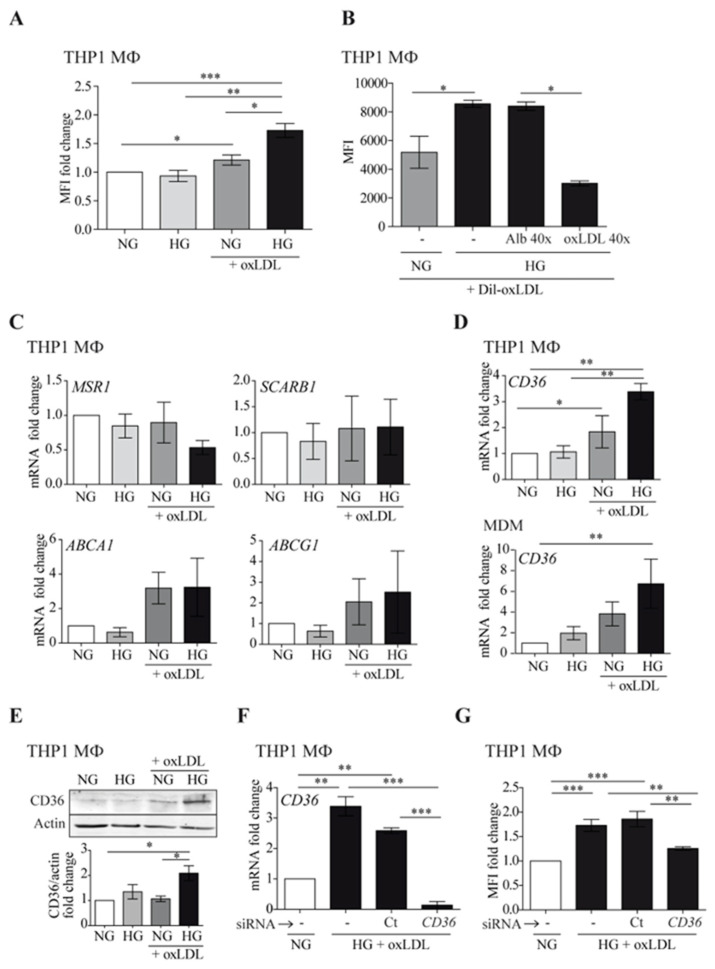
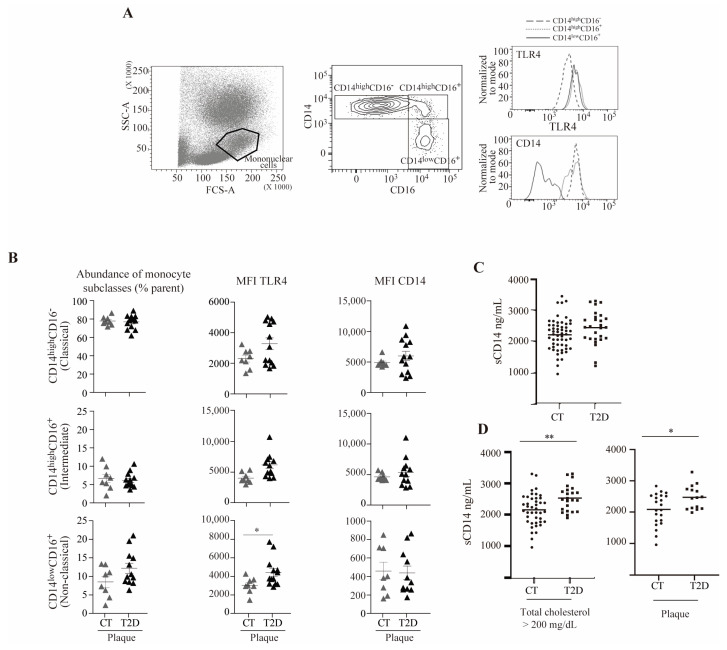
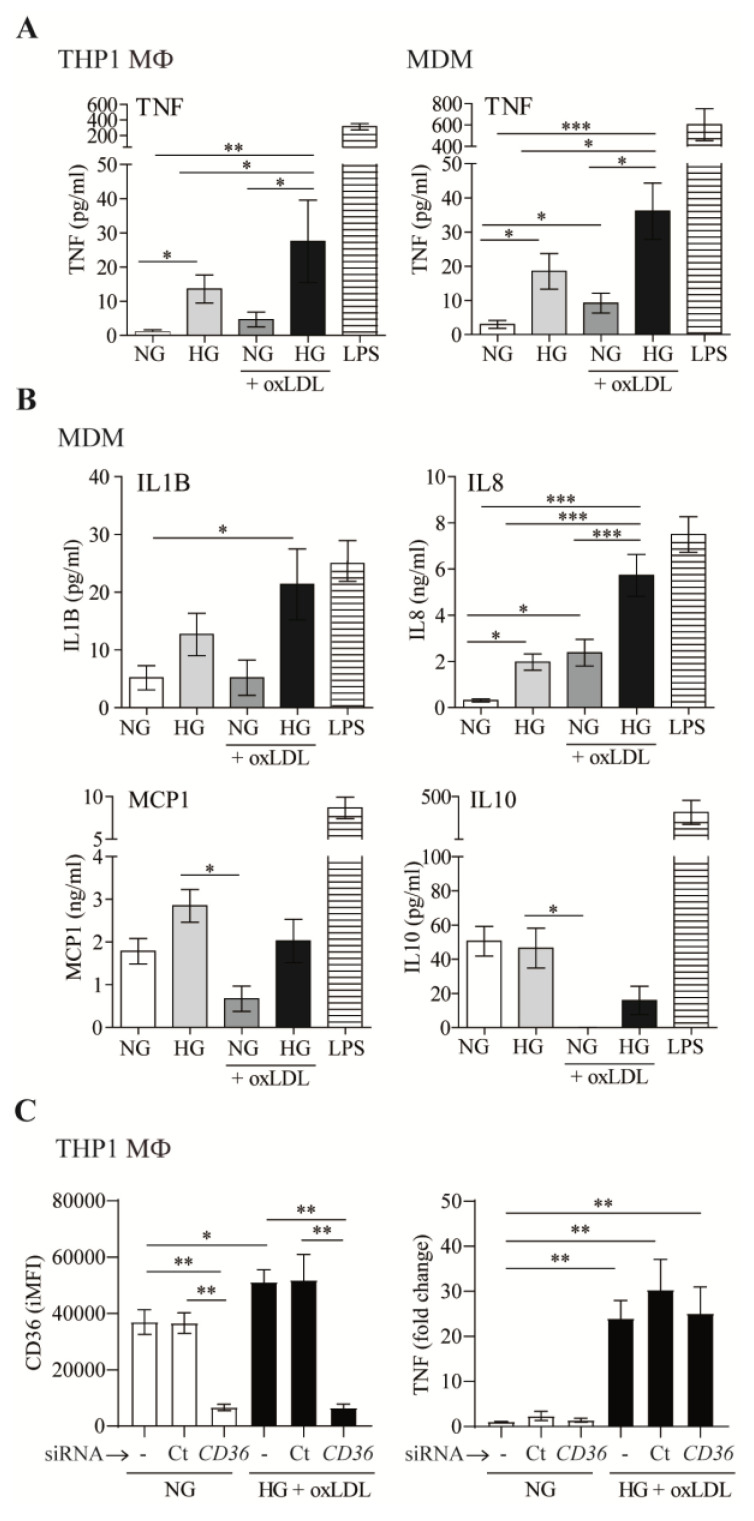
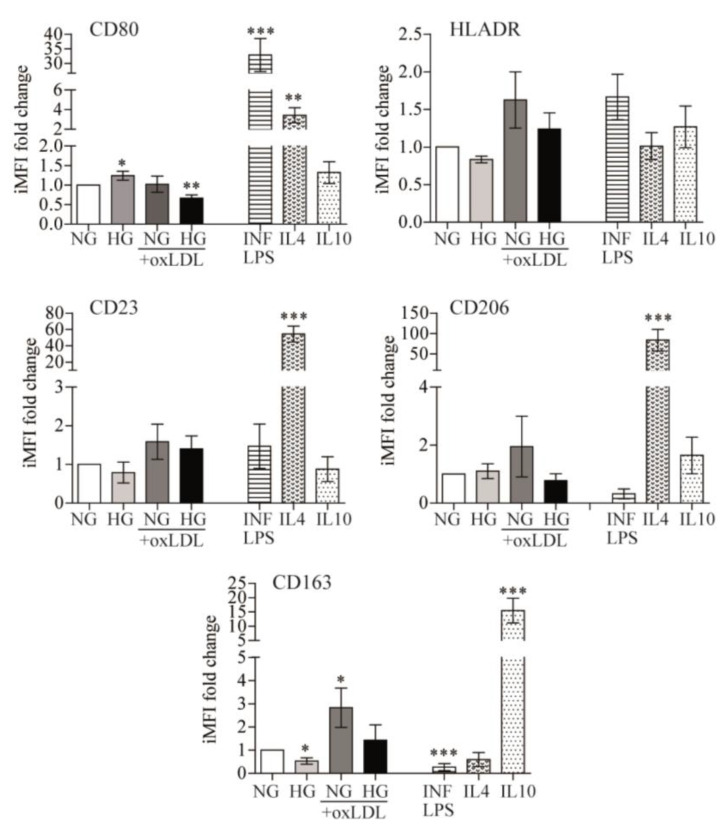
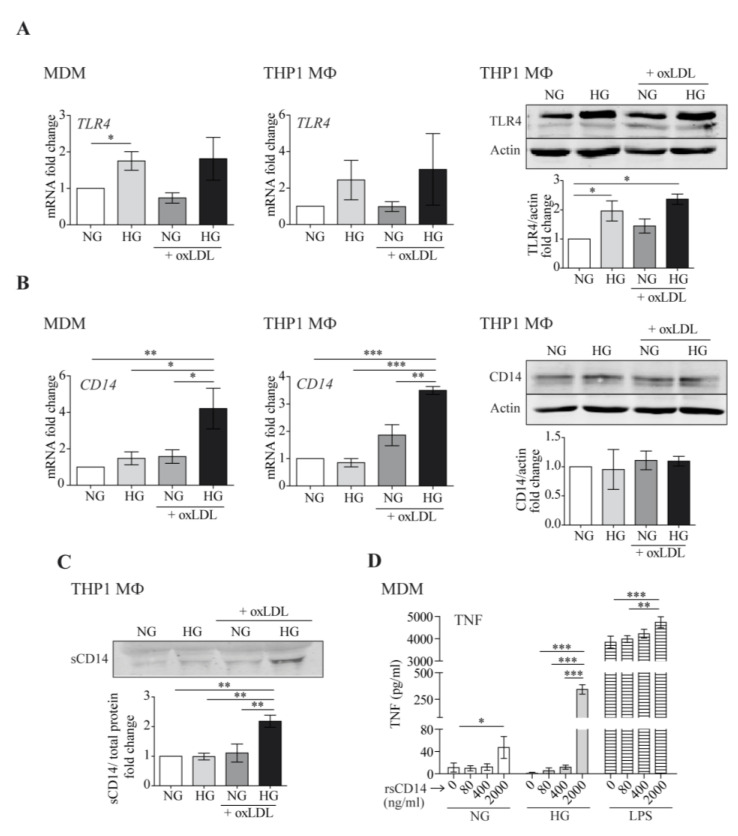
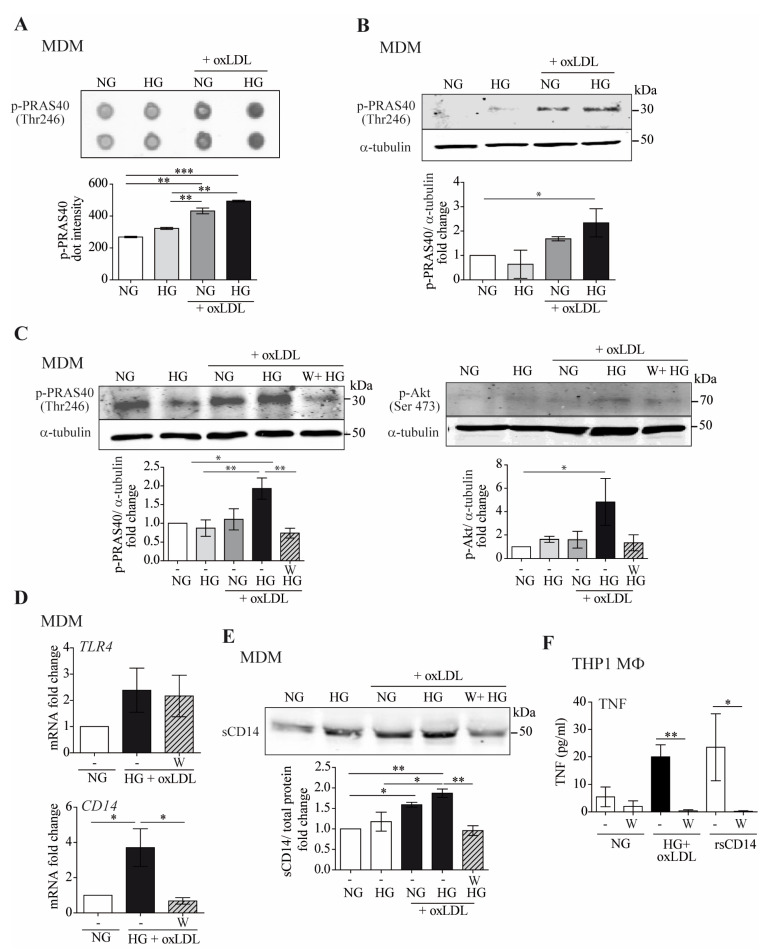
Atherosclerosis, a process in which macrophages play a key role, is accelerated in diabetes. Elevated concentrations of serum-oxidized low-density lipoproteins (oxLDL) represent a common feature of both conditions. The main goal of this study was to determine the contribution of oxLDL to the inflammatory response of macrophages exposed to diabetic-mimicking conditions. THP1 cells and peripheral blood monocytes purified from non-diabetic healthy donors were cultured under normal (5 mM) or high glucose (HG) (15 mM) with oxLDL. Then, foam cell formation, expression of CD80, HLADR, CD23, CD206, and CD163, as well as toll-like receptor 4 (TLR4) and co-receptors CD36 and CD14 (both at the cell surface and soluble (sCD14)), and inflammatory mediators' production were measured by flow cytometry, RT-qPCR, or ELISA. Additionally, serum sCD14 was determined in subjects with subclinical atherosclerosis with and without diabetes by ELISA. Our results showed that oxLDL-mediated intracellular lipid accumulation via CD36 increased under HG and that HG + oxLDL enhanced TNF, IL1B, and IL8, and decreased IL10. Moreover, TLR4 was upregulated in macrophages under HG and monocytes of subjects with diabetes and atherosclerosis. Interestingly, HG-oxLDL upregulated CD14 gene expression, although its total cellular protein abundance remained unaltered. sCD14 shedding via PRAS40/Akt-dependent mechanisms, with pro-inflammatory activity, was significantly increased in cultured macrophages and plasma from subjects with diabetes and subclinical atherosclerosis or hypercholesterolemia. Our data support an enhanced synergistic pro-inflammatory effect induced by HG and oxLDL in cultured human macrophages, possibly explained by increased sCD14 shedding.
动脉粥样硬化是一种巨噬细胞起关键作用的过程,在糖尿病中会加速。血清氧化型低密度脂蛋白(oxLDL)浓度升高是这两种情况的共同特征。本研究的主要目的是确定oxLDL对暴露于模拟糖尿病条件下的巨噬细胞炎症反应的影响。从非糖尿病健康供体中纯化的THP1细胞和外周血单核细胞在正常(5 mM)或高糖(HG)(15 mM)条件下与oxLDL一起培养。然后,通过流式细胞术、RT-qPCR或ELISA测量泡沫细胞形成、CD80、HLADR、CD23、CD206和CD163的表达,以及Toll样受体4(TLR4)和共受体CD36和CD14(细胞表面和可溶性(sCD14)),并检测炎症介质的产生。此外,通过ELISA测定有和没有糖尿病的亚临床动脉粥样硬化患者的血清sCD14。我们的结果表明,在HG条件下,oxLDL通过CD36介导的细胞内脂质积累增加,并且HG + oxLDL增强了TNF、IL1B和IL8,并降低了IL10。此外,在HG条件下巨噬细胞以及糖尿病和动脉粥样硬化患者的单核细胞中TLR4上调。有趣的是,HG-oxLDL上调了CD14基因表达,尽管其总细胞蛋白丰度保持不变。通过PRAS40/Akt依赖性机制的sCD14脱落具有促炎活性,在糖尿病和亚临床动脉粥样硬化或高胆固醇血症患者的培养巨噬细胞和血浆中显著增加。我们的数据支持HG和oxLDL在培养的人巨噬细胞中诱导增强的协同促炎作用,这可能由增加的sCD14脱落来解释。