Shchepalina Anastasia, Chebotareva Natalia, Akulkina Larissa, Brovko Mikhail, Sholomova Viktoria, Androsova Tatiana, Korotchaeva Yulia, Kalmykova Diana, Tanaschuk Elena, Taranova Marina, Lebedeva Marina, Beketov Vladimir, Moiseev Sergey
Tareev Clinic of Internal Diseases, Department of Internal Diseases, Occupational Diseases and Reumatology, Sechenov First Moscow State Medical University, 119435 Moscow, Russia.
Faculty of Fundamental Medicine, Lomonosov Moscow State University, Build. 1, 119991 Moscow, Russia.
Biomedicines. 2023 Apr 23;11(5):1246. doi: 10.3390/biomedicines11051246.
AKI is one of the COVID-19 complications with high prognostic significance. In our research, we studied the prognostic role of several biomarkers that could help us understand AKI pathogenesis in patients with COVID-19.
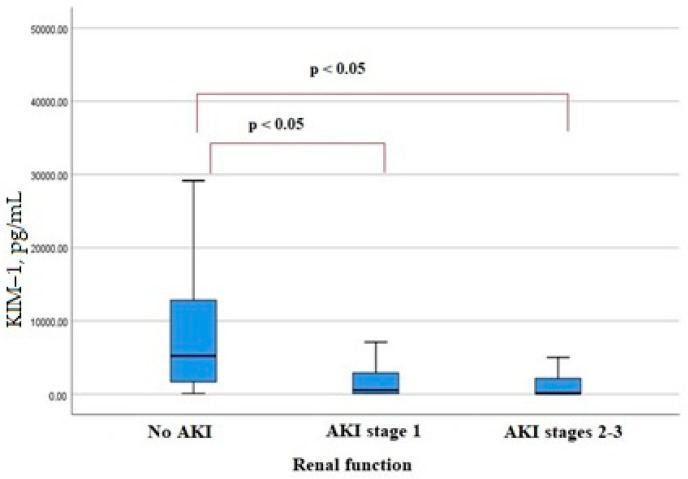
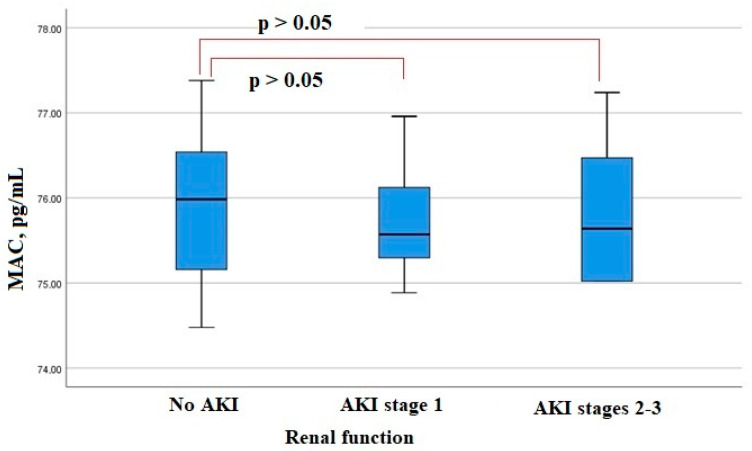
We evaluated the medical data of 500 patients hospitalized with COVID-19 in Tareev Clinic from 5 October 2020 to 1 March 2022. The diagnosis of COVID-19 was confirmed with positive RNA PCR in nasopharyngeal swabs and/or typical radiological findings on CT scans. Kidney function was assessed in accordance with KDIGO criteria. In the selected 89 patients, we evaluated serum levels of angiopoetin-1, KIM-1, MAC, and neutrophil elastase 2 and their prognostic significance.
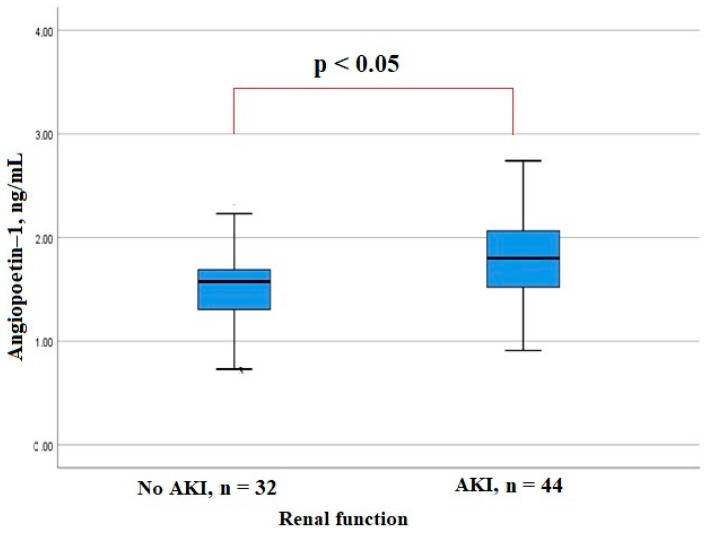
The incidence of AKI in our study was 38%. The main risk factors for kidney injury were male sex, cardiovascular diseases, and chronic kidney disease. High serum angiopoetin-1 levels and a decrease in blood lymphocyte count and fibrinogen level also increased the risk of AKI.
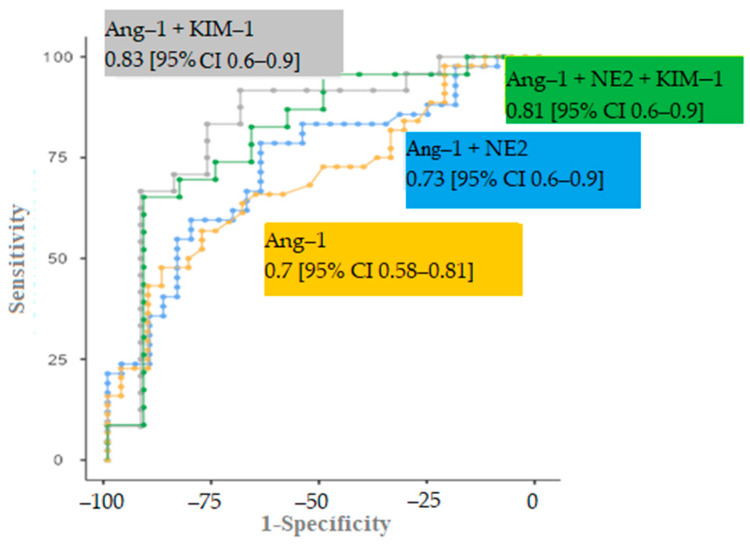
AKI is an independent risk factor for death in patients with COVID-19. We propose the prognostic model of AKI development, which includes the combination of serum levels of angiopoetin-1 and KIM-1 on admission. Our model can help to prevent AKI development in patients with coronavirus disease.
急性肾损伤(AKI)是新型冠状病毒肺炎(COVID-19)具有高度预后意义的并发症之一。在我们的研究中,我们研究了几种生物标志物的预后作用,这些标志物有助于我们了解COVID-19患者的AKI发病机制。
我们评估了2020年10月5日至2022年3月1日在塔列夫诊所住院的500例COVID-19患者的医疗数据。通过鼻咽拭子RNA聚合酶链反应(PCR)阳性和/或CT扫描典型影像学表现确诊COVID-19。根据改善全球肾脏病预后组织(KDIGO)标准评估肾功能。在选定的89例患者中,我们评估了血清血管生成素-1、肾损伤分子-1(KIM-1)、髓过氧化物酶(MAC)和中性粒细胞弹性蛋白酶2水平及其预后意义。
我们研究中AKI的发生率为38%。肾损伤的主要危险因素是男性、心血管疾病和慢性肾脏病。血清血管生成素-1水平升高以及血淋巴细胞计数和纤维蛋白原水平降低也增加了AKI的风险。
AKI是COVID-19患者死亡的独立危险因素。我们提出了AKI发生的预后模型,该模型包括入院时血清血管生成素-1和KIM-1水平的组合。我们的模型有助于预防冠状病毒病患者发生AKI。