• 文献检索
  • 文档翻译
  • 深度研究
  • 学术资讯
  • Suppr Zotero 插件Zotero 插件
  • 邀请有礼
  • 套餐&价格
  • 历史记录
应用&插件
Suppr Zotero 插件Zotero 插件浏览器插件Mac 客户端Windows 客户端微信小程序
定价
高级版会员购买积分包购买API积分包
服务
文献检索文档翻译深度研究API 文档MCP 服务
关于我们
关于 Suppr公司介绍联系我们用户协议隐私条款
关注我们

Suppr 超能文献

核心技术专利:CN118964589B侵权必究
粤ICP备2023148730 号-1Suppr @ 2026

文献检索

告别复杂PubMed语法,用中文像聊天一样搜索,搜遍4000万医学文献。AI智能推荐,让科研检索更轻松。

立即免费搜索

文件翻译

保留排版,准确专业,支持PDF/Word/PPT等文件格式,支持 12+语言互译。

免费翻译文档

深度研究

AI帮你快速写综述,25分钟生成高质量综述,智能提取关键信息,辅助科研写作。

立即免费体验

急性肾损伤:重症 COVID-19 患者的发生率、危险因素和结局。

Acute kidney injury: Incidence, risk factors, and outcomes in severe COVID-19 patients.

机构信息

Nephrology Division, Federal University of São Paulo, São Paulo, Brazil.

Laboratory of Applied Computing (LABCOM), Federal Institute of Education, Science and Technology of São Paulo, São Paulo, Brazil.

出版信息

PLoS One. 2021 May 25;16(5):e0251048. doi: 10.1371/journal.pone.0251048. eCollection 2021.

DOI:10.1371/journal.pone.0251048
PMID:34033655
原文链接:https://pmc.ncbi.nlm.nih.gov/articles/PMC8148326/
Abstract

BACKGROUND

COVID-19 is a multisystemic disorder that frequently causes acute kidney injury (AKI). However, the precise clinical and biochemical variables associated with AKI progression in patients with severe COVID-19 remain unclear.

METHODS

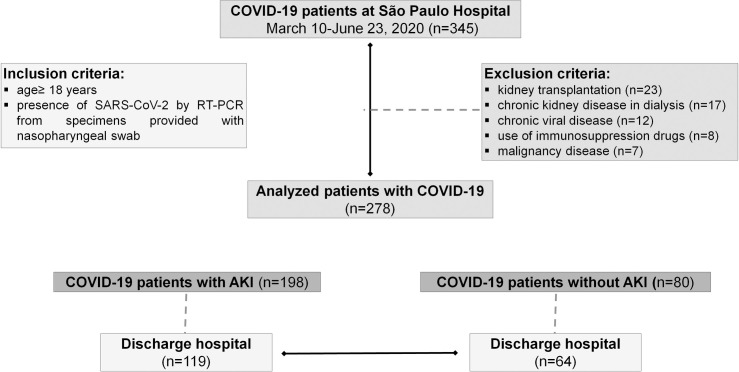
We performed a retrospective study on 278 hospitalized patients who were admitted to the ward and intensive care unit (ICU) with COVID-19 between March 2020 and June 2020, at the University Hospital, São Paulo, Brazil. Patients aged ≥ 18 years with COVID-19 confirmed on RT-PCR were included. AKI was defined according to the Kidney Disease Improving Global Outcomes (KDIGO) criteria. We evaluated the incidence of AKI, several clinical variables, medicines used, and outcomes in two sub-groups: COVID-19 patients with AKI (Cov-AKI), and COVID-19 patients without AKI (non-AKI). Univariate and multivariate analyses were performed.

RESULTS

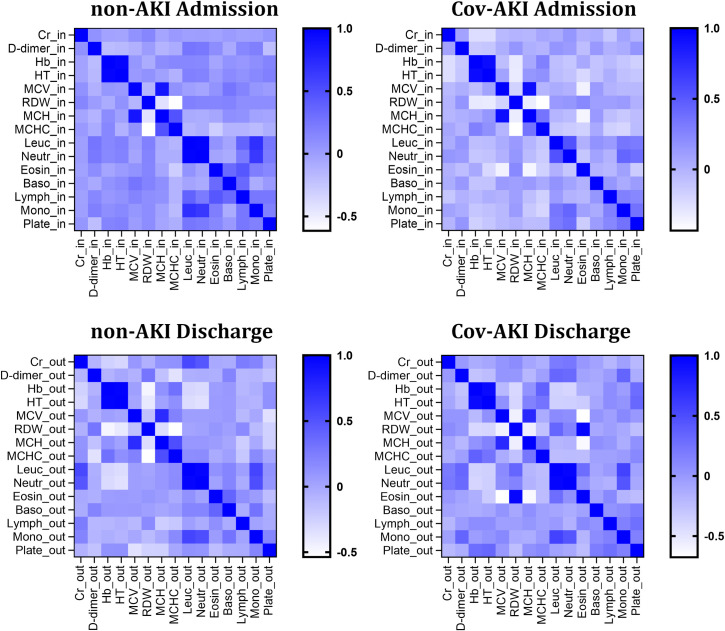
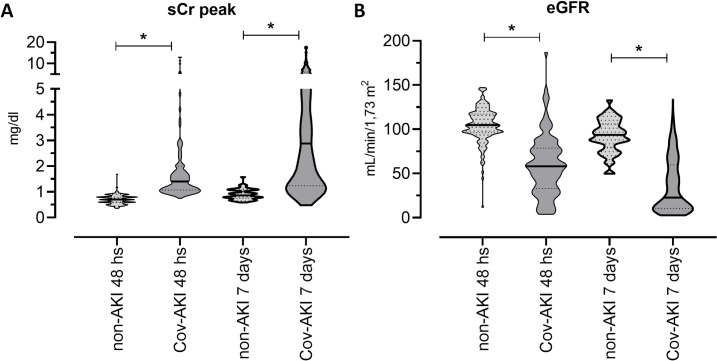
First, an elevated incidence of AKI (71.2%) was identified, distributed across different stages of the KDIGO criteria. We further observed higher levels of creatinine, C-reactive protein (CRP), leukocytes, neutrophils, monocytes, and neutrophil-to-lymphocyte ratio (NLR) in the Cov-AKI group than in the non-AKI group, at hospital admission. On univariate analysis, Cov-AKI was associated with older age (>62 years), hypertension, CRP, MCV, leucocytes, neutrophils, NLR, combined hydroxychloroquine and azithromycin treatment, use of mechanical ventilation, and vasoactive drugs. Multivariate analysis showed that hypertension and the use of vasoactive drugs were independently associated with a risk of higher AKI in COVID-19 patients. Finally, we preferentially found an altered erythrocyte and leukocyte cellular profile in the Cov-AKI group compared to the non-AKI group, at hospital discharge.

CONCLUSIONS

In our study, the development of AKI in patients with severe COVID-19 was related to inflammatory blood markers and therapy with hydroxychloroquine/azithromycin, with vasopressor requirement and hypertension considered potential risk factors. Thus, attention to the protocol, hypertension, and some blood markers may help assist doctors with decision-making for the management of COVID-19 patients with AKI.

摘要

背景

COVID-19 是一种多系统疾病,常导致急性肾损伤(AKI)。然而,严重 COVID-19 患者 AKI 进展相关的确切临床和生化变量仍不清楚。

方法

我们对 2020 年 3 月至 6 月期间在巴西圣保罗大学医院因 COVID-19 住院和入住重症监护病房(ICU)的 278 名住院患者进行了回顾性研究。纳入年龄≥18 岁、经 RT-PCR 确诊 COVID-19 的患者。AKI 根据肾脏病改善全球结局(KDIGO)标准定义。我们评估了 AKI 的发生率、几个临床变量、使用的药物以及 COVID-19 伴有 AKI(Cov-AKI)和 COVID-19 不伴有 AKI(非 AKI)两组患者的结局。进行了单变量和多变量分析。

结果

首先,我们发现 AKI 的发生率很高(71.2%),分布在 KDIGO 标准的不同阶段。我们还观察到 Cov-AKI 组入院时肌酐、C 反应蛋白(CRP)、白细胞、中性粒细胞、单核细胞和中性粒细胞与淋巴细胞比值(NLR)水平高于非 AKI 组。单变量分析显示,Cov-AKI 与年龄较大(>62 岁)、高血压、CRP、MCV、白细胞、中性粒细胞、NLR、联合羟氯喹和阿奇霉素治疗、使用机械通气和血管活性药物有关。多变量分析显示,高血压和血管活性药物的使用与 COVID-19 患者 AKI 风险增加独立相关。最后,与非 AKI 组相比,我们在 Cov-AKI 组患者出院时更优先发现红细胞和白细胞细胞谱改变。

结论

在我们的研究中,严重 COVID-19 患者 AKI 的发展与炎症血液标志物以及羟氯喹/阿奇霉素治疗有关,血管加压素需求和高血压被认为是潜在的危险因素。因此,关注方案、高血压和一些血液标志物可能有助于协助医生为 AKI 患者的 COVID-19 管理做出决策。
https://cdn.ncbi.nlm.nih.gov/pmc/blobs/b91f/8148326/8aedf5a699bd/pone.0251048.g003.jpg
https://cdn.ncbi.nlm.nih.gov/pmc/blobs/b91f/8148326/9c9ccf085aaa/pone.0251048.g001.jpg
https://cdn.ncbi.nlm.nih.gov/pmc/blobs/b91f/8148326/3cb73ff670cb/pone.0251048.g002.jpg
https://cdn.ncbi.nlm.nih.gov/pmc/blobs/b91f/8148326/8aedf5a699bd/pone.0251048.g003.jpg
https://cdn.ncbi.nlm.nih.gov/pmc/blobs/b91f/8148326/9c9ccf085aaa/pone.0251048.g001.jpg
https://cdn.ncbi.nlm.nih.gov/pmc/blobs/b91f/8148326/3cb73ff670cb/pone.0251048.g002.jpg
https://cdn.ncbi.nlm.nih.gov/pmc/blobs/b91f/8148326/8aedf5a699bd/pone.0251048.g003.jpg

相似文献

1
Acute kidney injury: Incidence, risk factors, and outcomes in severe COVID-19 patients.急性肾损伤:重症 COVID-19 患者的发生率、危险因素和结局。
PLoS One. 2021 May 25;16(5):e0251048. doi: 10.1371/journal.pone.0251048. eCollection 2021.
2
Use of an extended KDIGO definition to diagnose acute kidney injury in patients with COVID-19: A multinational study using the ISARIC-WHO clinical characterisation protocol.使用扩展的 KDIGO 定义诊断 COVID-19 患者的急性肾损伤:一项使用 ISARIC-WHO 临床特征协议的多国研究。
PLoS Med. 2022 Apr 20;19(4):e1003969. doi: 10.1371/journal.pmed.1003969. eCollection 2022 Apr.
3
Therapy with lopinavir/ritonavir and hydroxychloroquine is associated with acute kidney injury in COVID-19 patients.洛匹那韦/利托那韦和羟氯喹联合治疗与 COVID-19 患者的急性肾损伤有关。
PLoS One. 2021 May 11;16(5):e0249760. doi: 10.1371/journal.pone.0249760. eCollection 2021.
4
Acute Kidney Injury and Renal Replacement Therapy in Critically Ill COVID-19 Patients: Risk Factors and Outcomes: A Single-Center Experience in Brazil.急性肾损伤和危重症 COVID-19 患者的肾脏替代治疗:危险因素和结局:巴西单中心经验。
Blood Purif. 2021;50(4-5):520-530. doi: 10.1159/000513425. Epub 2020 Dec 18.
5
The Association of COVID-19 With Acute Kidney Injury Independent of Severity of Illness: A Multicenter Cohort Study.新型冠状病毒肺炎与急性肾损伤的关联:一项多中心队列研究,疾病严重程度无关。
Am J Kidney Dis. 2021 Apr;77(4):490-499.e1. doi: 10.1053/j.ajkd.2020.12.007. Epub 2021 Jan 8.
6
Acute kidney injury in coronavirus infectious disease: a study of incidence, risk factors, and prognosis during the first wave of the disease in Brazil.新型冠状病毒传染病中的急性肾损伤:巴西疫情第一波期间发病率、危险因素和预后的研究。
Int Urol Nephrol. 2023 Jun;55(6):1501-1508. doi: 10.1007/s11255-022-03454-4. Epub 2022 Dec 30.
7
Acute kidney injury in patients with COVID-19: a retrospective cohort study from Switzerland.COVID-19 患者的急性肾损伤:来自瑞士的回顾性队列研究。
Swiss Med Wkly. 2021 Mar 1;151:w20482. doi: 10.4414/smw.2021.20482.
8
The Risk Factors and Clinical Outcomes Associated with Acute Kidney Injury in Patients with COVID-19: Data from a Large Cohort in Iran.与 COVID-19 患者急性肾损伤相关的危险因素和临床结局:来自伊朗大型队列的数据。
Kidney Blood Press Res. 2021;46(5):620-628. doi: 10.1159/000517581. Epub 2021 Jul 27.
9
Characteristics and outcomes of acute kidney injury in hospitalized COVID-19 patients: A multicenter study by the Turkish society of nephrology.土耳其肾脏病学会多中心研究:住院 COVID-19 患者急性肾损伤的特征和结局。
PLoS One. 2021 Aug 10;16(8):e0256023. doi: 10.1371/journal.pone.0256023. eCollection 2021.
10
Acute kidney injury in children with COVID-19: a retrospective study.儿童 COVID-19 相关急性肾损伤:一项回顾性研究。
BMC Nephrol. 2021 May 31;22(1):202. doi: 10.1186/s12882-021-02389-9.

引用本文的文献

1
Global geographic and socioeconomic disparities in COVID-associated acute kidney injury: a systematic review and meta-analysis.新冠相关急性肾损伤的全球地理和社会经济差异:一项系统综述和荟萃分析。
J Glob Health. 2025 Jul 25;15:04166. doi: 10.7189/jogh.15.04166.
2
Lower Serum Magnesium Is Associated with Mortality in Severe COVID-19: A Secondary Analysis of a Randomized Trial.血清镁水平降低与重症 COVID-19 患者的死亡率相关:一项随机试验的二次分析
Biol Trace Elem Res. 2025 Apr 15. doi: 10.1007/s12011-025-04619-9.
3
Early Identification of Sepsis-Induced Acute Kidney Injury by Using Monocyte Distribution Width, Red-Blood-Cell Distribution, and Neutrophil-to-Lymphocyte Ratio.

本文引用的文献

1
Predictors of disease severity and outcome of hospitalized renal transplant recipients with COVID-19 infection: a systematic review of a globally representative sample.预测 COVID-19 感染住院肾移植受者疾病严重程度和结局的因素:全球代表性样本的系统评价。
Rom J Intern Med. 2021 Mar 5;59(1):10-42. doi: 10.2478/rjim-2020-0034. Print 2021 Mar 1.
2
Estimating glomerular filtration rate in patients with acute kidney injury: a prospective multicenter study of diagnostic accuracy.估算急性肾损伤患者的肾小球滤过率:一项前瞻性多中心诊断准确性研究。
Nephrol Dial Transplant. 2020 Nov 1;35(11):1886-1893. doi: 10.1093/ndt/gfz178.
3
利用单核细胞分布宽度、红细胞分布和中性粒细胞与淋巴细胞比值早期识别脓毒症诱导的急性肾损伤
Diagnostics (Basel). 2024 Apr 28;14(9):918. doi: 10.3390/diagnostics14090918.
4
Clinical and Biochemical Characteristics of COVID-19-Associated Acute Kidney Injury (COVAKI): A Proof-of-Concept Case-Control Study.新型冠状病毒肺炎相关急性肾损伤(COVAKI)的临床和生化特征:一项概念验证病例对照研究
Cureus. 2024 Apr 7;16(4):e57763. doi: 10.7759/cureus.57763. eCollection 2024 Apr.
5
Factors associated with acute kidney injury (AKI) and mortality in COVID-19 patients in a Sub-Saharan African intensive care unit: a single-center prospective study.撒哈拉以南非洲重症监护病房 COVID-19 患者急性肾损伤(AKI)和死亡率的相关因素:一项单中心前瞻性研究。
Ren Fail. 2023;45(2):2263583. doi: 10.1080/0886022X.2023.2263583. Epub 2023 Oct 23.
6
Continuous and early prediction of future moderate and severe Acute Kidney Injury in critically ill patients: Development and multi-centric, multi-national external validation of a machine-learning model.连续且早期预测危重症患者未来中重度急性肾损伤:机器学习模型的建立和多中心、多国家外部验证。
PLoS One. 2023 Jul 25;18(7):e0287398. doi: 10.1371/journal.pone.0287398. eCollection 2023.
7
The Prediction Score of Acute Kidney Injury in Patients with Severe COVID-19 Infection.重症新型冠状病毒肺炎感染患者急性肾损伤的预测评分
J Clin Med. 2023 Jun 30;12(13):4412. doi: 10.3390/jcm12134412.
8
Reduction of estimated glomerular filtration rate after COVID-19-associated acute kidney injury.新冠肺炎相关急性肾损伤后估算肾小球滤过率的降低。
J Bras Nefrol. 2023 Oct-Dec;45(4):488-494. doi: 10.1590/2175-8239-JBN-2022-0179en.
9
Epidemiology and Outcome of Early-Onset Acute Kidney Injury and Recovery in Critically Ill COVID-19 Patients: A Retrospective Analysis.危重症COVID-19患者早发性急性肾损伤及其恢复的流行病学与结局:一项回顾性分析
Biomedicines. 2023 Mar 23;11(4):1001. doi: 10.3390/biomedicines11041001.
10
Factors Predictive of Development of Acute Kidney Injury in Patients With COVID-19 in Brunei Darussalam.文莱达鲁萨兰国新冠肺炎患者急性肾损伤发生的预测因素
Cureus. 2023 Apr 6;15(4):e37230. doi: 10.7759/cureus.37230. eCollection 2023 Apr.
Mechanisms of SARS-CoV-2 Transmission and Pathogenesis.
SARS-CoV-2 的传播和发病机制。
Trends Immunol. 2020 Dec;41(12):1100-1115. doi: 10.1016/j.it.2020.10.004. Epub 2020 Oct 14.
4
Kidney disease and all-cause mortality in patients with COVID-19 hospitalized in Genoa, Northern Italy.意大利北部热那亚地区 COVID-19 住院患者的肾脏疾病与全因死亡率。
J Nephrol. 2021 Feb;34(1):173-183. doi: 10.1007/s40620-020-00875-1. Epub 2020 Oct 6.
5
Viral presence and immunopathology in patients with lethal COVID-19: a prospective autopsy cohort study.在致死性 COVID-19 患者中的病毒存在和免疫病理学:一项前瞻性尸检队列研究。
Lancet Microbe. 2020 Nov;1(7):e290-e299. doi: 10.1016/S2666-5247(20)30144-0. Epub 2020 Sep 25.
6
Characteristics of Acute Kidney Injury in Hospitalized COVID-19 Patients in an Urban Academic Medical Center.城市学术医疗中心住院COVID-19患者急性肾损伤的特征
Clin J Am Soc Nephrol. 2021 Feb 8;16(2):284-286. doi: 10.2215/CJN.07440520. Epub 2020 Sep 18.
7
Risk of QT Interval Prolongation Associated With Use of Hydroxychloroquine With or Without Concomitant Azithromycin Among Hospitalized Patients Testing Positive for Coronavirus Disease 2019 (COVID-19).COVID-19 住院患者使用羟氯喹(无论是否联合使用阿奇霉素)导致 QT 间期延长的风险。
JAMA Cardiol. 2020 Sep 1;5(9):1036-1041. doi: 10.1001/jamacardio.2020.1834.
8
COVID-19: more than a cytokine storm.新冠病毒肺炎:不止是一场细胞因子风暴
Crit Care. 2020 Sep 4;24(1):549. doi: 10.1186/s13054-020-03267-w.
9
Acute kidney injury in patients with SARS-CoV-2 infection.新型冠状病毒2型(SARS-CoV-2)感染患者的急性肾损伤
Ann Intensive Care. 2020 Sep 3;10(1):117. doi: 10.1186/s13613-020-00734-z.
10
Risk of hydroxychloroquine alone and in combination with azithromycin in the treatment of rheumatoid arthritis: a multinational, retrospective study.单独使用羟氯喹及联合阿奇霉素治疗类风湿关节炎的风险:一项多国回顾性研究。
Lancet Rheumatol. 2020 Nov;2(11):e698-e711. doi: 10.1016/S2665-9913(20)30276-9. Epub 2020 Aug 21.