Alshahrani Safar Abadi Saeed Al-Saleem, Al-Saleh Norah Fayz, Siddiqui Aesha Farheen, Khalil Shamsun Nahar, Alsaleem Mohammed Abadi, AlHefdhi Hayfa A, Al-Qadi Sahar Awad, Asiri Abdullah Ahmad
Family and Community Medicine Department, College of Medicine, King Khalid University, Abha 62529, Saudi Arabia.
Ministry of Health, Abha 61521, Saudi Arabia.
J Clin Med. 2023 May 13;12(10):3444. doi: 10.3390/jcm12103444.
The burden of postpartum depression (PPD) is significant because it remains unrecognized, and it not only affects the mother adversely but also has a negative consequence on the family life and the development of the infant. The aim of the study was to measure the prevalence of PPD and identify the risk factors of PPD among mothers attending the well-baby clinic of six Primary Health Care centers in Abha city, Southwest Saudi Arabia.
A total of 228 Saudi women having a child aged between two weeks to one year were recruited in the study by using a consecutive sampling technique. The Arabic version of the Edinburgh Postnatal Depression Scale (EPDS) was used as a screening tool to measure the prevalence of PPD. The mothers were also inquired about their socio-demographic characteristics and risk factors.
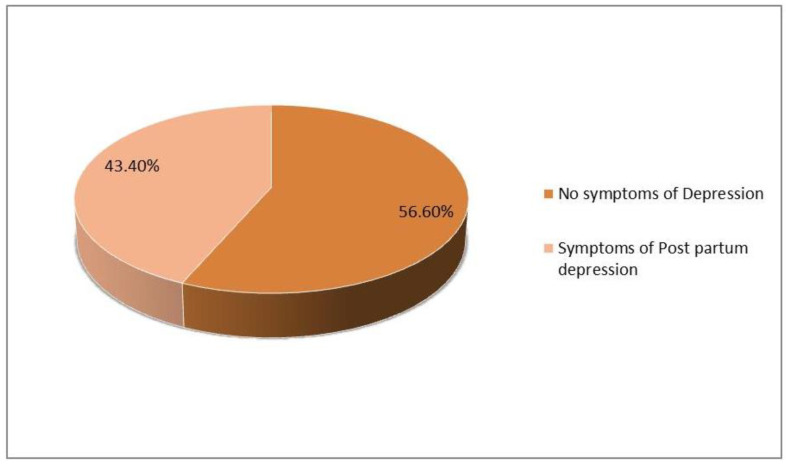
The prevalence rate of postpartum depression was 43.4%. Family conflict, and lack of support by spouse and family during pregnancy were found to be the strongest predictors of developing PPD. Women who had reported family conflict were at six times higher risk for developing PPD compared to those who did not have a family conflict (aOR = 6.5, 95% CI = 2.3-18.4). Women who reported a lack of spousal support during pregnancy encountered 2.3 fold increased risk for PPD (aOR = 2.3, 95% CI = 1.0-4.8) and women who had not received family support during pregnancy period were more than three times (aOR = 3.5, 95 % CI 1.6-7.7) likely to experience PPD.
The risk of PPD among Saudi postnatal women was high. PPD screening should be an integral part of postnatal care. Awareness of women, spouses and families about potential risk factors can be a preventive strategy. The early identification of high-risk women during the antenatal and post-natal period could help to prevent this condition.
产后抑郁症(PPD)的负担很重,因为它仍未得到识别,不仅会对母亲产生不利影响,还会对家庭生活和婴儿发育造成负面影响。本研究的目的是测量沙特阿拉伯西南部阿卜哈市六个初级卫生保健中心母婴保健门诊的母亲中PPD的患病率,并确定PPD的风险因素。
采用连续抽样技术,共招募了228名年龄在两周至一岁之间孩子的沙特女性参与研究。使用阿拉伯语版的爱丁堡产后抑郁量表(EPDS)作为筛查工具来测量PPD的患病率。还询问了母亲们的社会人口学特征和风险因素。
产后抑郁症的患病率为43.4%。家庭冲突以及孕期配偶和家人缺乏支持被发现是发生PPD的最强预测因素。报告有家庭冲突的女性患PPD的风险是没有家庭冲突女性的六倍(调整后比值比[aOR]=6.5,95%置信区间[CI]=2.3 - 18.4)。报告孕期缺乏配偶支持的女性患PPD的风险增加2.3倍(aOR = 2.3,95% CI = 1.0 - 4.8),而孕期未得到家人支持的女性患PPD的可能性是前者的三倍多(aOR = 3.5,95% CI 1.6 - 7.7)。
沙特产后女性患PPD的风险很高。PPD筛查应成为产后护理的一个组成部分。提高女性、配偶和家庭对潜在风险因素的认识可能是一种预防策略。在产前和产后早期识别高危女性有助于预防这种情况。