State Key Laboratory of Cell Biology, Shanghai Institute of Biochemistry and Cell Biology, Center for Excellence in Molecular Cell Science, Chinese Academy of Sciences, Shanghai 200031, China.
University of Chinese Academy of Sciences, Beijing 100190, China.
Acta Biochim Biophys Sin (Shanghai). 2023 May 30;55(6):948-955. doi: 10.3724/abbs.2023080.
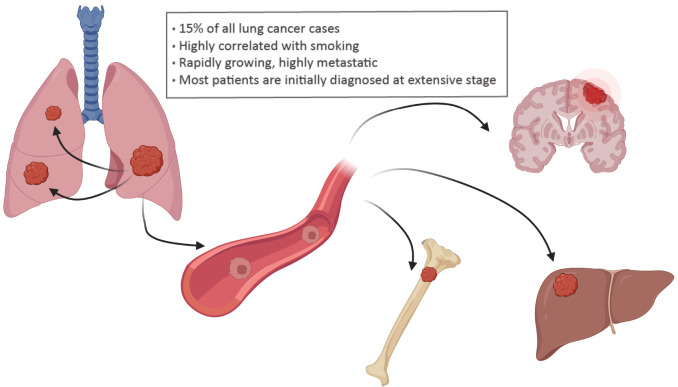
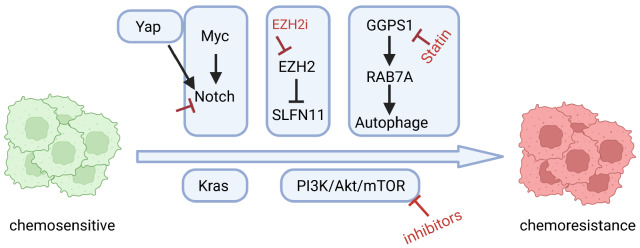
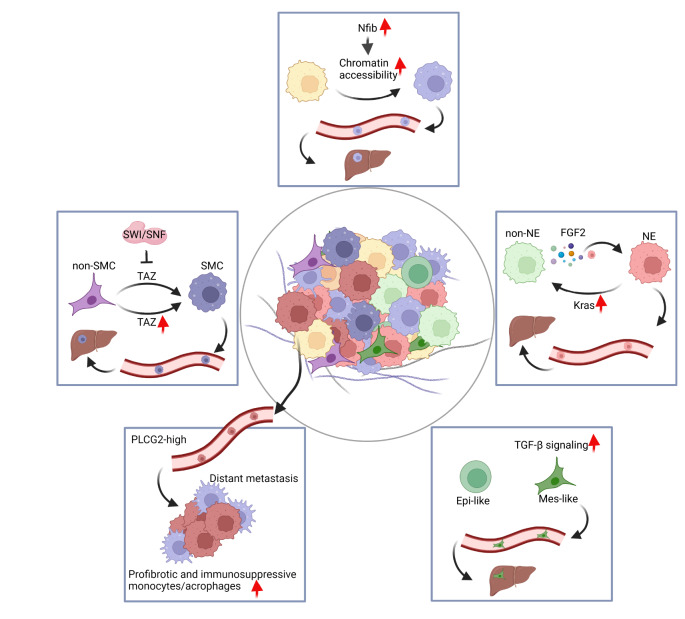
Small cell lung cancer (SCLC) accounts for approximately 15% of all lung cancer cases and features a strong predilection for early metastasis and extremely poor prognosis. Despite being highly sensitive to chemotherapy and/or radiotherapy initially, most SCLC patients develop therapeutic resistance within one year and die of distant metastases. Multiple studies have revealed the high heterogeneity and strong plasticity of SCLC associated with frequent metastases and early development of therapeutic resistance as well as poor clinical outcome. Importantly, different SCLC subtypes are associated with different therapeutic vulnerabilities, and the inflamed subtype tends to have the best response to immunotherapy, which highlights the importance of precision medicine in the clinic. Here, we review recent advances in SCLC heterogeneity and plasticity and their link to distant metastases and chemotherapy resistance. We hope that a better understanding of the molecular mechanisms underlying SCLC malignant progression will help to develop better intervention strategies for this deadly disease.
小细胞肺癌(SCLC)约占所有肺癌病例的 15%,其早期转移倾向强,预后极差。尽管 SCLC 患者对化疗和/或放疗最初具有高度敏感性,但大多数患者在一年内会产生治疗耐药性,并死于远处转移。多项研究表明,SCLC 具有高度异质性和强可塑性,与频繁转移、早期产生治疗耐药性以及临床预后不良有关。重要的是,不同的 SCLC 亚型与不同的治疗脆弱性相关,炎症亚型对免疫治疗的反应较好,这凸显了精准医学在临床中的重要性。在这里,我们综述了 SCLC 异质性和可塑性的最新进展及其与远处转移和化疗耐药性的关系。我们希望更好地了解 SCLC 恶性进展的分子机制,将有助于为这种致命疾病开发更好的干预策略。