Oyato Befekadu, Zakir Husen, Hussein Dursa, Lemma Tasfaye, Awol Mukemil
Department of Midwifery, College of Health Sciences, Salale University, Fitche, Ethiopia.
Department of Public Health, College of Health Sciences, Salale University, Fitche, Ethiopia.
Pediatric Health Med Ther. 2023 May 23;14:169-183. doi: 10.2147/PHMT.S402154. eCollection 2023.
Three years ahead of the plan, Ethiopia has met Millennium Development Goal 4 of reducing under-five mortality. Additionally, the nation is on track to achieve the Sustainable Development Goal of putting an end to preventable child mortality. Despite this, recent data from the nation showed that there were 43 infant deaths for every 1000 live births. Moreover, the country has fallen short of the 2015 Health Sector Transformation Plan goal, with an anticipated infant mortality rate of 35 deaths per 1000 live births in 2020. Thus, this study aims to identify the time to death and its predictors among Ethiopian infants.
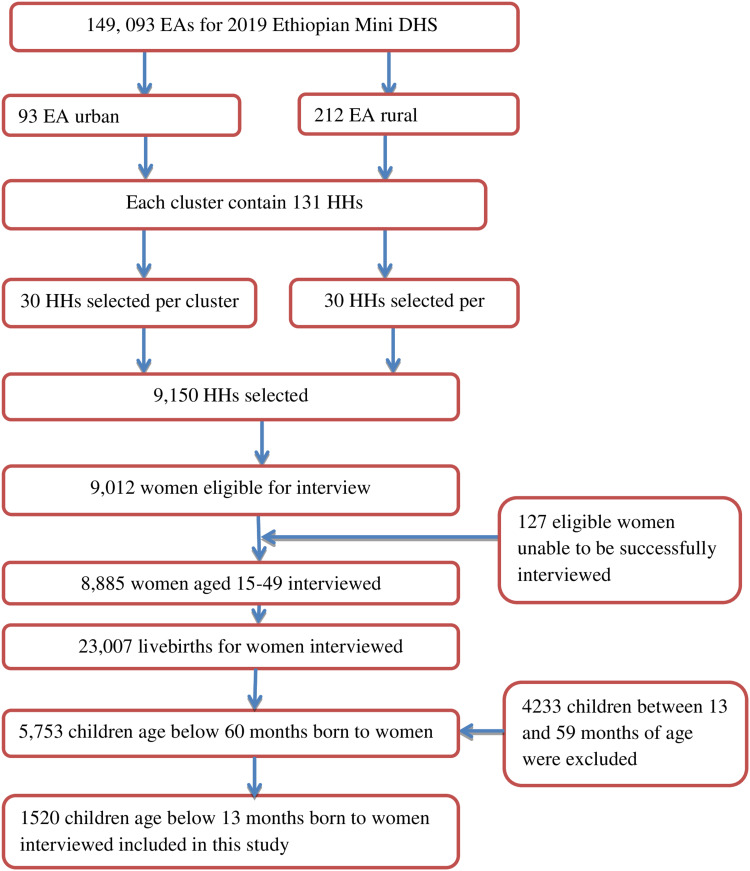
This study used the 2019 Mini-Ethiopian Demographic and Health Survey data set to conduct a retrospective study. The analysis used survival curves and descriptive statistics. Multilevel mixed-effects parametric survival analysis was applied to identify the predictors of infant mortality.
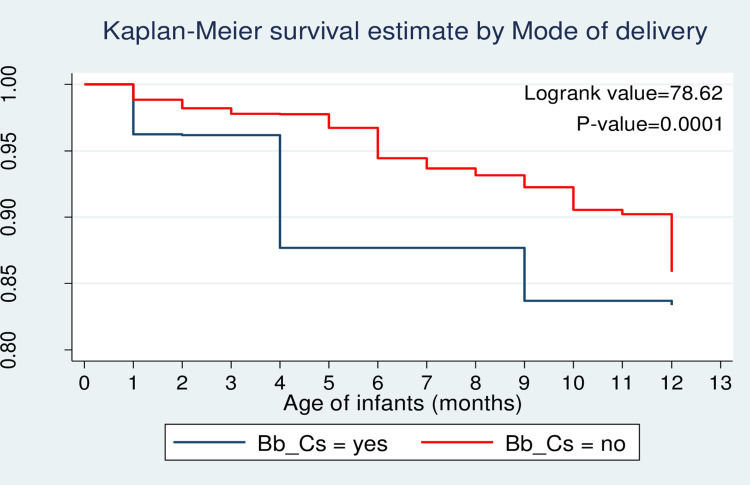
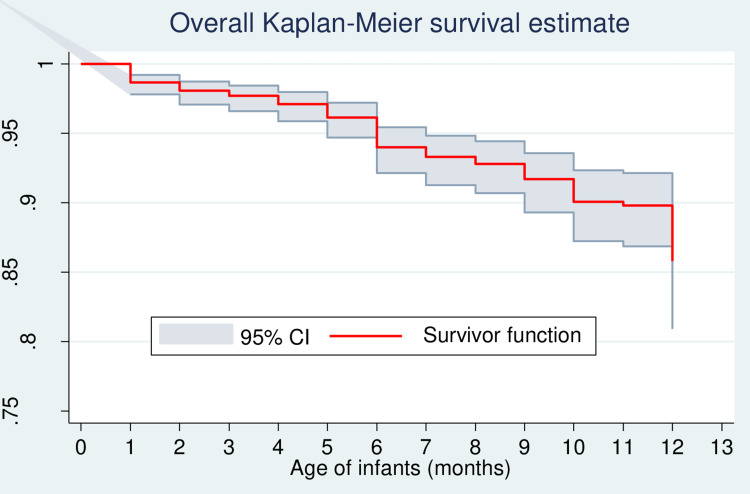
The estimated mean survival time of infants was 11.3 months (95% CI: 11.1, 11.4). Women's current pregnancy status, family size, age of women, previous birth interval, place of delivery, and mode of delivery were significant individual-level predictors of infant mortality. Infants born with less than 24 months' birth interval had a 2.29 times higher estimated risk of death (AHR = 2.29, 95% CI: 1.05, 5.02). Infants born at home were 2.48 times more likely to die than those born in a health facility (AHR = 2.48, 95% CI: 1.03, 5.98). At the community level, women's education was the only statistically significant predictor of infant death.
The risk of infant death was higher before the first month of life, typically shortly after birth. Healthcare programs should put a strong emphasis on efforts to space out births and make institutional delivery services more readily accessible to mothers in Ethiopia to address the infant mortality challenges.
埃塞俄比亚比计划提前三年实现了千年发展目标4,即降低五岁以下儿童死亡率。此外,该国正在朝着实现消除可预防儿童死亡的可持续发展目标迈进。尽管如此,该国最近的数据显示,每1000例活产中有43例婴儿死亡。此外,该国未达到2015年卫生部门转型计划的目标,预计2020年婴儿死亡率为每1000例活产35例死亡。因此,本研究旨在确定埃塞俄比亚婴儿的死亡时间及其预测因素。
本研究使用2019年埃塞俄比亚微型人口与健康调查数据集进行回顾性研究。分析采用生存曲线和描述性统计。应用多水平混合效应参数生存分析来确定婴儿死亡率的预测因素。
婴儿的估计平均生存时间为11.3个月(95%置信区间:11.1, 11.4)。妇女当前的怀孕状况、家庭规模、妇女年龄、上次生育间隔、分娩地点和分娩方式是婴儿死亡率的重要个体水平预测因素。出生间隔少于24个月的婴儿死亡风险估计高出2.29倍(风险比=2.29,95%置信区间:1.05, 5.02)。在家中出生的婴儿死亡可能性比在医疗机构出生的婴儿高2.48倍(风险比=2.48,95%置信区间:1.03, 5.98)。在社区层面,妇女教育是婴儿死亡唯一具有统计学意义的预测因素。
婴儿在出生后第一个月之前,通常是出生后不久,死亡风险较高。医疗保健计划应大力强调在埃塞俄比亚拉开生育间隔的努力,并使母亲更容易获得机构分娩服务,以应对婴儿死亡率挑战。