Department of Gastroenterology, The Second Hospital of Hebei Medical University, Hebei Key Laboratory of Gastroenterology, Hebei Institute of Gastroenterology, Hebei Clinical Research Center for Digestive Diseases, Shijiazhuang, Hebei, People's Republic of China.
Department of Endocrinology, The Second Hospital of Hebei Medical University, Shijiazhuang, Hebei, People's Republic of China.
Int J Nanomedicine. 2023 May 25;18:2799-2818. doi: 10.2147/IJN.S402179. eCollection 2023.
Mucosal healing has emerged as a crucial therapeutic goal for inflammatory bowel diseases (IBD). Exosomes (Exo) as a potential acellular candidate for stem cell therapy might be competent to promote mucosal healing, while its mechanism remains unexplored.
Exosomes derived from human umbilical cord mesenchymal stem cells (hucMSCs) were subjected to experimental colitis mice intraperitoneally to estimate the role in mucosal healing and the regeneration of intestinal stem cells (ISCs) and epithelium. The intestinal organoid model of IBD was constructed utilizing tumor necrosis factor (TNF)-α for subsequent function analysis in vitro. Transcriptome sequencing was performed to decipher the underlying mechanism and Wnt-C59, an oral Wnt inhibitor, was used to confirm that further. Finally, the potential specific components of hucMSC‑exo were investigated based on several existing miRNA expression datasets.
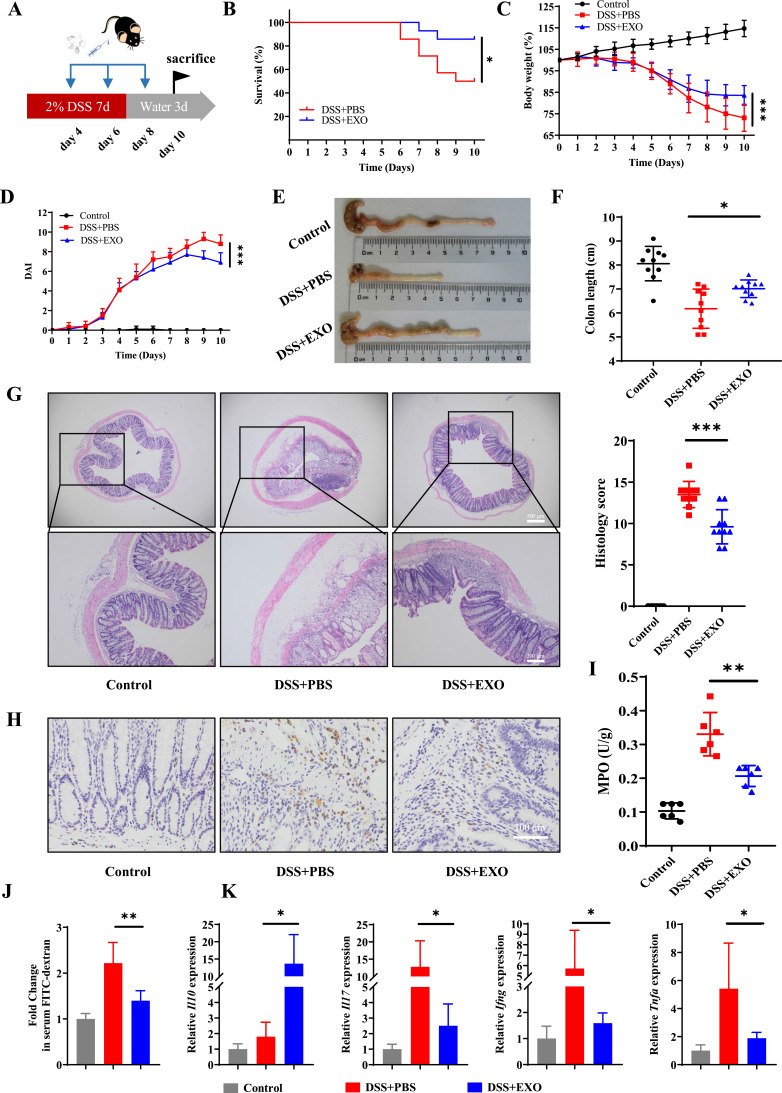
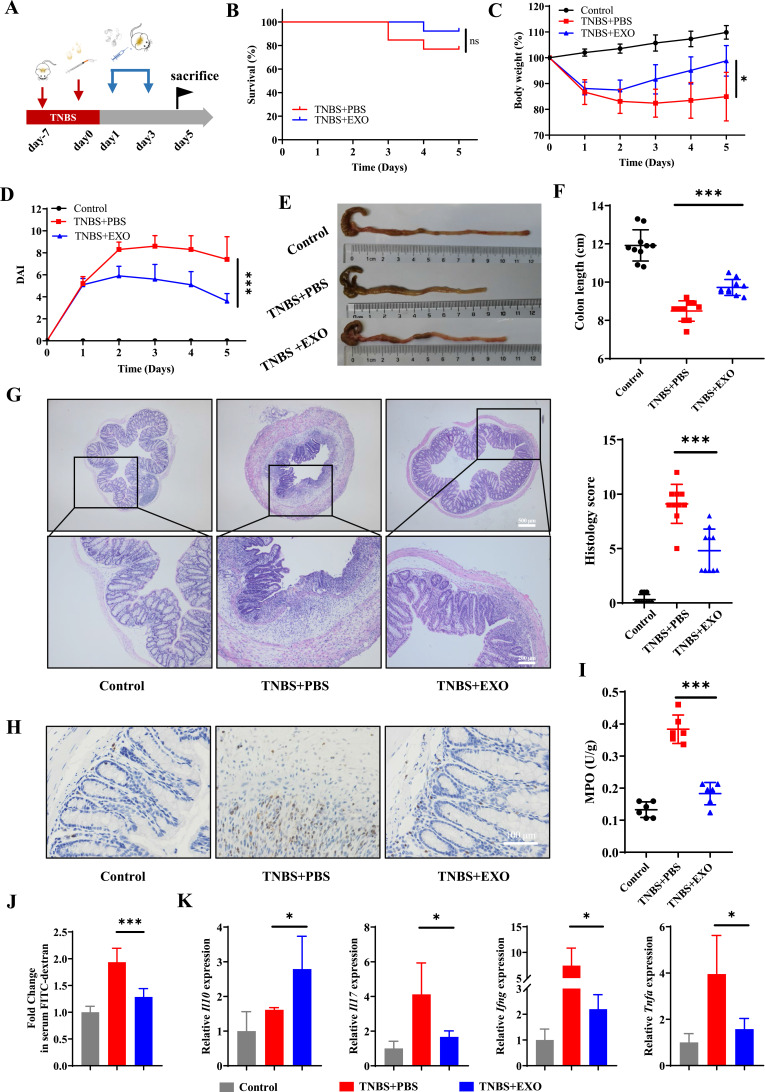
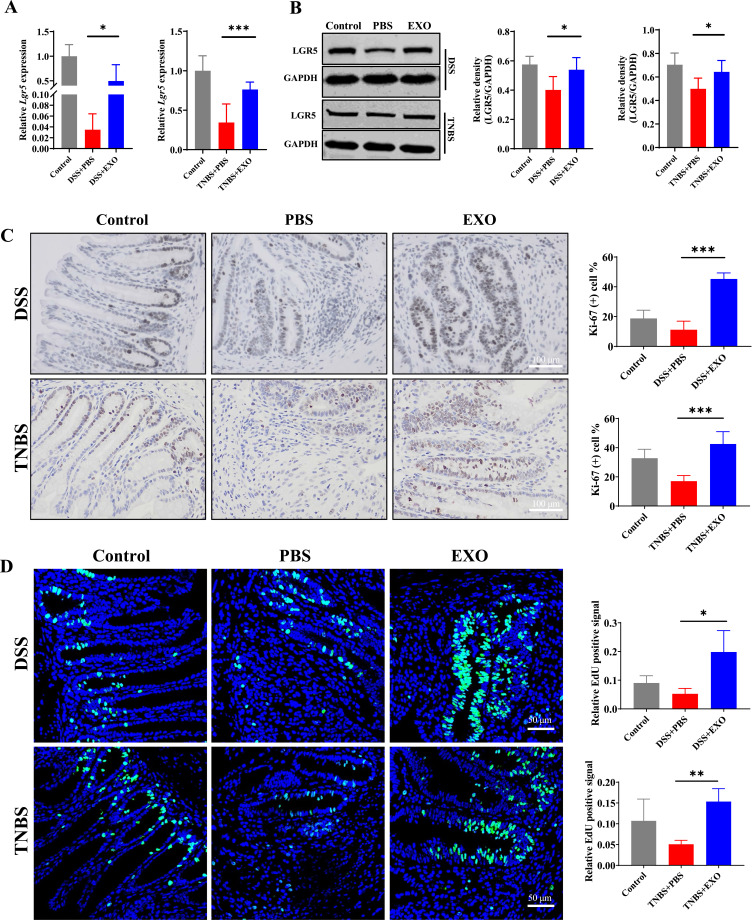
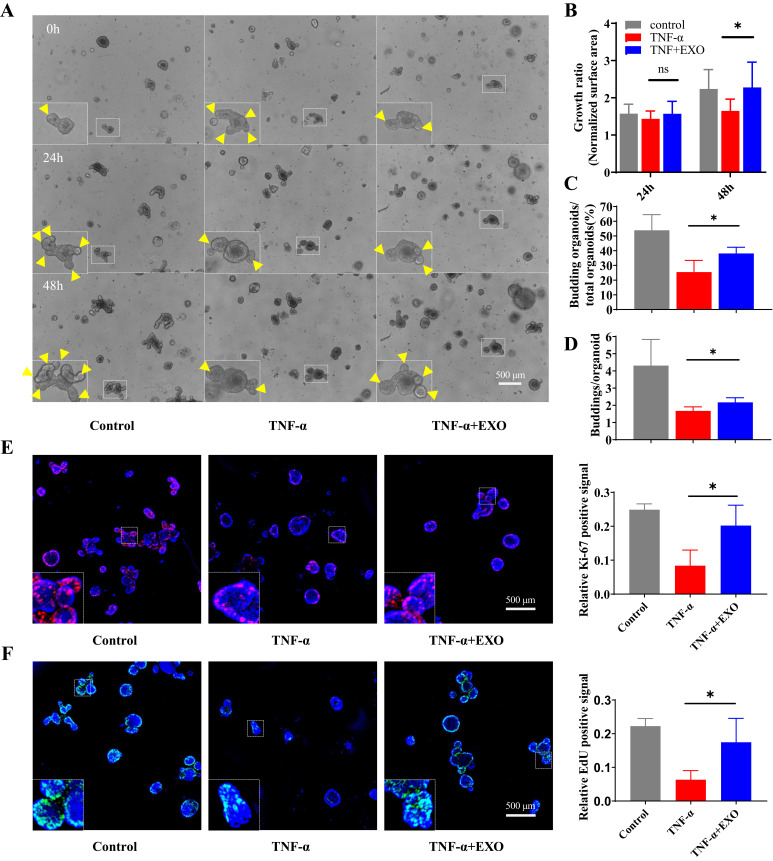
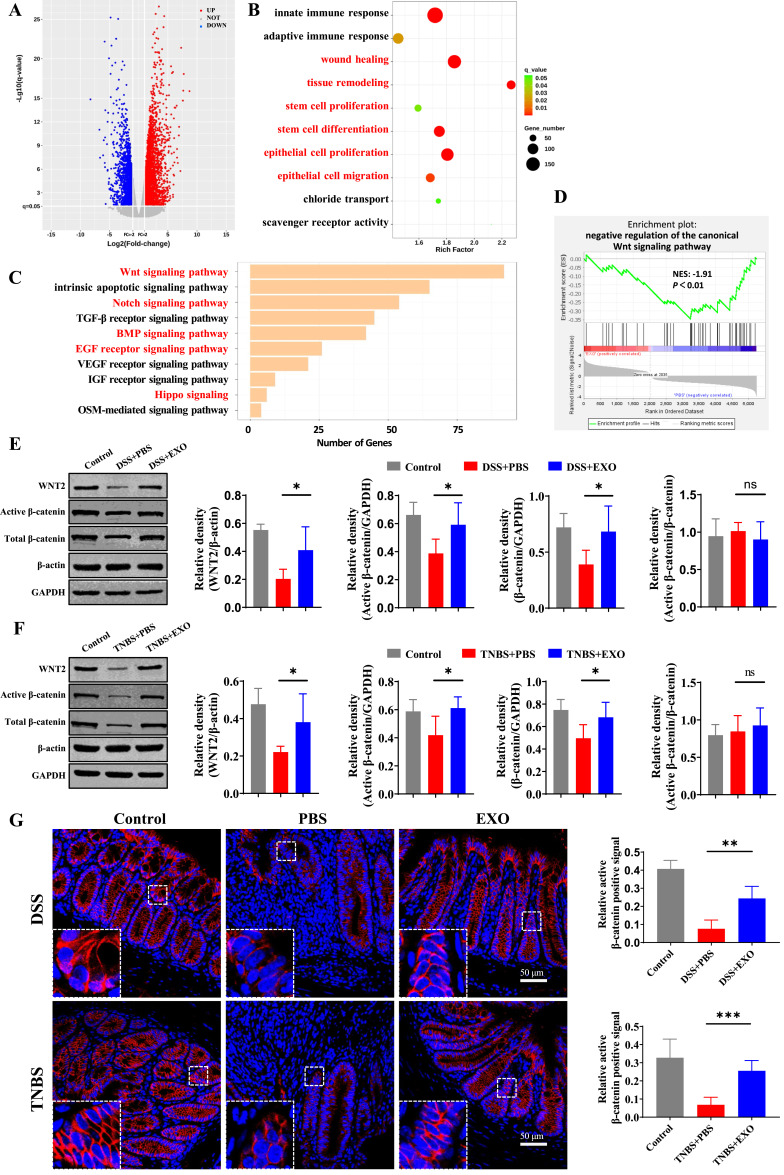
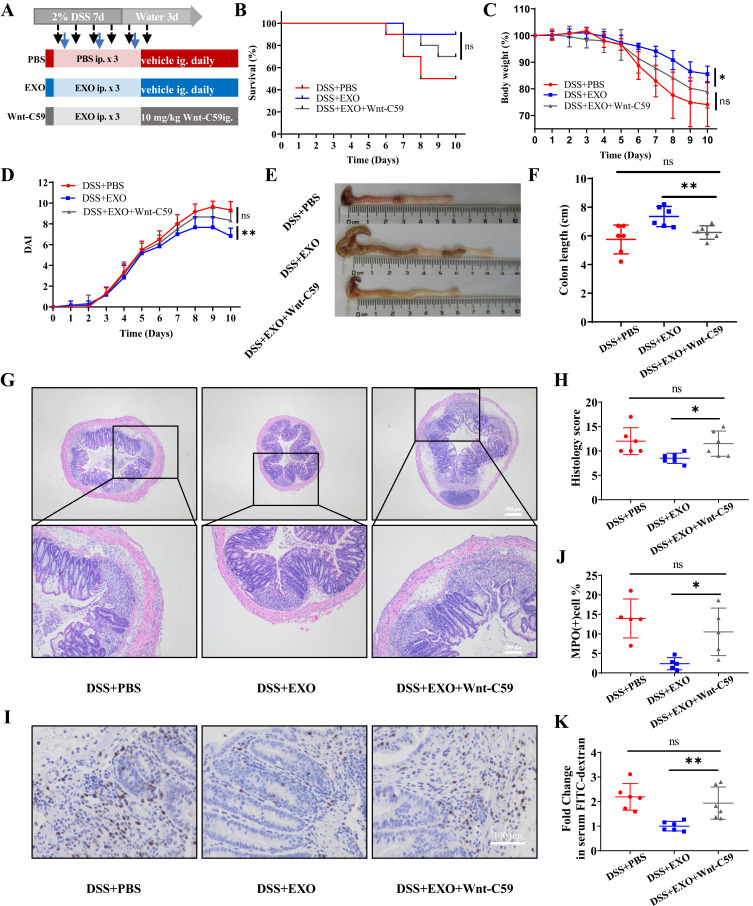
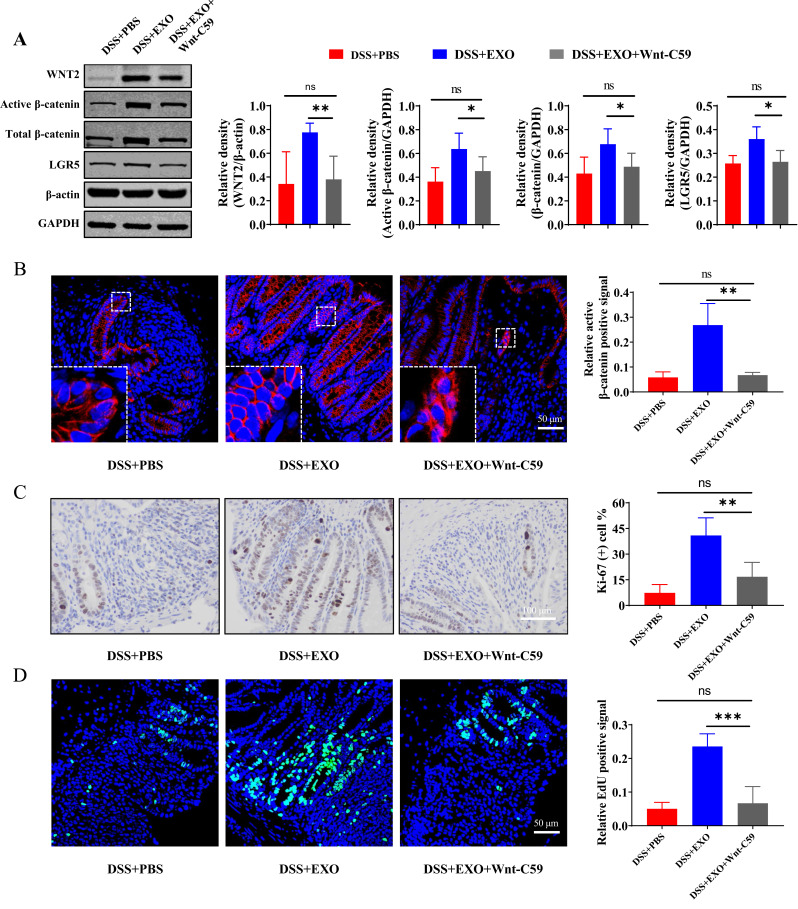
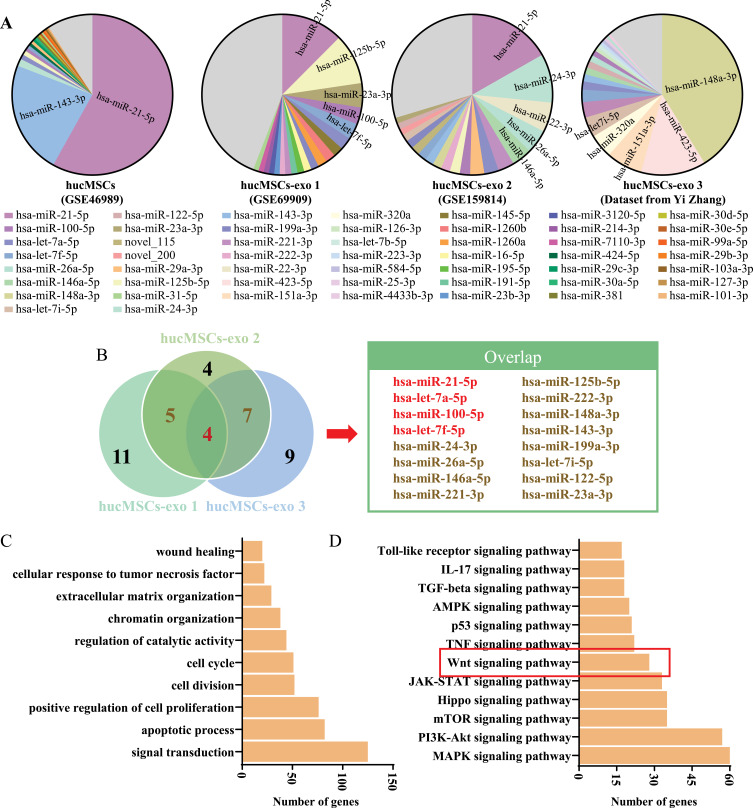
HucMSC-exo showed striking potential for mucosal healing in colitis mice, characterized by decreased histopathological injuries and neutrophil infiltration as well as improved epithelial integrity. HucMSC-exo up-regulated the expression of leucine-rich repeat-containing G-protein coupled receptor 5 (Lgr5), a specific marker for ISCs and accelerated the proliferation of intestinal epithelium. HucMSC-exo endowed intestinal organoids with more excellent capacity to grow and bud under TNF-α stimulation. More than that, the fact that hucMSC-exo activated the canonical Wnt signaling pathway to promote mucosal healing was uncovered by not only RNA-sequencing but also relevant experimental data. Finally, bioinformatics analysis of the existing miRNA expression datasets indicated that several miRNAs abundant in hucMSC-exo involved widely in regeneration or repair related biological processes and Wnt signaling pathway might be one of the most important signal transduction pathways.
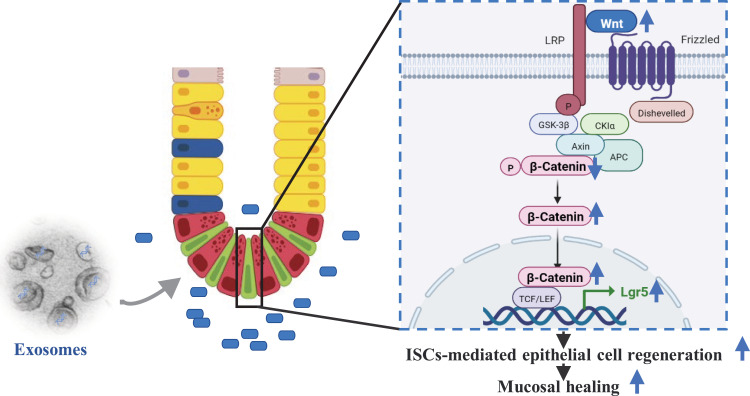
Our results suggested that hucMSC-exo could facilitate mucosal healing in experimental colitis by accelerating ISCs and intestinal epithelium regeneration via transferring key miRNAs, which was dependent on the activation of Wnt/β-catenin signaling pathway.
黏膜愈合已成为炎症性肠病(IBD)的重要治疗目标。外泌体(Exo)作为一种潜在的无细胞干细胞治疗候选物,可能有能力促进黏膜愈合,但作用机制尚不清楚。
将人脐带间充质干细胞(hucMSC)来源的外泌体(Exo)通过腹腔注射到实验性结肠炎小鼠体内,以评估其在黏膜愈合和肠干细胞(ISCs)和上皮细胞再生中的作用。利用肿瘤坏死因子(TNF)-α构建了 IBD 的肠类器官模型,用于随后的体外功能分析。进行转录组测序以揭示潜在的作用机制,并使用口服 Wnt 抑制剂 Wnt-C59 进一步证实。最后,基于几个现有的 miRNA 表达数据集,研究了 hucMSC-exo 的潜在特异性成分。
hucMSC-exo 对结肠炎小鼠具有显著的黏膜愈合潜力,表现为组织病理学损伤和中性粒细胞浸润减少,上皮完整性改善。hucMSC-exo 上调了 Lgr5(富含亮氨酸重复的 G 蛋白偶联受体 5)的表达,Lgr5 是 ISCs 的特异性标志物,并加速了肠道上皮细胞的增殖。hucMSC-exo 使肠类器官在 TNF-α刺激下具有更好的生长和出芽能力。不仅 RNA 测序,还有相关的实验数据表明,hucMSC-exo 通过激活经典的 Wnt 信号通路促进黏膜愈合。最后,对现有的 miRNA 表达数据集进行生物信息学分析表明,hucMSC-exo 中丰富的几种 miRNA 广泛参与再生或修复相关的生物学过程,Wnt 信号通路可能是最重要的信号转导通路之一。
我们的研究结果表明,hucMSC-exo 通过转移关键 miRNA 加速 ISCs 和肠道上皮细胞再生,从而促进实验性结肠炎中的黏膜愈合,这依赖于 Wnt/β-catenin 信号通路的激活。