Changchun Veterinary Research Institute, Chinese Academy of Agricultural Sciences/Key laboratory of Jilin Province for Zoonosis Prevention and Control, Changchun, China.
School of Food and Engineering, Jilin Agricultural University, Changchun, China.
Microbiol Spectr. 2023 Aug 17;11(4):e0217022. doi: 10.1128/spectrum.02170-22. Epub 2023 Jun 1.
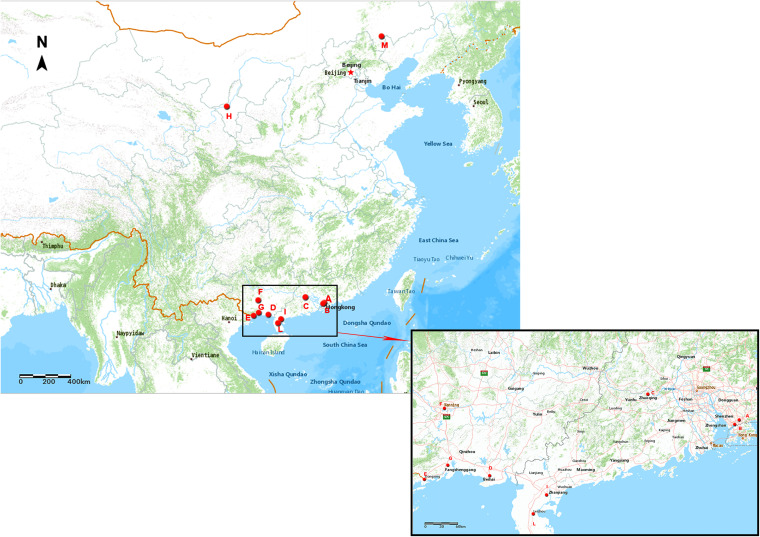
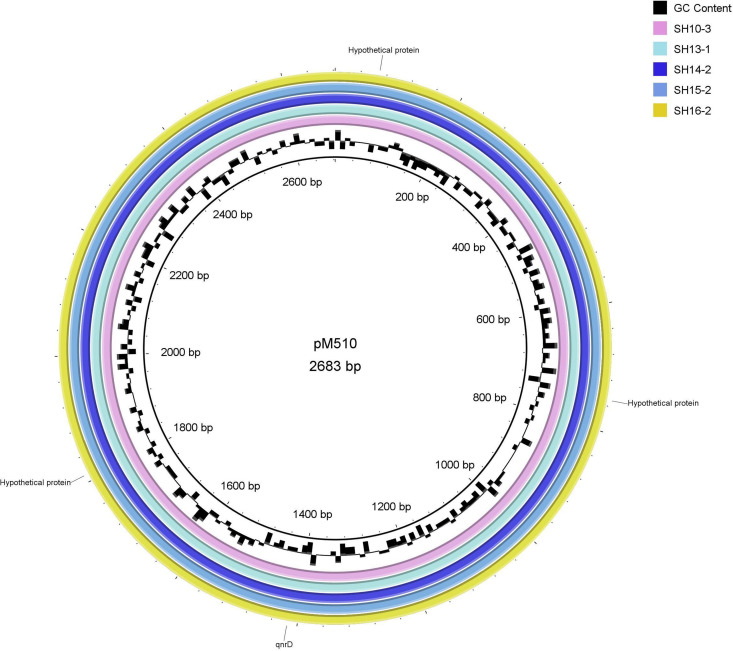
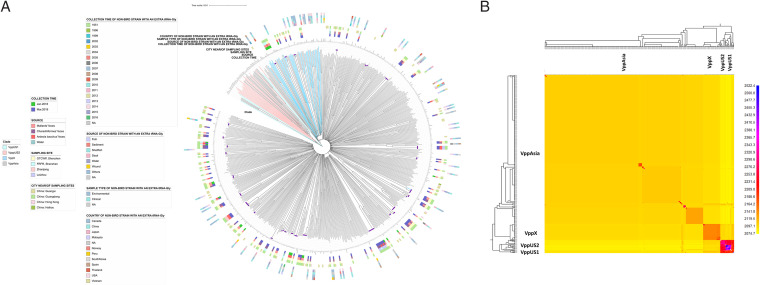
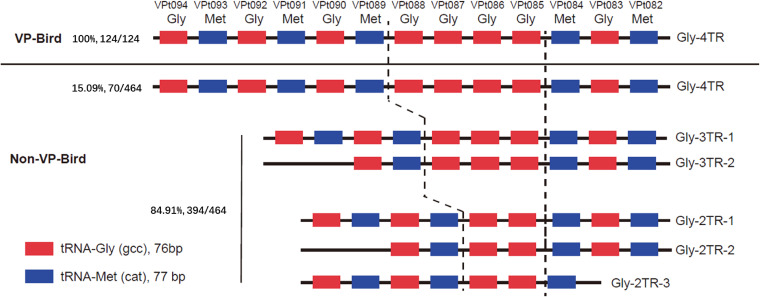
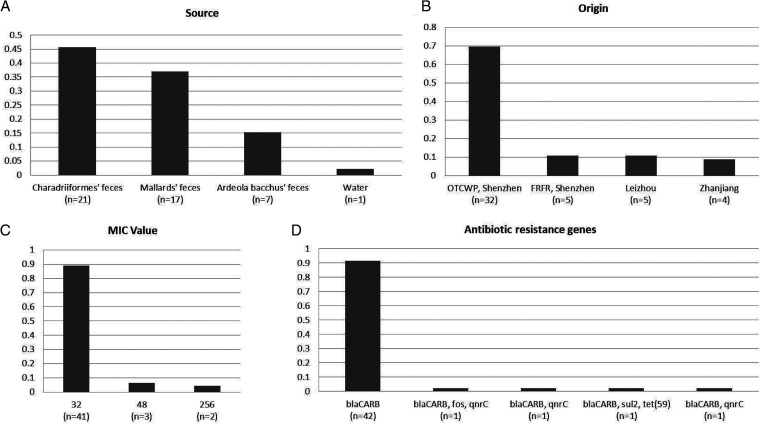
Vibrio parahaemolyticus is a marine bacterium coming from estuarine environments, where the migratory birds can easily be colonized by V. parahaemolyticus. Migratory birds may be important reservoirs of V. parahaemolyticus by growth and re-entry into the environment. To further explore the spreading mechanism of V. parahaemolyticus among marine life, human beings, and migratory birds, we aimed to investigate the characteristics of the genetic diversity, antimicrobial resistance, virulence genes, and a potentially informative gene marker of V. parahaemolyticus isolated from migratory birds in China. This study recovered 124 (14.55%) V. parahaemolyticus isolates from 852 fecal and environmental (water) samples. All of the 124 strains were classified into 85 known sequence types (STs), of which ST-2738 was most frequently identified. Analysis of the population structure using whole-genome variation of the 124 isolates illustrated that they grouped into 27 different clonal groups (CGs) belonging to the previously defined geographical populations VppX and VppAsia. Even though these genomes have high diversity, an extra copy of tRNA-Gly was presented in all migratory bird-carried V. parahaemolyticus isolates, which could be used as a potentially informative marker of the V. parahaemolyticus strains derived from birds. Antibiotic sensitivity experiments revealed that 47 (37.10%) isolates were resistant to ampicillin. Five isolates harbored the plasmid-mediated quinolone resistance (PMQR) gene , which has not previously been identified in this species. The investigation of antibiotic resistance provides the basic knowledge to further evaluate the risk of enrichment and reintroduction of pathogenic V. parahaemolyticus strains in migratory birds. The presence of V. parahaemolyticus in migratory birds' fecal samples implies that the human pathogenic V. parahaemolyticus strains may also potentially infect birds and thus pose a risk for zoonotic infection and food safety associated with re-entry into the environment. Our study firstly highlights the extra copy of tRNA as a potentially informative marker for identifying the bird-carried V. parahaemolyticus strains. Also, we firstly identify the plasmid-mediated quinolone resistance (PMQR) gene in V. parahaemolyticus. To further evaluate the risk of enrichment and reintroduction of pathogenic strains carried by migratory birds, we suggest conducting estuarine environmental surveillance to monitor the antibiotic resistance and virulence factors of bird-carried V. parahaemolyticus isolates.
副溶血性弧菌是一种来自河口环境的海洋细菌,候鸟很容易被副溶血性弧菌定植。候鸟可能是副溶血性弧菌的重要储存宿主,因为它们可以在环境中生长和重新进入。为了进一步探索副溶血性弧菌在海洋生物、人类和候鸟之间的传播机制,我们旨在研究从中国候鸟中分离的副溶血性弧菌的遗传多样性、抗菌药物耐药性、毒力基因和一个潜在的信息基因标记的特征。本研究从 852 份粪便和环境(水)样本中回收了 124 株(14.55%)副溶血性弧菌。所有 124 株菌均分为 85 种已知序列类型(ST),其中 ST-2738 是最常见的类型。使用 124 株菌的全基因组变异分析种群结构表明,它们分为 27 个不同的克隆群(CG),属于先前定义的地理种群 VppX 和 VppAsia。尽管这些基因组具有高度多样性,但所有携带副溶血性弧菌的候鸟都存在额外的 tRNA-Gly 拷贝,这可能成为源自鸟类的副溶血性弧菌菌株的一个潜在信息标记。抗生素敏感性实验表明,47 株(37.10%)分离株对氨苄西林有耐药性。有 5 株菌携带质粒介导的喹诺酮耐药(PMQR)基因 ,这在该物种中尚未被发现。抗生素耐药性的研究为进一步评估在候鸟中富集和重新引入致病性副溶血性弧菌菌株的风险提供了基础知识。在候鸟粪便样本中发现副溶血性弧菌意味着人类致病性副溶血性弧菌菌株也可能感染鸟类,从而对与重新进入环境相关的人畜共患病感染和食品安全构成威胁。我们的研究首次强调了 tRNA 的额外拷贝作为识别携带副溶血性弧菌的鸟类菌株的潜在信息标记。此外,我们首次在副溶血性弧菌中鉴定出质粒介导的喹诺酮耐药(PMQR)基因 。为了进一步评估候鸟携带的致病性菌株富集和重新引入的风险,我们建议进行河口环境监测,以监测携带副溶血性弧菌的鸟类的抗生素耐药性和毒力因子。