Lin Yunying, Huang Yi, Li Boyu, Zhang Ting, Niu Yichao, Hu Shuanggang, Ding Ying, Yao Guangxin, Wei Zhe, Yao Ning, Yao Yejie, Lu Yao, He Yaqiong, Zhu Qinling, Zhang Ling, Sun Yun
Center for Reproductive Medicine Center, Renji Hospital, School of Medicine, Shanghai Jiao Tong University, Shanghai, China.
Shanghai Key Laboratory for Assisted Reproduction and Reproductive Genetics, Shanghai, China.
Front Cell Dev Biol. 2023 May 16;11:1193248. doi: 10.3389/fcell.2023.1193248. eCollection 2023.
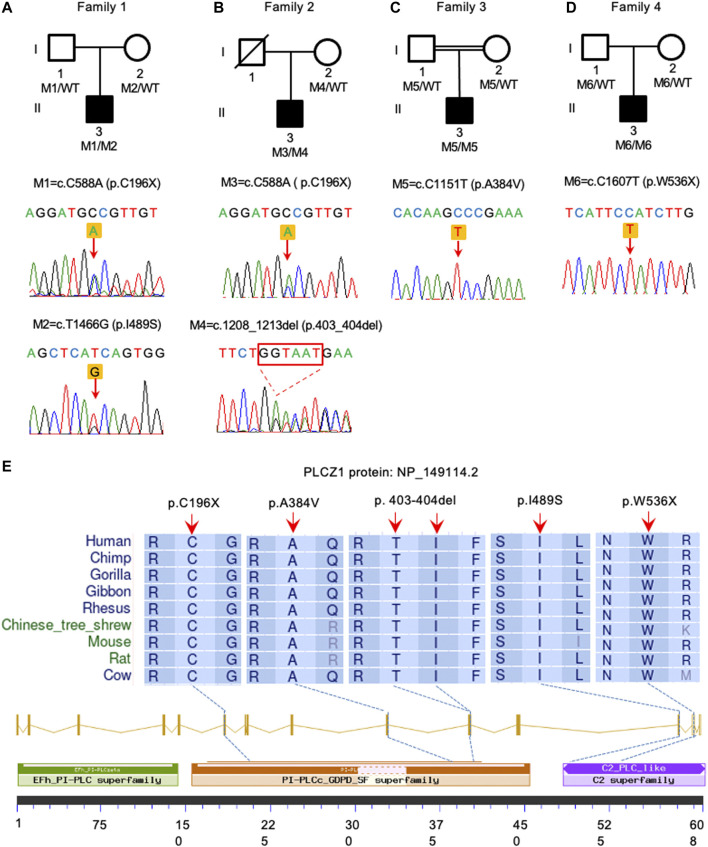
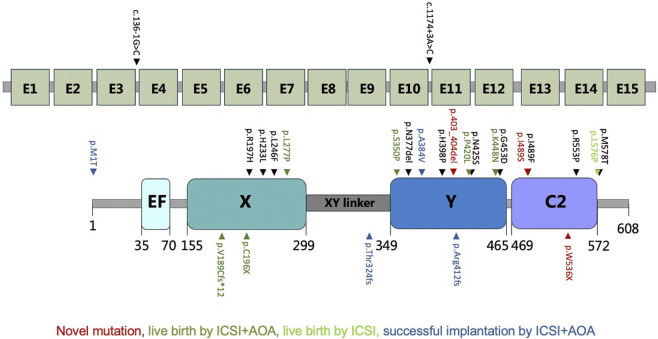
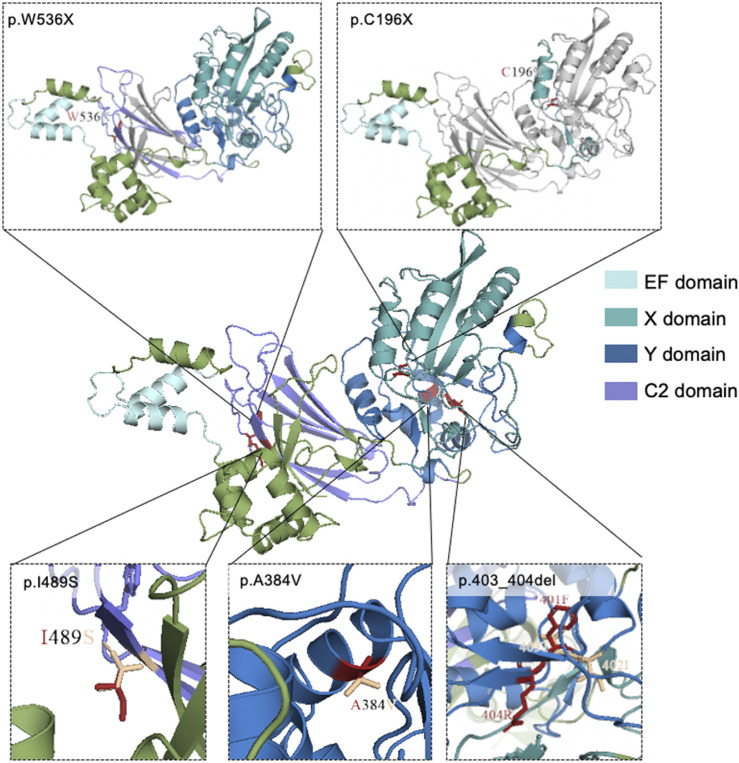
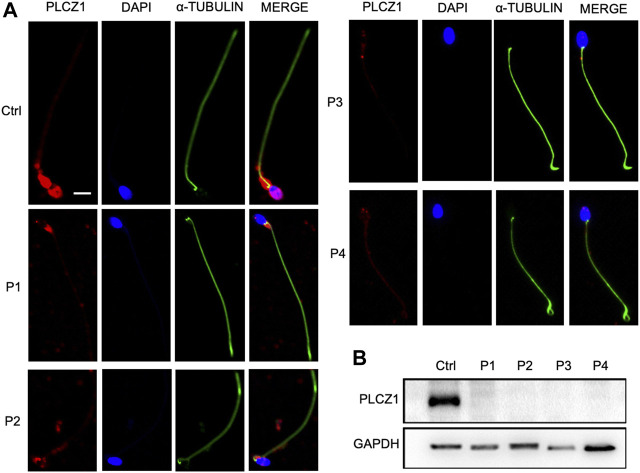
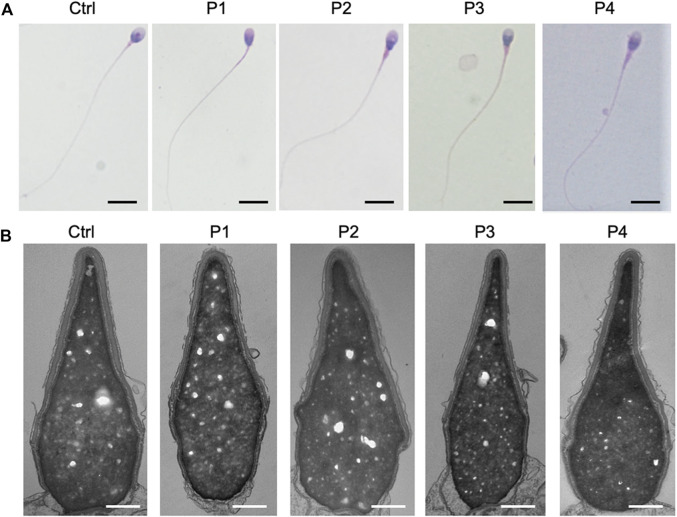
Early embryonic arrest is one of the causes of assist reproduction technology (ART) failure. We have previously reported that the first sperm-derived genetic factor, mutations, could lead to early embryonic arrest. However, whether there are other male genetic factors associated with early embryonic arrest remains elusive. Here, we reported bi-allelic mutations in , a well-known causal gene of total fertilization failure, in four infertile males. Among these mutations, p.403_404del, p.I489S, and p.W536X were newly reported in this study. Histological and Western blotting analysis of the patients' sperm indicated these variants as loss-of-function mutations. These patients manifested normal conventional semen parameters and ultra-structures in sperm heads. However, among four fertilization (IVF) cycles, 81.8% (18/22) of the oocytes were polyspermic fertilized, which was rarely reported in -related male patients. In the following six ICSI cycles, artificial oocyte activation (AOA) was applied and successfully rescued the fertilization failure and polyspermy phenotypes, with 31.3% (15/48) of the MII oocytes normally fertilized. However, 60.0% (9/15) of these normally fertilized zygotes were arrested at 2-5-cell stage, with one failing to cleave, indicating that was not only necessary for fertilization, but also crucial for early embryonic development. However, these rescued zygotes showed a lower potential in developing into blastocysts when cultured . Thus, fresh cleavage transfer was tried and two live births were successfully achieved thereafter. In conclusion, this study provided novel mutations in gene to expand the pathogenic mutational spectrum in male infertility and demonstrated that was a crucial sperm-related genetic factor for early embryonic arrest. We also proposed that cleavage transfer after ICSI and AOA treatment could be a potential treatment method for male patients carrying bi-allelic mutations in .
早期胚胎停滞是辅助生殖技术(ART)失败的原因之一。我们之前曾报道,首个源自精子的遗传因素——突变,可导致早期胚胎停滞。然而,是否存在其他与早期胚胎停滞相关的男性遗传因素仍不清楚。在此,我们报告了4名不育男性中,一个众所周知的导致完全受精失败的致病基因——发生双等位基因突变。在这些突变中,p.403_404del、p.I489S和p.W536X是本研究新报道的。对患者精子进行的组织学和蛋白质免疫印迹分析表明,这些变异为功能丧失性突变。这些患者的常规精液参数和精子头部超微结构均正常。然而,在4个体外受精(IVF)周期中,81.8%(18/22)的卵母细胞发生了多精受精,这在与相关的男性患者中鲜有报道。在随后的6个卵胞浆内单精子注射(ICSI)周期中,采用了人工卵母细胞激活(AOA),并成功挽救了受精失败和多精受精表型,31.3%(15/48)的第二次减数分裂中期(MII)卵母细胞正常受精。然而,这些正常受精的受精卵中有60.0%(9/15)在2-5细胞阶段停滞,1个未发生卵裂,这表明不仅对受精是必需的,对早期胚胎发育也至关重要。然而,这些挽救的受精卵在体外培养时发育成囊胚的潜力较低。因此,尝试了新鲜卵裂期胚胎移植,此后成功实现了2例活产。总之,本研究提供了基因中的新突变,以扩大男性不育的致病突变谱,并证明是早期胚胎停滞的关键精子相关遗传因素。我们还提出,ICSI和AOA治疗后的卵裂期胚胎移植可能是携带双等位基因突变男性患者的一种潜在治疗方法。