Barrera Cristian, Corredor Germán, Viswanathan Vidya Sankar, Ding Ruiwen, Toro Paula, Fu Pingfu, Buzzy Christina, Lu Cheng, Velu Priya, Zens Philipp, Berezowska Sabina, Belete Merzu, Balli David, Chang Han, Baxi Vipul, Syrigos Konstantinos, Rimm David L, Velcheti Vamsidhar, Schalper Kurt, Romero Eduardo, Madabhushi Anant
Department of Biomedical Engineering, School of Medicine, Emory University, Atlanta, GA, USA.
Louis Stokes Cleveland VA Medical Center, Cleveland, OH, USA.
NPJ Precis Oncol. 2023 Jun 1;7(1):52. doi: 10.1038/s41698-023-00403-x.
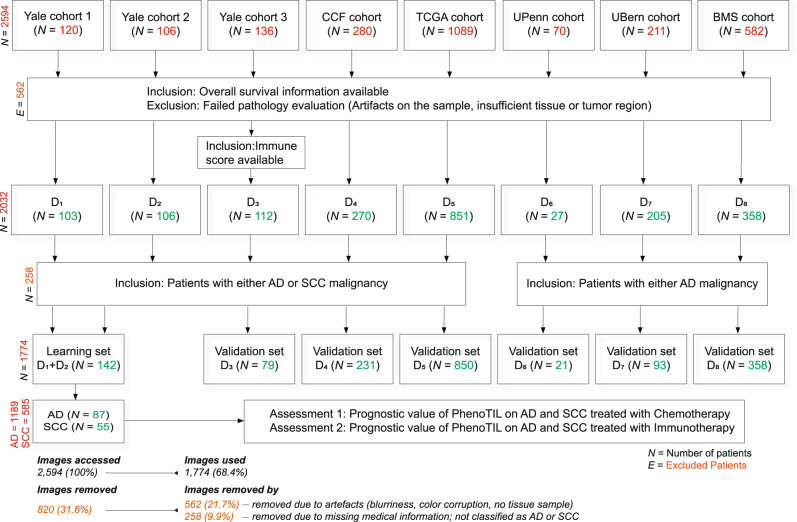
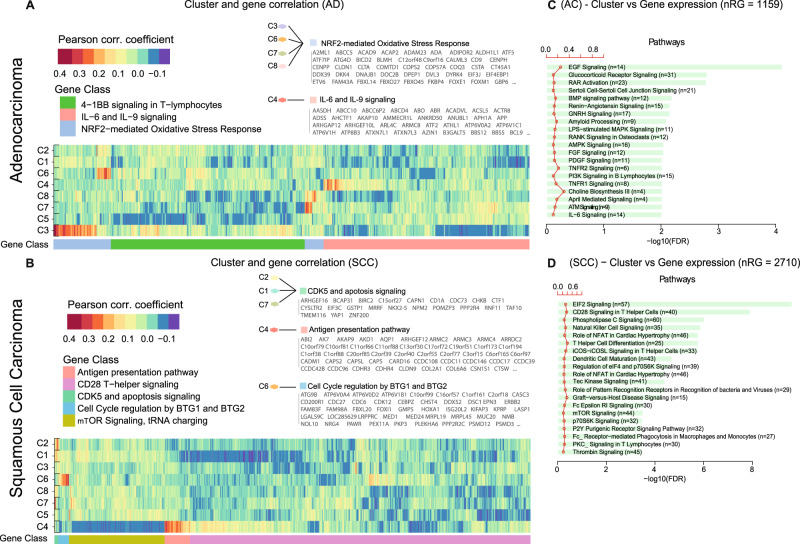
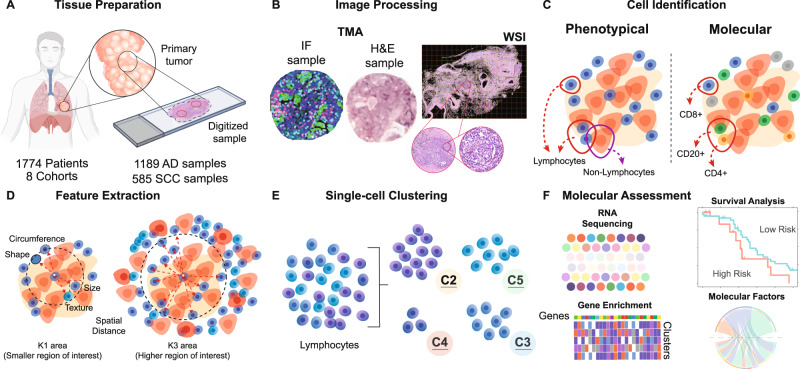
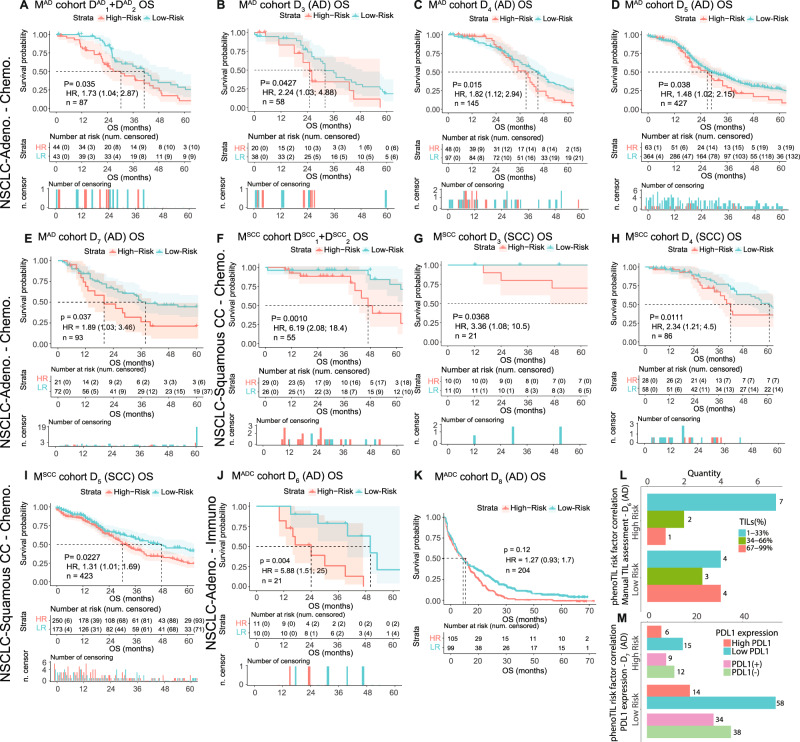
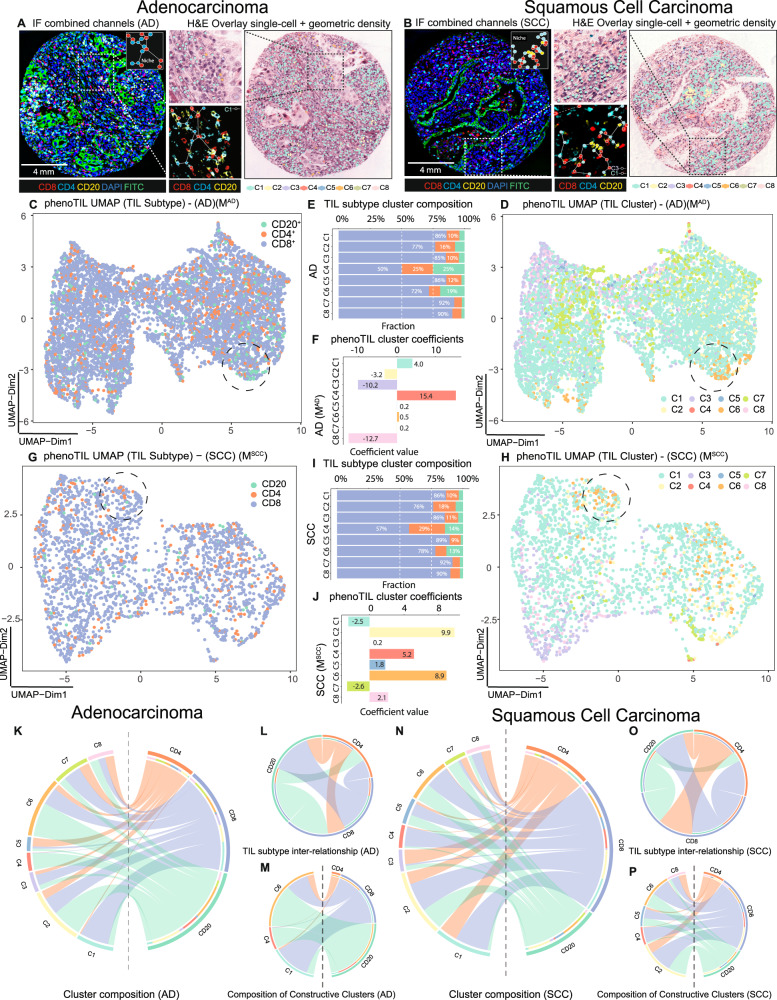
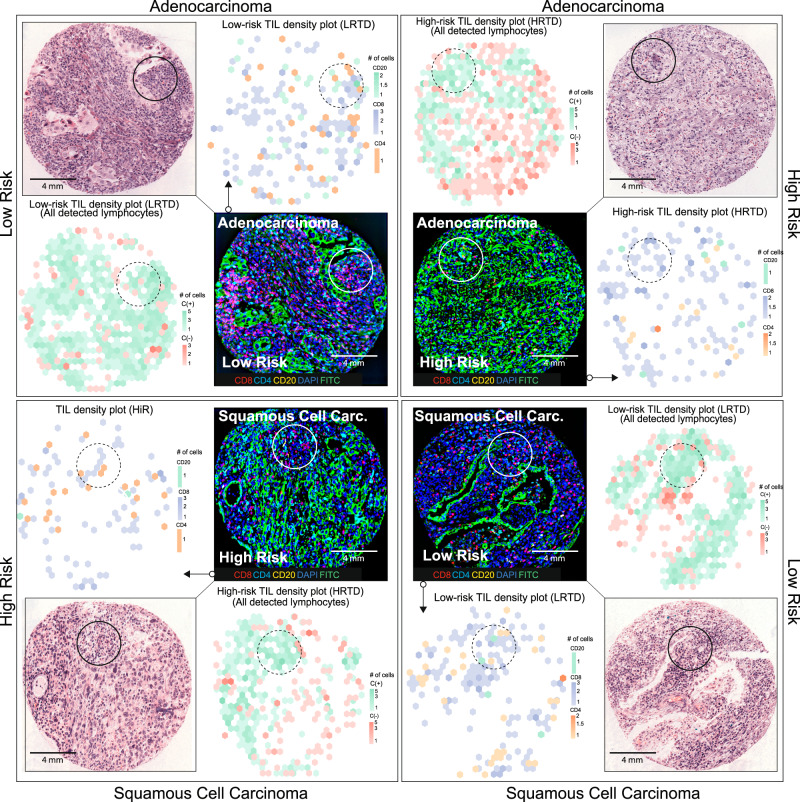
The tumor immune composition influences prognosis and treatment sensitivity in lung cancer. The presence of effective adaptive immune responses is associated with increased clinical benefit after immune checkpoint blockers. Conversely, immunotherapy resistance can occur as a consequence of local T-cell exhaustion/dysfunction and upregulation of immunosuppressive signals and regulatory cells. Consequently, merely measuring the amount of tumor-infiltrating lymphocytes (TILs) may not accurately reflect the complexity of tumor-immune interactions and T-cell functional states and may not be valuable as a treatment-specific biomarker. In this work, we investigate an immune-related biomarker (PhenoTIL) and its value in associating with treatment-specific outcomes in non-small cell lung cancer (NSCLC). PhenoTIL is a novel computational pathology approach that uses machine learning to capture spatial interplay and infer functional features of immune cell niches associated with tumor rejection and patient outcomes. PhenoTIL's advantage is the computational characterization of the tumor immune microenvironment extracted from H&E-stained preparations. Association with clinical outcome and major non-small cell lung cancer (NSCLC) histology variants was studied in baseline tumor specimens from 1,774 lung cancer patients treated with immunotherapy and/or chemotherapy, including the clinical trial Checkmate 057 (NCT01673867).
肿瘤免疫组成影响肺癌的预后和治疗敏感性。有效的适应性免疫反应的存在与免疫检查点阻断剂治疗后临床获益增加相关。相反,免疫治疗耐药可能是局部T细胞耗竭/功能障碍以及免疫抑制信号和调节性细胞上调的结果。因此,仅仅测量肿瘤浸润淋巴细胞(TILs)的数量可能无法准确反映肿瘤-免疫相互作用的复杂性和T细胞功能状态,也可能无法作为治疗特异性生物标志物发挥价值。在这项研究中,我们调查了一种免疫相关生物标志物(PhenoTIL)及其在非小细胞肺癌(NSCLC)中与治疗特异性结果相关的价值。PhenoTIL是一种新颖的计算病理学方法,它利用机器学习来捕捉空间相互作用,并推断与肿瘤排斥和患者预后相关的免疫细胞微环境的功能特征。PhenoTIL的优势在于对从苏木精和伊红(H&E)染色标本中提取的肿瘤免疫微环境进行计算表征。我们在1774例接受免疫治疗和/或化疗的肺癌患者的基线肿瘤标本中研究了其与临床结局及主要非小细胞肺癌(NSCLC)组织学变体的相关性,其中包括临床试验Checkmate 057(NCT01673867)。