School of Allied Health Sciences, Walailak University, Thasala, Nakhon Si Thammarat, Thailand.
Research Excellence Center for Innovation and Health Products, Walailak University, Thasala, Nakhon Si Thammarat, Thailand.
PeerJ. 2023 May 29;11:e15463. doi: 10.7717/peerj.15463. eCollection 2023.
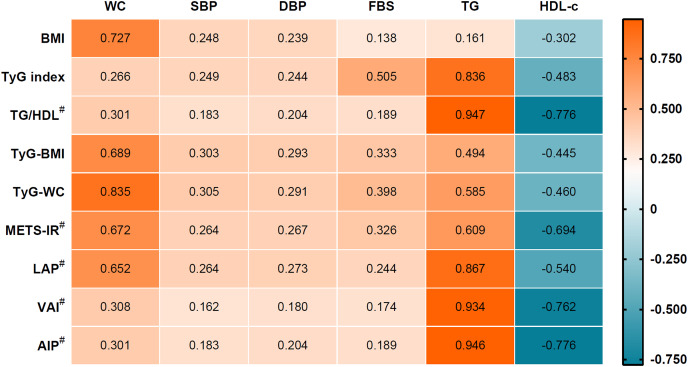
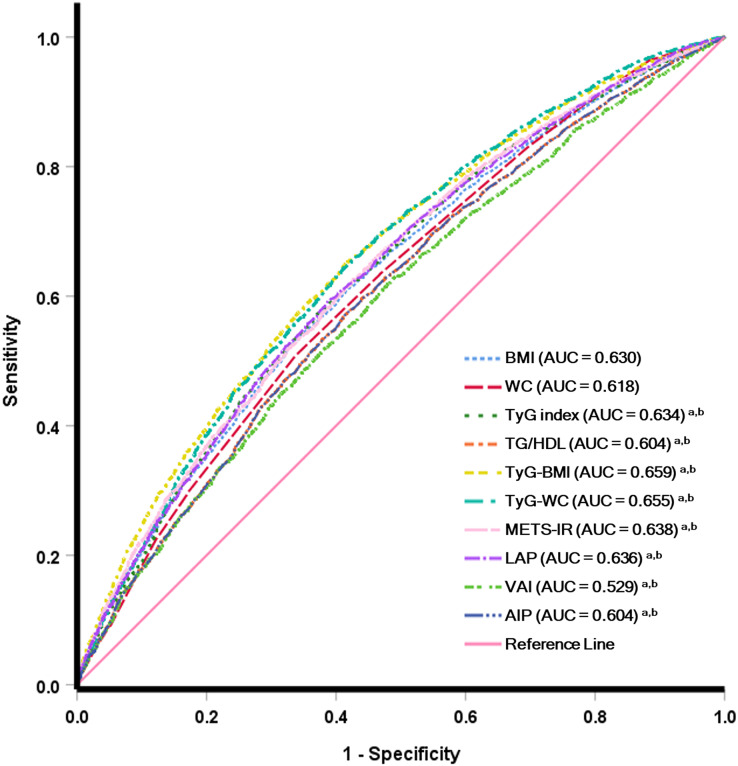
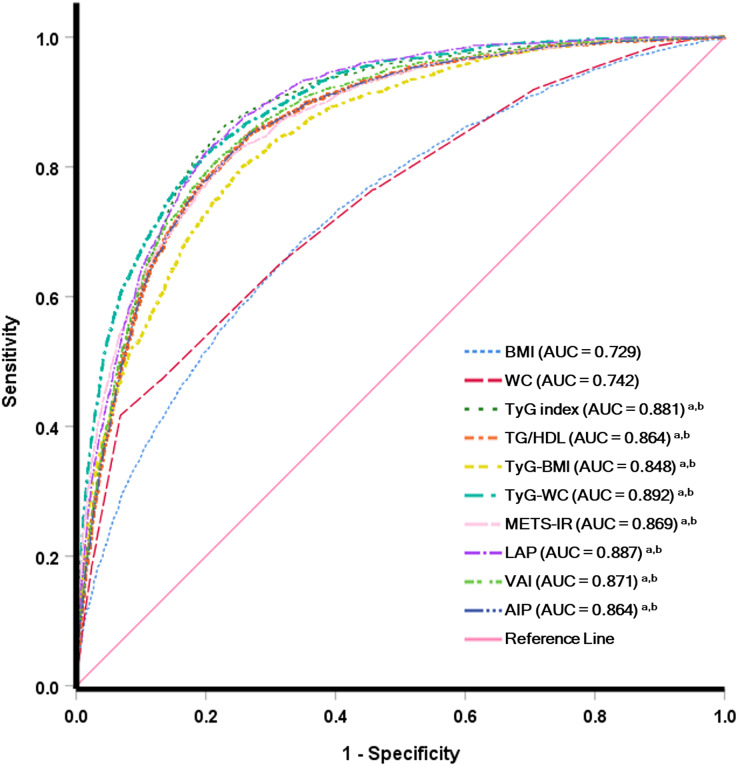
Police officers in Thailand have an increased risk of heart disease, stroke, and type 2 diabetes, possibly due to a high prevalence of hypertension and metabolic syndrome (MetS). In this study, the researchers aimed to understand the relationship between surrogate markers of insulin resistance (IR) and the prevalence of MetS and hypertension in Thai police officers. The study included 7,852 police officer participants, of which 91.8% were men with an average age of 48.56 years. The prevalence of hypertension and MetS were found to be 51.1% and 30.8%, respectively, and the participants with MetS and hypertension were older compared to the regular group. The study looked at eight IR indices, including markers such as atherogenic index of plasma (AIP), lipid accumulation product (LAP), metabolic score for insulin resistance (METS-IR), triglyceride glucose (TyG) index, TyG index with body mass index (TyG-BMI), TyG index with waist circumference (TyG-WC), the ratio of triglycerides to high-density lipoprotein cholesterol ratio (TG/HDL-c), and visceral obesity index (VAI). These indices were found to be positively correlated with waist circumference, systolic blood pressure (SBP), diastolic blood pressure (DBP), fasting plasma glucose (FPG), and triglycerides (TG), while being negatively correlated with high-density lipoprotein cholesterol (HDL-c). In addition, the multiple regression analysis showed that higher quartiles of all IR indices were significantly associated with increased risks of MetS and hypertension. Interestingly, the IR indices were more accurate in predicting MetS (ranges 0.848 to 0.892) than traditional obesity indices, with the AUC difference at < 0.001. Among the IR indices, TyG-WC performed the best in predicting MetS (AUC value 0.892 and Youden index 0.620). At the same time, TyG-BMI had the highest accuracy in predicting hypertension (AUC value of 0.659 and Youden index of 0.236). In addition, this study found that when two markers were combined for diagnosing metabolic syndrome, a significantly improved predictive value for disease risk was observed, as evidenced by higher AUC and Yoden index. Moreover, the IR indices were found to have higher predictive power for MetS and hypertension in younger police personnel (age < 48 years) than older personnel. In conclusion, this study highlights the importance of reducing cardiovascular disease risks among law enforcement personnel as a strategic goal to improve their health and wellness. The findings suggest that IR indices may be valuable tools in predicting MetS and hypertension in law enforcement personnel and could potentially aid in the early identification and prevention of law enforcement personnel health conditions.
泰国警察患心脏病、中风和 2 型糖尿病的风险增加,这可能是由于高血压和代谢综合征(MetS)的高发率所致。在这项研究中,研究人员旨在了解胰岛素抵抗(IR)的替代标志物与泰国警察中 MetS 和高血压的患病率之间的关系。该研究包括 7852 名警察参与者,其中 91.8%为男性,平均年龄为 48.56 岁。研究发现,高血压和 MetS 的患病率分别为 51.1%和 30.8%,患有 MetS 和高血压的参与者比普通组年龄更大。该研究观察了八个 IR 指数,包括血浆致动脉粥样硬化指数(AIP)、脂质蓄积产物(LAP)、胰岛素抵抗代谢评分(METS-IR)、三酰甘油葡萄糖(TyG)指数、TyG 指数与体重指数(TyG-BMI)、TyG 指数与腰围(TyG-WC)、三酰甘油与高密度脂蛋白胆固醇比值(TG/HDL-c)和内脏肥胖指数(VAI)等标志物。这些指数与腰围、收缩压(SBP)、舒张压(DBP)、空腹血糖(FPG)和三酰甘油(TG)呈正相关,与高密度脂蛋白胆固醇(HDL-c)呈负相关。此外,多元回归分析显示,所有 IR 指数的四分位距越高,患 MetS 和高血压的风险就越高。有趣的是,IR 指数在预测 MetS 方面比传统肥胖指数更准确(范围 0.848 至 0.892),AUC 差异<0.001。在 IR 指数中,TyG-WC 预测 MetS 的效果最佳(AUC 值为 0.892,Youden 指数为 0.620)。同时,TyG-BMI 对预测高血压的准确性最高(AUC 值为 0.659,Youden 指数为 0.236)。此外,这项研究发现,当两种标志物联合用于诊断代谢综合征时,疾病风险的预测价值显著提高,表现为 AUC 和 Yoden 指数更高。此外,IR 指数在年轻警察(<48 岁)中对 MetS 和高血压的预测能力高于年龄较大的警察。综上所述,该研究强调了将降低执法人员心血管疾病风险作为改善其健康和福利的战略目标的重要性。研究结果表明,IR 指数可能是预测执法人员 MetS 和高血压的有用工具,并可能有助于早期识别和预防执法人员的健康状况。