Sawant Neena S, Vinchurkar Piyush, Kolwankar Samiksha, Patil Tejaswi, Rathi Khusbhu, Urkude Jayesh
Department of Psychiatry, Seth GSMC and KEM Hospital, Mumbai, Maharashtra, India.
Seth GSMC and KEM Hospital, Parel, Mumbai, Maharashtra, India.
Ind Psychiatry J. 2023 Jan-Jun;32(1):59-64. doi: 10.4103/ipj.ipj_52_22. Epub 2022 Sep 14.
Online education has become a norm since the pandemic and it was a complete change for the medical curriculum. Many students missed patient interaction, which was a crucial part of their learning.
This study was designed to know the perceptions of online teaching of both the non-competency-based medical education (non-CBME) and competency-based medical education (CBME) curriculum during the coronavirus disease 2019 (COVID-19) pandemic, learning outcomes, and health-related problems due to online teaching-learning in medical undergraduates.
It was an online survey done after ethics approval. The survey questionnaire was sent to all medical undergraduates via email or WhatsApp and responses were recorded after informed consent. The total number of students who completed the survey was 346.
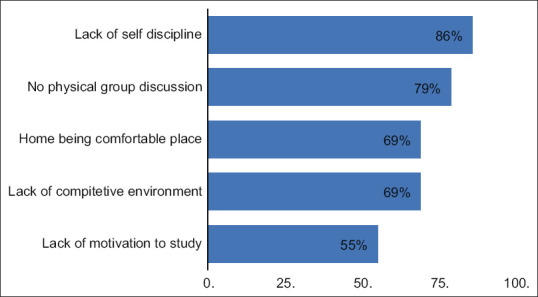
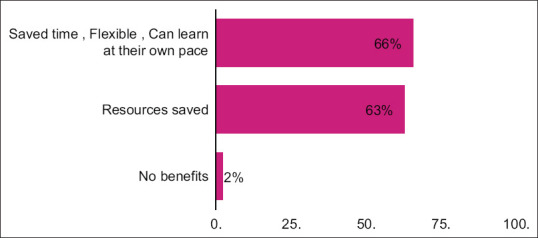
66% of students found that online classes were not as enjoyable as offline. 66% found them time-saving with learning at their own pace. 85% felt they learned no clinical skills, and 80.6% said there was a lack of practical demonstrations. 71% experienced digital fatigue, 62% missed learning in a group, and 73% felt the poor motivation to study. Only 30% and 18.7% were confident enough to take a history or do an examination of the patient, respectively, after online clinics. 33% were confident to appear for university theory and only 11% for practical exams. The health problems faced due to online teaching included somatic complaints, sleep disturbances anxiety, and depressive symptoms in 40% of students.
The students were dissatisfied with online teaching. Learning outcomes were affected, as they were not confident to appear for university exams. Hence, though teaching happened during the pandemic, the online education imparted revealed lacunae and health effects.
自疫情以来,在线教育已成为常态,这给医学课程带来了彻底的改变。许多学生错过了患者互动,而这是他们学习的关键部分。
本研究旨在了解2019年冠状病毒病(COVID-19)大流行期间非基于能力的医学教育(非CBME)和基于能力的医学教育(CBME)课程的在线教学认知、学习成果以及医学本科生在线教学学习导致的健康相关问题。
这是一项在获得伦理批准后进行的在线调查。调查问卷通过电子邮件或WhatsApp发送给所有医学本科生,并在获得知情同意后记录回复。完成调查的学生总数为346人。
66%的学生发现在线课程不如线下课程有趣。66%的学生发现在线课程节省时间,可以按照自己的节奏学习。85%的学生觉得他们没有学到临床技能,80.6%的学生表示缺乏实践演示。71%的学生经历了数字疲劳,62%的学生怀念小组学习,73%的学生感到学习动力不足。在线临床实习后,只有30%和18.7%的学生分别有足够信心进行病史采集或对患者进行检查。33%的学生有信心参加大学理论考试,只有11%的学生有信心参加实践考试。在线教学导致的健康问题包括40%的学生出现躯体不适、睡眠障碍、焦虑和抑郁症状。
学生对在线教学不满意。学习成果受到影响,因为他们没有信心参加大学考试。因此,尽管在大流行期间进行了教学,但所传授的在线教育存在缺陷并对健康有影响。