Instituto de Biología Molecular y Celular de Rosario (IBR-UNR/CONICET), Facultad de Ciencias Bioquímicas y Farmacéuticas, Universidad Nacional de Rosario (UNR), 2000, Rosario, Argentina.
Institute of Synthetic Biology, University of Düsseldorf, Düsseldorf, Germany.
Nat Commun. 2023 Jun 6;14(1):3277. doi: 10.1038/s41467-023-38739-4.
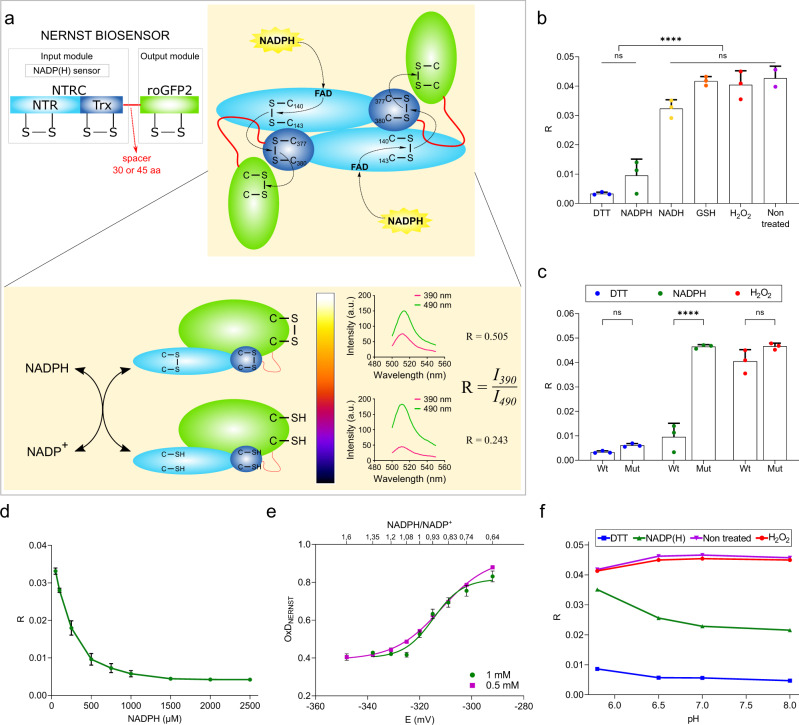
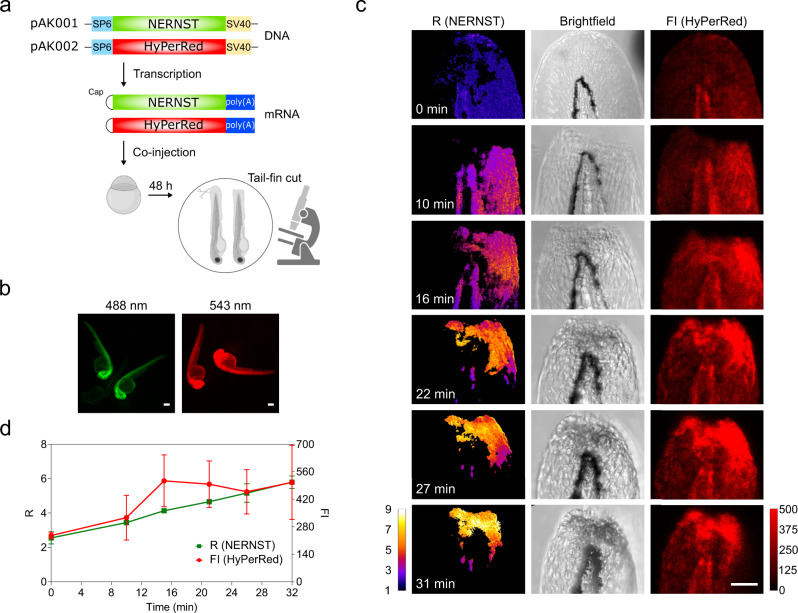
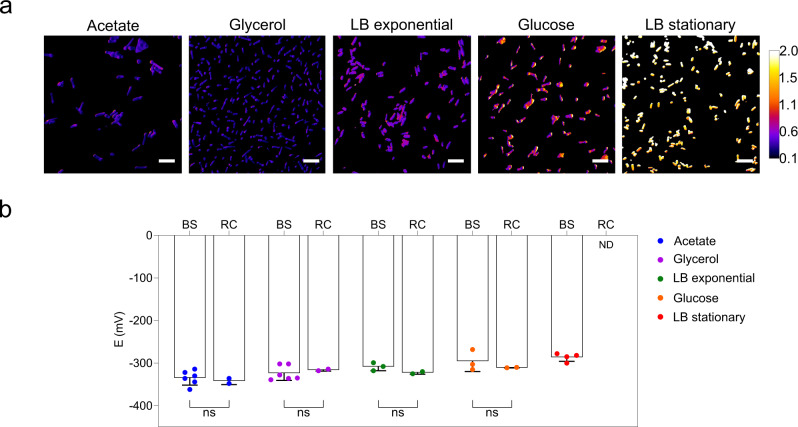
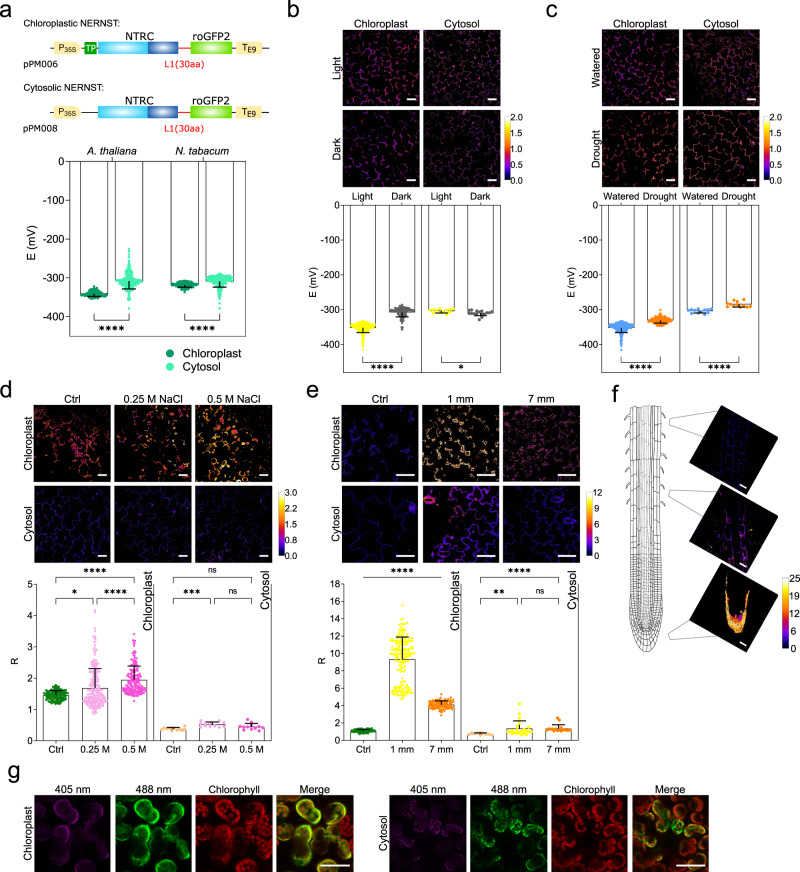
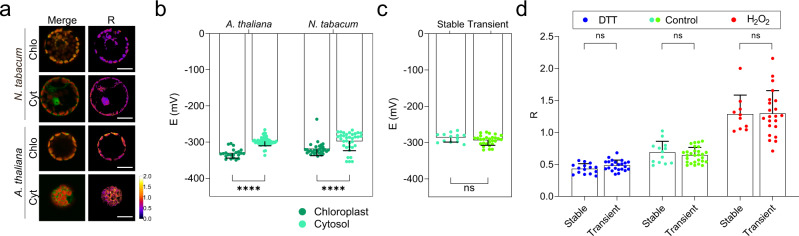
NADP(H) is a central metabolic hub providing reducing equivalents to multiple biosynthetic, regulatory and antioxidative pathways in all living organisms. While biosensors are available to determine NADP or NADPH levels in vivo, no probe exists to estimate the NADP(H) redox status, a determinant of the cell energy availability. We describe herein the design and characterization of a genetically-encoded ratiometric biosensor, termed NERNST, able to interact with NADP(H) and estimate E. NERNST consists of a redox-sensitive green fluorescent protein (roGFP2) fused to an NADPH-thioredoxin reductase C module which selectively monitors NADP(H) redox states via oxido-reduction of the roGFP2 moiety. NERNST is functional in bacterial, plant and animal cells, and organelles such as chloroplasts and mitochondria. Using NERNST, we monitor NADP(H) dynamics during bacterial growth, environmental stresses in plants, metabolic challenges to mammalian cells, and wounding in zebrafish. NERNST estimates the NADP(H) redox poise in living organisms, with various potential applications in biochemical, biotechnological and biomedical research.
NADP(H) 是一个中央代谢枢纽,为所有生物的多种生物合成、调节和抗氧化途径提供还原当量。虽然有生物传感器可用于测定体内 NADP 或 NADPH 水平,但尚无探针可估计 NADP(H) 氧化还原状态,而后者是细胞能量可用性的决定因素。我们在此描述了一种遗传编码的比率型生物传感器的设计和特性,称为 NERNST,它能够与 NADP(H) 相互作用,并估计 E。NERNST 由一个对氧化还原敏感的绿色荧光蛋白 (roGFP2) 与 NADPH-硫氧还蛋白还原酶 C 模块融合而成,该模块通过 roGFP2 部分的氧化还原选择性地监测 NADP(H) 氧化还原状态。NERNST 在细菌、植物和动物细胞以及细胞器(如叶绿体和线粒体)中均具有功能。使用 NERNST,我们监测了细菌生长过程中、植物面临环境压力时、哺乳动物细胞受到代谢挑战时以及斑马鱼受伤时 NADP(H) 的动态变化。NERNST 估计了活生物体中的 NADP(H) 氧化还原势,在生化、生物技术和生物医学研究中有各种潜在的应用。