Department of Biochemistry, Medical Research Institute, Alexandria University, 165 El-Horreya Avenue, EL-Hadara, P.O. Box 21561, Alexandria, Egypt.
Mol Med. 2023 Jun 6;29(1):71. doi: 10.1186/s10020-023-00666-x.
Hepatitis C virus (HCV) infection is a global public health problem and Egypt has the highest HCV prevalence worldwide. Hence, global efforts target to eliminate HCV by 2030. Sofosbuvir is a nucleotide analogue inhibitor of HCV polymerase essential for viral replication. Animal studies prove that Sofosbuvir metabolites cross the placenta and are excreted in the milk of nursing animals. We aimed to investigate the possible effects of preconception maternal exposure to Sofosbuvir on mitochondrial biogenesis in prenatal fetal liver, skeletal muscle, and placental tissues.
The study was conducted on 20 female albino rats divided into a control group receiving a placebo and an exposed group receiving 4 mg/kg orally/day for 3 months of Sofosbuvir. At the end of the treatment period, pregnancy was induced in both groups by mating with healthy male rats overnight. At gestational day 17, all pregnant female rats were sacrificed. Each fetus was dissected to obtain the fetal liver, skeletal muscle, and placental tissues.
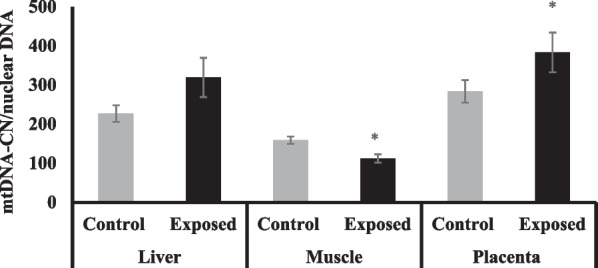
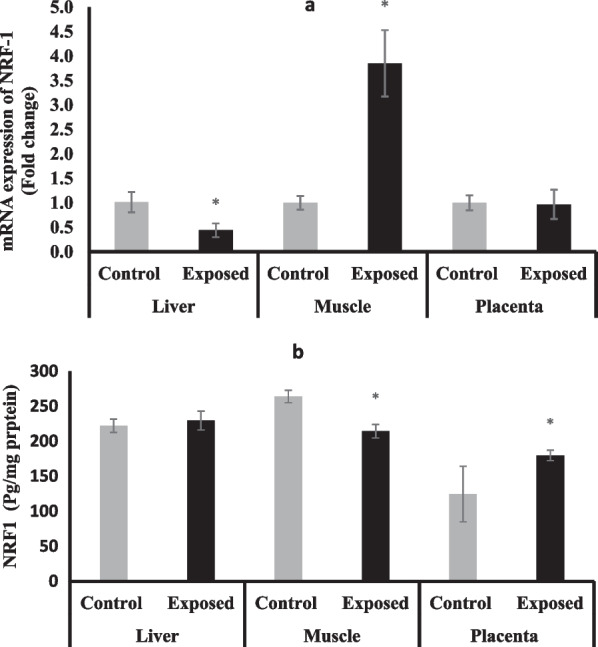
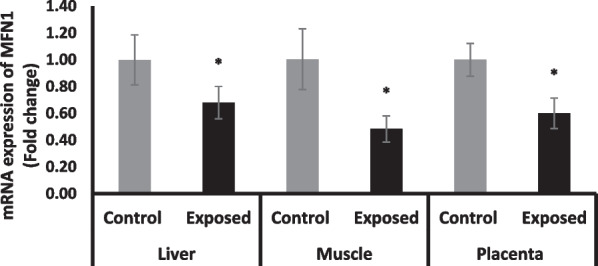
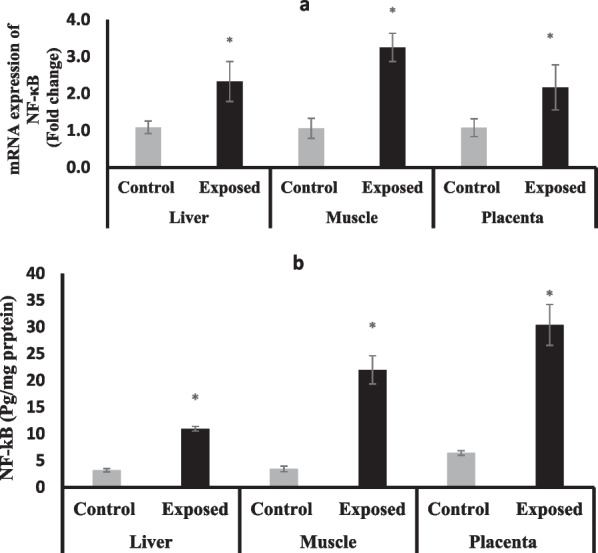
The results of our study indicated that the exposure of young female rats to Sofosbuvir affects pregnancy outcomes. Fetal liver and muscle showed lower mitochondrial DNA-copy number (mtDNA-CN) by about 24% and 29% respectively, peroxisome proliferator-activated receptor-gamma coactivator-1 alpha and its downstream targets; nuclear respiratory factor-1 and mitochondrial transcription factor A. While the placental tissues showed different patterns, particularly elevated in mtDNA-CN by about 43%.
The study provides preliminary evidence of the detrimental effects of Sofosbuvir on the pregnancy outcomes of the exposed females and may impair the placental and fetal organs' development. These effects may be mediated through modulating mitochondrial homeostasis and functions.
丙型肝炎病毒(HCV)感染是一个全球性的公共卫生问题,埃及是全球 HCV 感染率最高的国家。因此,全球致力于在 2030 年前消除 HCV。索磷布韦是一种 HCV 聚合酶的核苷酸类似物抑制剂,对病毒复制至关重要。动物研究证明,索磷布韦的代谢物可以穿过胎盘,并在哺乳期动物的乳汁中排泄。我们旨在研究母体在妊娠前接触索磷布韦对产前胎儿肝脏、骨骼肌和胎盘组织中线粒体生物发生的可能影响。
该研究在 20 只雌性白化大鼠中进行,分为对照组(给予安慰剂)和暴露组(给予 4mg/kg 索磷布韦口服/天,共 3 个月)。治疗期结束后,两组大鼠均与健康雄性大鼠交配过夜诱导妊娠。在妊娠第 17 天,所有怀孕的雌性大鼠被处死。从每个胎儿中取出胎儿肝脏、骨骼肌和胎盘组织。
我们的研究结果表明,年轻雌性大鼠接触索磷布韦会影响妊娠结局。胎儿肝脏和肌肉的线粒体 DNA 拷贝数(mtDNA-CN)分别降低约 24%和 29%,过氧化物酶体增殖物激活受体-γ共激活因子-1α及其下游靶标核呼吸因子-1 和线粒体转录因子 A。而胎盘组织表现出不同的模式,特别是 mtDNA-CN 升高约 43%。
该研究提供了索磷布韦对暴露雌性妊娠结局的有害影响的初步证据,并可能损害胎盘和胎儿器官的发育。这些影响可能是通过调节线粒体的动态平衡和功能来介导的。