Department of Biological Sciences, University of Northern Colorado, 501 20th Street, Greeley, CO, 80639, USA.
Department of Biochemistry and Molecular Genetics, University of Colorado Denver, 12801 East 17th Avenue, Aurora, CO, 80045, USA.
BMC Biol. 2023 Jun 6;21(1):136. doi: 10.1186/s12915-023-01626-x.
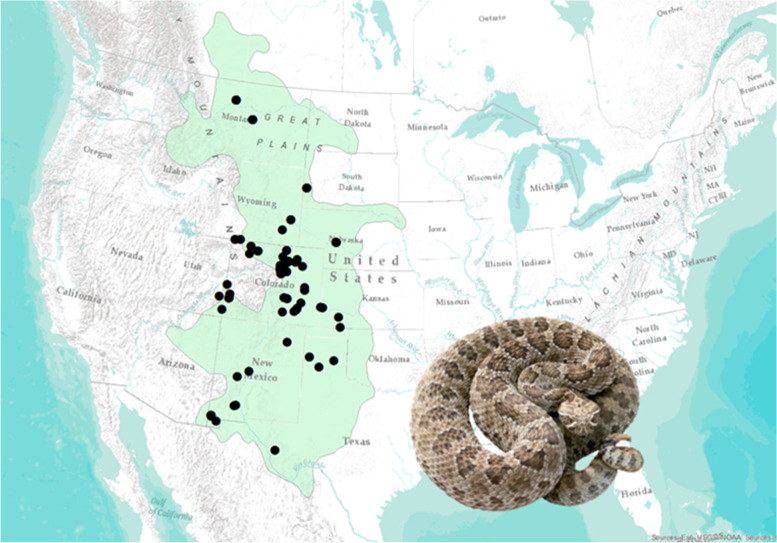
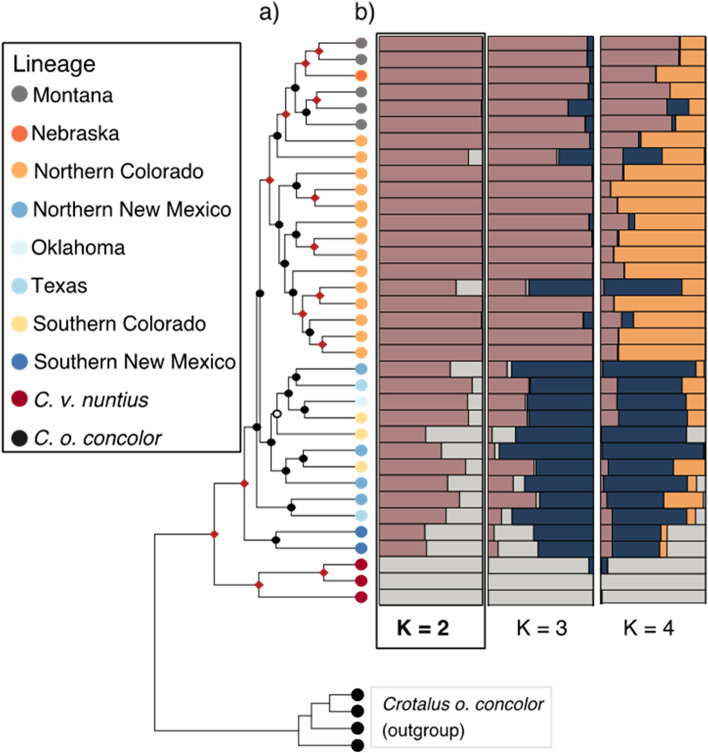
Snake venoms are trophic adaptations that represent an ideal model to examine the evolutionary factors that shape polymorphic traits under strong natural selection. Venom compositional variation is substantial within and among venomous snake species. However, the forces shaping this phenotypic complexity, as well as the potential integrated roles of biotic and abiotic factors, have received little attention. Here, we investigate geographic variation in venom composition in a wide-ranging rattlesnake (Crotalus viridis viridis) and contextualize this variation by investigating dietary, phylogenetic, and environmental variables that covary with venom.
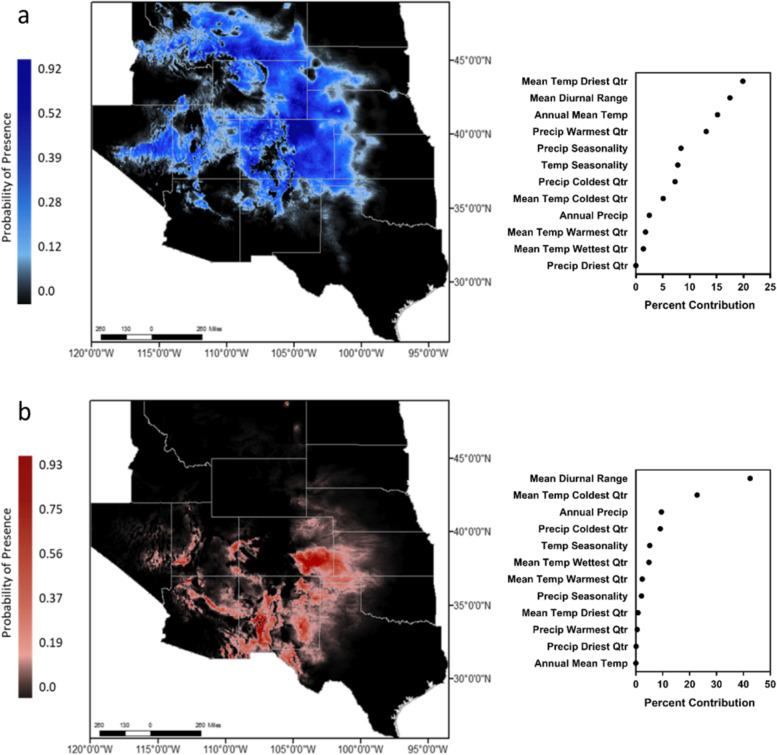
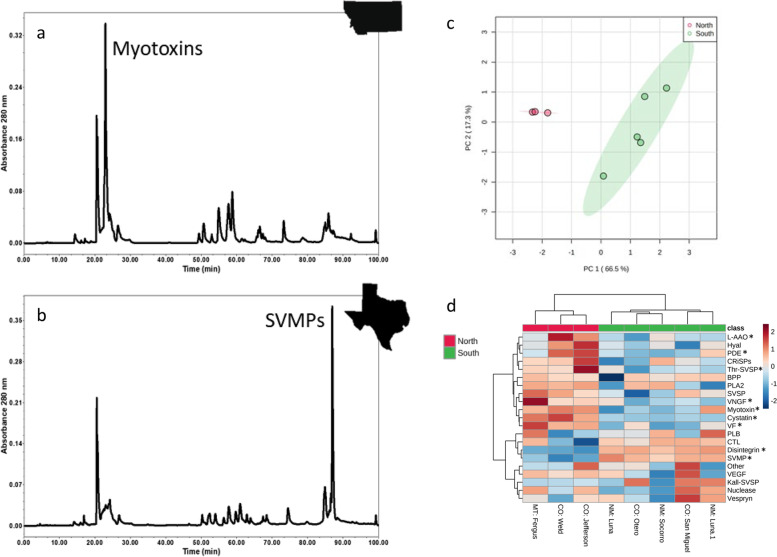
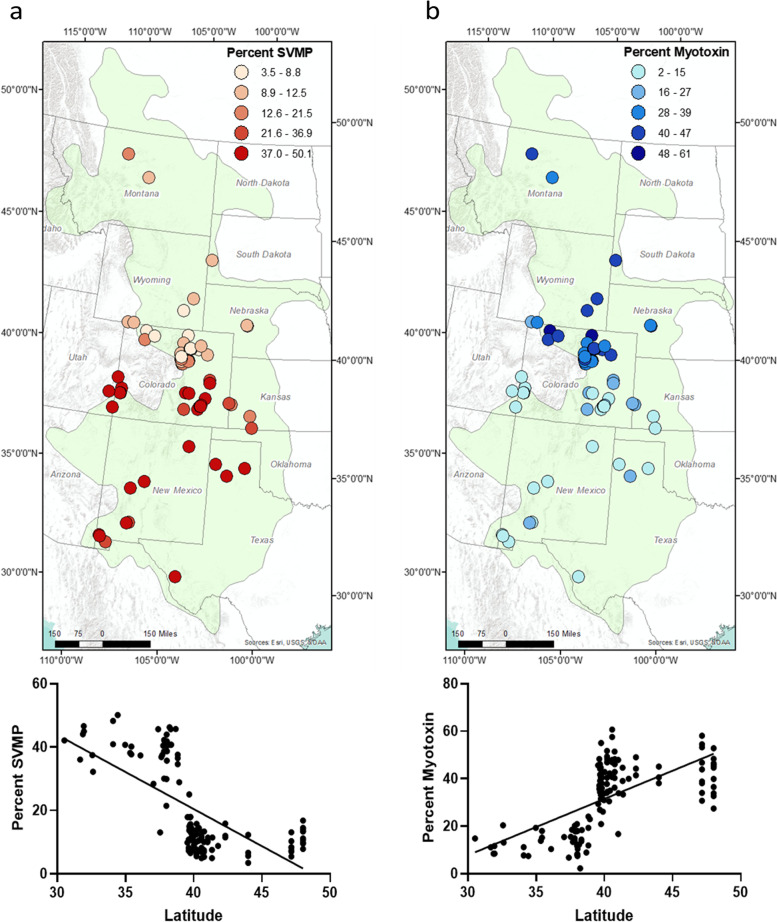
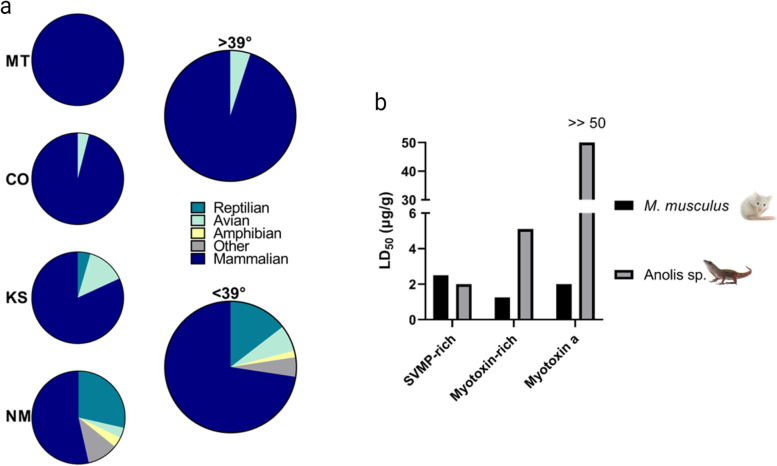
Using shotgun proteomics, venom biochemical profiling, and lethality assays, we identify 2 distinct divergent phenotypes that characterize major axes of venom variation in this species: a myotoxin-rich phenotype and a snake venom metalloprotease (SVMP)-rich phenotype. We find that dietary availability and temperature-related abiotic factors are correlated with geographic trends in venom composition.
Our findings highlight the potential for snake venoms to vary extensively within species, for this variation to be driven by biotic and abiotic factors, and for the importance of integrating biotic and abiotic variation for understanding complex trait evolution. Links between venom variation and variation in biotic and abiotic factors indicate that venom variation likely results from substantial geographic variation in selection regimes that determine the efficacy of venom phenotypes across populations and snake species. Our results highlight the cascading influence of abiotic factors on biotic factors that ultimately shape venom phenotype, providing evidence for a central role of local selection as a key driver of venom variation.
蛇毒是营养适应的产物,是研究在强烈自然选择下塑造多态特征的进化因素的理想模型。毒液成分在有毒蛇种内和种间存在很大的变化。然而,塑造这种表型复杂性的力量,以及生物和非生物因素的潜在综合作用,还没有得到太多关注。在这里,我们研究了一种广泛分布的响尾蛇(Crotalus viridis viridis)毒液成分的地理变化,并通过研究与毒液共变的饮食、系统发育和环境变量来理解这种变化。
使用鸟枪法蛋白质组学、毒液生化分析和致死性测定,我们确定了 2 种不同的明显不同的表型,这些表型特征是该物种毒液变化的主要轴:一种富含肌肉毒素的表型和一种富含蛇毒金属蛋白酶(SVMP)的表型。我们发现,饮食的可利用性和与温度有关的非生物因素与毒液成分的地理趋势相关。
我们的研究结果强调了蛇毒在物种内广泛变化的潜力,这种变化是由生物和非生物因素驱动的,并且对于整合生物和非生物变化来理解复杂特征的进化具有重要意义。毒液变化与生物和非生物因素之间的联系表明,毒液变化可能是由于选择制度在地理上的巨大变化,这些变化决定了毒液表型在种群和蛇种之间的有效性。我们的研究结果强调了非生物因素对生物因素的级联影响,最终形成了毒液表型,为局部选择作为毒液变化的关键驱动因素提供了证据。