Division of Thyroid Surgery, Department of General Surgery, West China Hospital, Sichuan University, Chengdu, 610041, China.
The Laboratory of Thyroid and Parathyroid Disease, Frontiers Science Center for Disease-Related Molecular Network, West China Hospital, Sichuan University, Chengdu, 610041, China.
BMC Med. 2023 Jun 6;21(1):206. doi: 10.1186/s12916-023-02914-7.
Hashimoto's thyroiditis (HT) is an organ-specific autoimmune disease characterized by lymphocyte infiltration that destroys thyrocyte cells. The aim of the present study was to elucidate the role and mechanisms of tissue small extracellular vesicle (sEV) microRNAs (miRNAs) in the pathogenesis of HT.
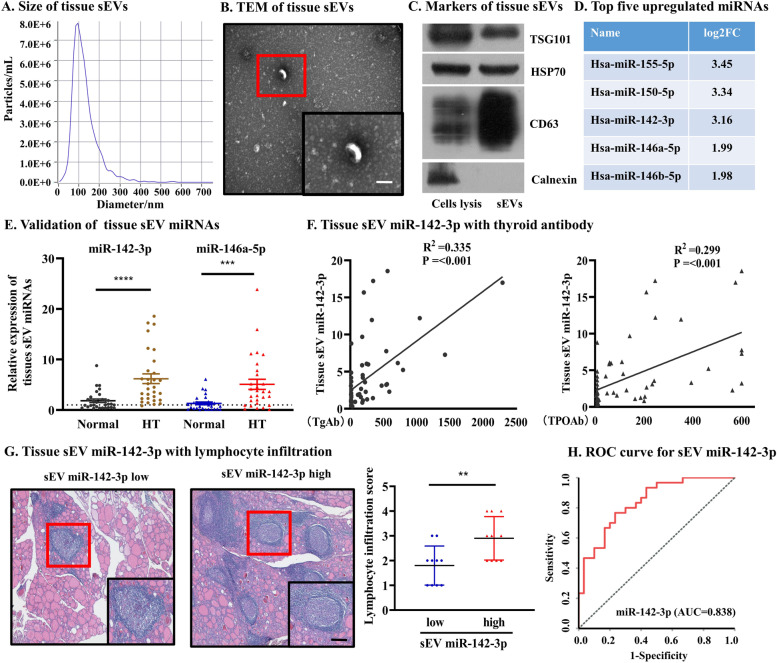
Differentially expressed tissue sEV miRNAs were identified between HT tissue and normal tissue by RNA sequencing in the testing set (n = 20). Subsequently, using quantitative real-time polymerase chain reaction (qRT‒PCR) assays and logistic regression analysis in the validation set (n = 60), the most relevant tissue sEV miRNAs to HT were verified. The parental and recipient cells of that tissue sEV miRNA were then explored. In vitro and in vivo experiments were further performed to elucidate the function and potential mechanisms of sEV miRNAs that contribute to the development of HT.
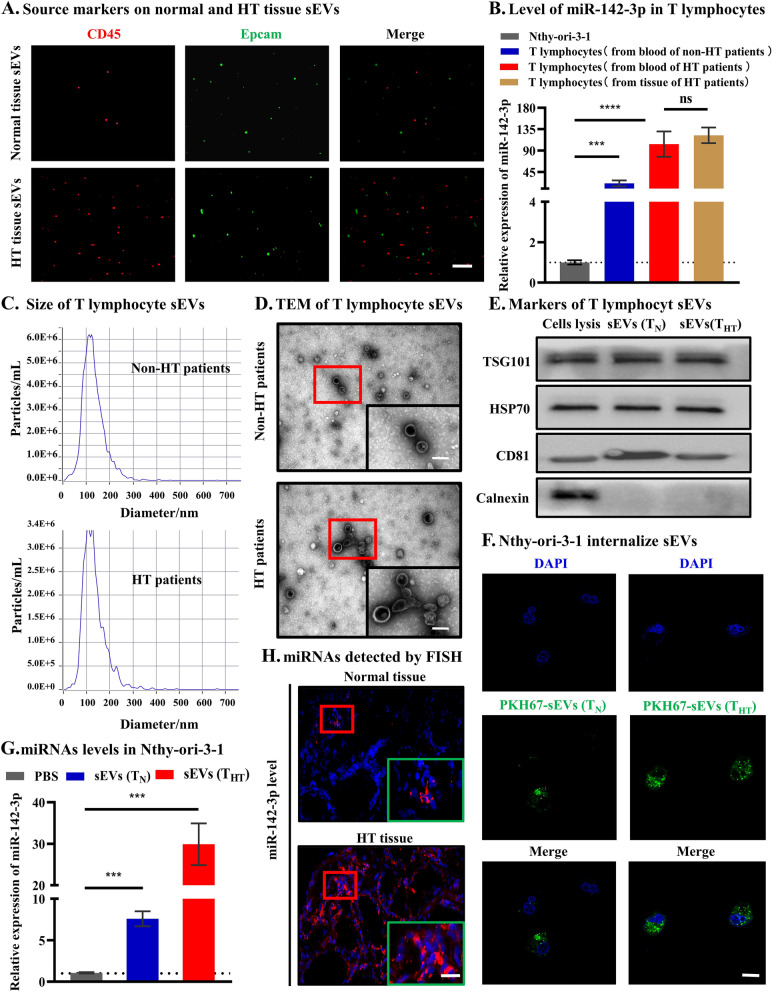
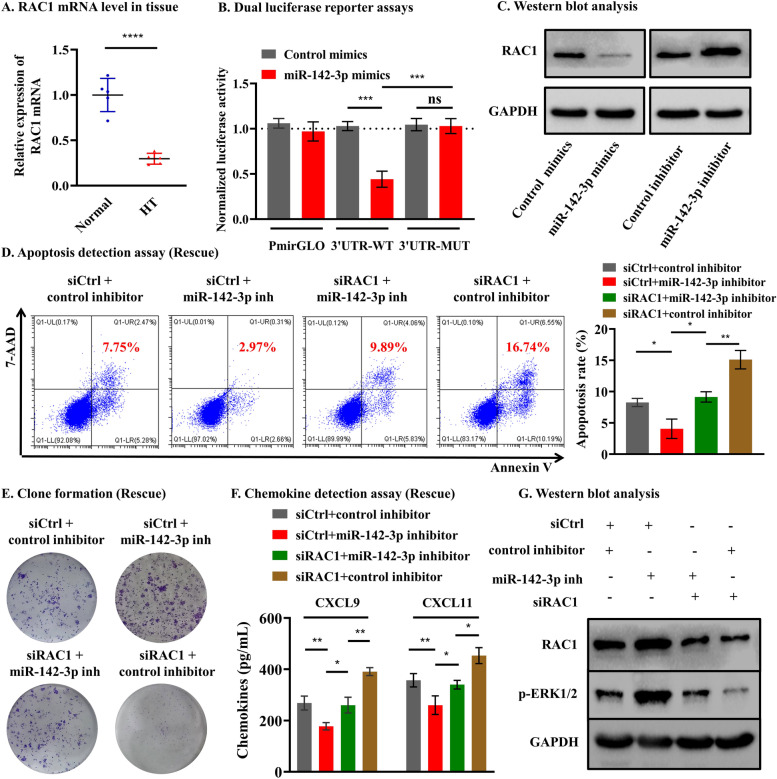
We identified that miR-142-3p encapsulated in T lymphocyte-derived tissue sEVs can induce Treg function defect and thyrocyte destruction through an intact response loop. Inactivation of miR-142-3p can effectively protect non-obese diabetic (NOD).H-2 mice from HT development display reduced lymphocyte infiltration, lower antibody titers, and higher Treg cells. Looking at the mechanisms underlying sEV action on thyrocyte destruction, we found that the strong deleterious effect mediated by tissue sEV miR-142-3p is due to its ability to block the activation of the ERK1/2 signaling pathway by downregulating RAC1.
Our findings highlight the fact that tissue sEV-mediated miR-142-3p transfer can serve as a communication mode between T lymphocytes and thyrocyte cells in HT, favoring the progression of HT.
桥本甲状腺炎(HT)是一种以淋巴细胞浸润为特征的器官特异性自身免疫性疾病,可破坏甲状腺细胞。本研究旨在阐明组织小细胞外囊泡(sEV)microRNAs(miRNAs)在 HT 发病机制中的作用和机制。
通过测试集(n=20)中的 RNA 测序鉴定 HT 组织与正常组织之间差异表达的组织 sEV miRNAs。随后,在验证集(n=60)中使用实时定量聚合酶链反应(qRT-PCR)检测和逻辑回归分析,验证与 HT 最相关的组织 sEV miRNAs。然后探索该组织 sEV miRNA 的母细胞和受体细胞。进一步进行体外和体内实验,阐明促进 HT 发展的 sEV miRNAs 的功能和潜在机制。
我们发现,T 淋巴细胞来源的组织 sEV 中包裹的 miR-142-3p 可以通过完整的反应环诱导 Treg 功能缺陷和甲状腺细胞破坏。miR-142-3p 的失活可以有效保护非肥胖型糖尿病(NOD)。H-2 小鼠免受 HT 发展的影响,表现为淋巴细胞浸润减少、抗体滴度降低和 Treg 细胞增多。观察 sEV 对甲状腺细胞破坏作用的机制,我们发现组织 sEV miR-142-3p 介导的强烈有害作用是由于其通过下调 RAC1 阻断 ERK1/2 信号通路的激活。
我们的研究结果表明,组织 sEV 介导的 miR-142-3p 转移可以作为 T 淋巴细胞和 HT 甲状腺细胞之间的一种通讯方式,有利于 HT 的进展。