Güven Zeynep Tuğba, Çelik Serhat, Keklik Muzaffer, Ünal Ali
Hematology, Adana City Hospital, Adana, TUR.
Hematology, Kırıkkale University School of Medicine, Kırıkkale, TUR.
Cureus. 2023 May 6;15(5):e38618. doi: 10.7759/cureus.38618. eCollection 2023 May.
The COVID-19 vaccine is the most essential tool for altering the pandemic's trajectory. The pandemic's control is complicated by society's unwillingness to vaccinate. The aim of this cross-sectional study was to assess patients with hematological malignancies and their attitudes regarding COVID-19 immunization and to investigate COVID-19 anxiety in this susceptible population.
In this cross-sectional study, 165 patients with hematological malignancies were included. COVID-19 anxiety was evaluated with the coronavirus anxiety scale (CAS), and COVID-19 vaccine attitude was evaluated with the Vaccine Attitudes Review (VAX) scale.
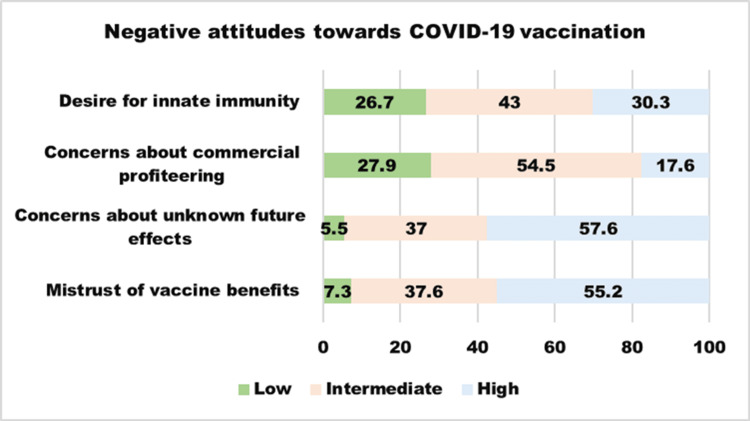
The mean CAS score was 2.42 (0-17). There were 22 (13%) participants with a mean CAS score of ≥ 9. Half of the participants had a CAS score of 0. The CAS score was higher in females (p = 0.023). Similarly, it was significantly higher in patients who were not in remission for hematological malignancy and who received active chemotherapy (p = 0.010). The mean VAX score was 49.07 ± 8.76 (27-72). Most of the participants (64%) had a neutral attitude toward the COVID-19 vaccination. In a survey of 165 patients, 55% said that they were skeptical about vaccination safety, and 58% said that they were concerned about unintended side effects. In addition, 90% expressed moderate concerns about commercial profiteering. Natural immunity was preferred by 30% of the participants. There was no statistically significant correlation between CAS scores and the Vaccine Attitudes Review (VAX) scale.
This study draws attention to the level of anxiety in patients with hematological malignancies during the COVID-19 pandemic. Negative attitudes toward the COVID-19 vaccine are worrisome for at-risk patient groups. We think that patients with hematological malignancies should be informed to eliminate their hesitations about COVID-19 vaccines.
新冠疫苗是改变疫情发展轨迹的最重要工具。社会对疫苗接种的不情愿使疫情防控变得复杂。这项横断面研究的目的是评估血液系统恶性肿瘤患者及其对新冠疫苗接种的态度,并调查这一易感人群中的新冠焦虑情况。
在这项横断面研究中,纳入了165例血液系统恶性肿瘤患者。采用冠状病毒焦虑量表(CAS)评估新冠焦虑情况,采用疫苗态度评估量表(VAX)评估对新冠疫苗的态度。
CAS平均得分为2.42(0 - 17)。有22名(13%)参与者的CAS平均得分≥9。一半的参与者CAS得分为0。女性的CAS得分更高(p = 0.023)。同样,血液系统恶性肿瘤未缓解且接受积极化疗的患者得分显著更高(p = 0.010)。VAX平均得分为49.07±8.76(27 - 72)。大多数参与者(64%)对新冠疫苗接种持中立态度。在对165名患者的调查中,55%表示对疫苗安全性持怀疑态度,58%表示担心意外副作用。此外,90%对商业暴利表达了中度担忧。30%的参与者更倾向于自然免疫。CAS得分与疫苗态度评估量表(VAX)之间无统计学显著相关性。
本研究提请关注新冠疫情期间血液系统恶性肿瘤患者的焦虑程度。对新冠疫苗的消极态度对高危患者群体而言令人担忧。我们认为应告知血液系统恶性肿瘤患者,以消除他们对新冠疫苗的犹豫。