Infectious Diseases and Tropical Medicine Research Center, Resistant Tuberculosis Institute, Zahedan University of Medical Sciences, Zahedan, Iran.
Health Promotion Research Center, Zahedan University of Medical Sciences, Zahedan, Iran.
J Gastrointest Cancer. 2021 Jun;52(2):499-507. doi: 10.1007/s12029-021-00643-9. Epub 2021 May 5.
Investigations about the impact and consequences of the COVID-19 infection on the mental health of patients with chronic diseases and those with immunosuppressive conditions are growing. The current study aimed to systematically review and meta-analysis of studies that evaluated the level of depression and anxiety in cancer patients during the COVID-19 pandemic.
The PubMed, Scopus and Web of Sciences databases were searched to retrieve potential studies from January 2020 to 3 January 2021. Summary data on frequency and mean of depression and anxiety were extracted. Random-effect meta-analysis was conducted to estimate overall prevalence, mean and standardized mean difference.
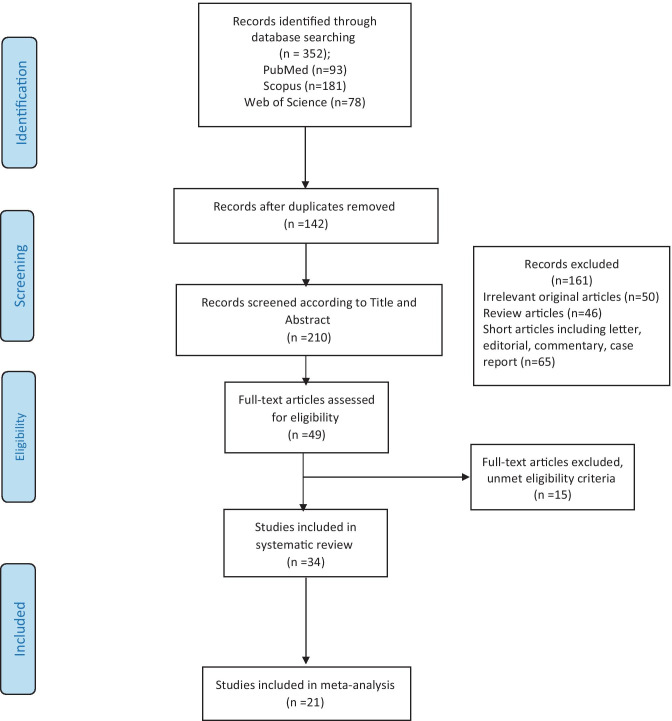
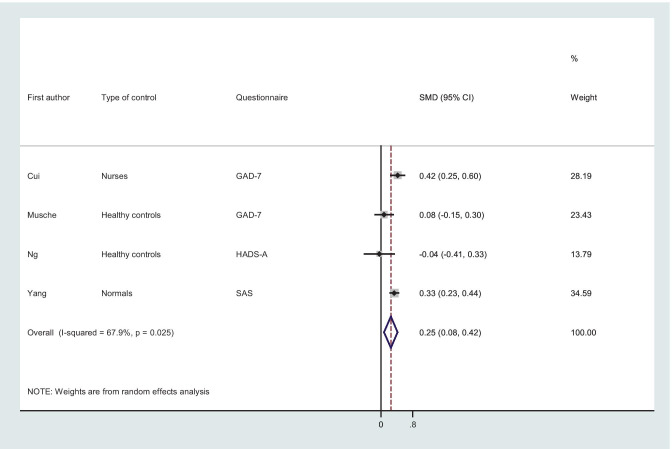
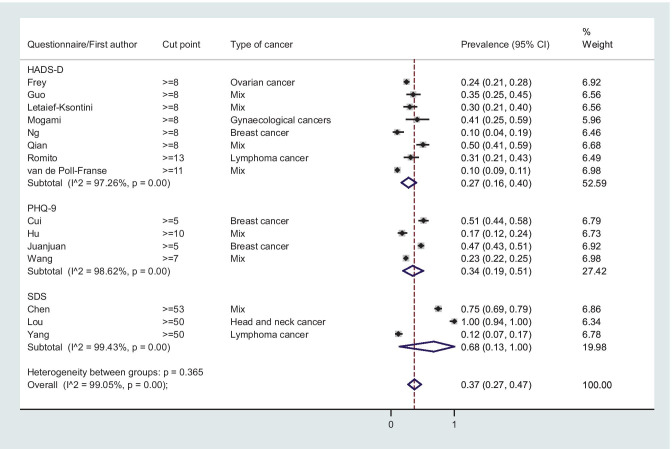
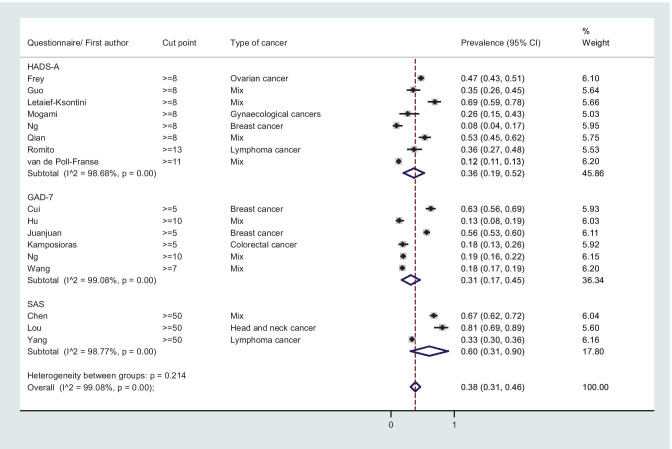
Thirty-four studies were included in the systematic review, of them 21 studies included in meta-analysis. Overall depression and anxiety were 0.37 (0.27, 0.47); I = 99.05%, P value < 0.001 and 0.38 (0.31, 0.46); I = 99.08%, P value < 0.001, respectively. Compared to controls, cancer patients had higher anxiety level [standard mean difference (SMD 0.25 (95% CI 0.08, 0.42)].
Overall, the findings of this study suggest that the prevalence of depression and anxiety among patients with cancer during the COVID-19 pandemic can reach considerable levels, although observed substantial heterogeneity should be considered when interpreting the results.
关于 COVID-19 感染对慢性病患者和免疫抑制患者的心理健康的影响和后果的研究正在增加。本研究旨在系统评价和荟萃分析评估 COVID-19 大流行期间癌症患者抑郁和焦虑水平的研究。
检索了 PubMed、Scopus 和 Web of Sciences 数据库,以检索 2020 年 1 月至 2021 年 1 月 3 日期间可能的研究。提取了抑郁和焦虑的频率和平均值的汇总数据。采用随机效应荟萃分析估计总体患病率、平均值和标准化均数差。
共纳入 34 项系统评价研究,其中 21 项研究纳入荟萃分析。总体抑郁和焦虑分别为 0.37(0.27,0.47);I=99.05%,P 值<0.001 和 0.38(0.31,0.46);I=99.08%,P 值<0.001。与对照组相比,癌症患者焦虑水平较高[标准均数差(SMD)0.25(95% CI 0.08,0.42)]。
总体而言,本研究的结果表明,COVID-19 大流行期间癌症患者的抑郁和焦虑患病率可能达到相当高的水平,尽管在解释结果时应考虑到观察到的显著异质性。